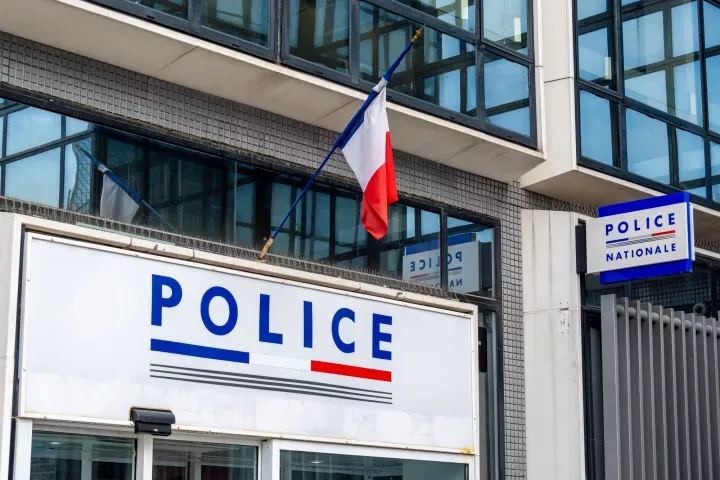
Police clearance certificate is an official document issued by the internal affairs authorities confirming that a person currently has no criminal record and is not wanted in connection with a criminal offense. Alternatively, it may confirm that the person's previous convictions have been expunged.
A certificate of no criminal record may often be required in the following situations:
- Obtaining a visa;
- Applying for a temporary residence permit;
- Applying for a residence permit;
- Obtaining citizenship;
- Employment;
- Admission to an educational institution;
- Background checks for adoption and guardianship;
- Providing evidence in court;
- Entering into marriage.
What is a Police Clearance Certificate in France?
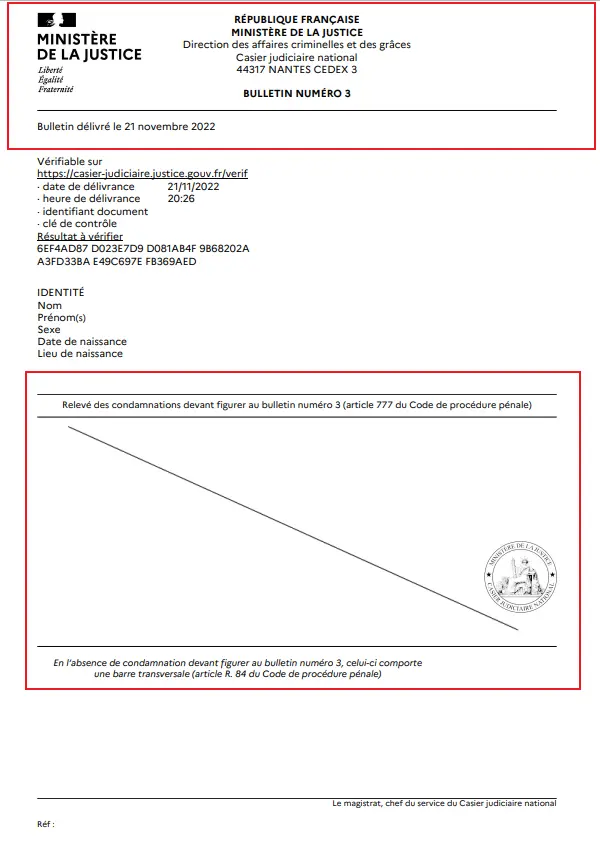
In France, a police clearance certificate is properly referred to as an “Extract from the Criminal Record” (Extrait de casier judiciaire). The authority responsible for maintaining the criminal records and issuing certificates is the French Ministry of Justice. Information on criminal convictions is stored in the National Criminal Record (Casier judiciaire national). The data processing center is located in Nantes.
The issuance of police clearance certificates in France is governed by Decree No. 2015-1841 of December 30, 2015, as well as other regulatory legal acts.
The system for issuing police clearance certificates in France is considerably more complex than in most other countries. The process cannot be completed entirely through a notarized power of attorney. An attempt to unlawfully obtain another person's criminal record information is punishable by a fine of EUR 7,500.
A police clearance certificate is a paper or electronic document generated on the basis of data from the National Criminal Record. The document is issued in French.
There are three main types of criminal record extracts in France:
- Bulletin No. 1, containing all criminal record information, is used by law enforcement authorities;
- Bulletin No. 2, containing criminal record information except for convictions of persons eligible for rehabilitation, minors, police officers, and persons whose sentences have been suspended, is used by administrative authorities and institutions;
- Bulletin No. 3, containing information on serious convictions and restrictions imposed by a court, is issued to the individual concerned, as well as to authorized authorities of other EU Member States.
A police clearance certificate (Bulletin No. 3) is one of the most frequently requested documents in France and must be provided for many administrative procedures. Approximately 4 million such certificates are issued in France each year.
The certificate is a document containing identifying information, details of serious criminal convictions, and information on judicial restrictions.
For apostille purposes and subsequent use abroad, a paper criminal record extract (Bulletin No. 3) is generally used.
How to obtain a Police Clearance Certificate in France
There are two main ways to obtain a certificate of no criminal record in France:
- in paper form by mail;
- in electronic form through dedicated online services.
Certificate by mail
To obtain a police clearance certificate in paper form in person, a request must be sent to the National Criminal Record at the following address: Casier judiciaire national, 44317 Nantes cedex 3, or by fax to 02 51 89 89 18.
If the applicant has no criminal record, the response is sent by ordinary mail. If the applicant has a criminal record, the certificate is sent by registered mail with acknowledgment of receipt.
Electronic Certificate
An electronic request for a police clearance certificate can be submitted through the National Criminal Record's dedicated online service in two ways:
- through the digital government services system FranceConnect;
- using an email address (if FranceConnect is not available or the applicant was born outside France).
If the applicant has no criminal record, they receive a special link via FranceConnect or email, which allows them to download the electronic police clearance certificate twice within ten days. If the applicant has a criminal record, the certificate is sent by registered mail with acknowledgment of receipt.
Police Clearance Certificate in New Caledonia
For persons born in New Caledonia and persons under its jurisdiction, a police clearance certificate can only be obtained through the registry of the local court.
Certificate by power of attorney
A specific feature of French legislation is that, in France, it is not possible to obtain a police clearance certificate by power of attorney on behalf of another person. The application must be personally signed by the person whose records are being requested. The only exceptions are legal representatives of minors under 18 and legally incapacitated persons. In such cases, the applicant's status must be documented.
When obtaining a police clearance certificate, personal details should be carefully checked. Any error or typo may render the document invalid.
Processing time for a Police Clearance Certificate in France
An electronic police clearance certificate in France is issued within 24 hours, while the processing time for a paper certificate depends on the place of delivery.
Apostille for a French Police Clearance Certificate
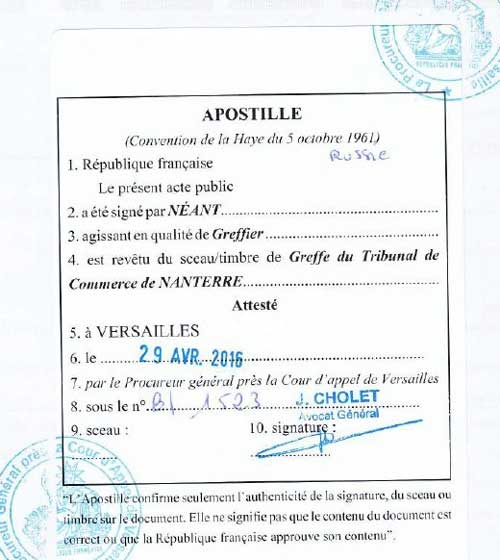
France acceded to the Hague Convention Abolishing the Requirement of Legalisation for Foreign Public Documents in 1965.
An apostille is an internationally standardized form used to certify the authenticity of a document for presentation in countries and states that recognize this form of legalization. It usually takes the form of a special stamp or certificate. In recent years, however, electronic apostilles (e-Apostilles) have also become increasingly common — a special digital certification confirming the authenticity of documents issued in electronic form.
Following the 2025 reform, apostilles for French police clearance certificates are issued by notaries through 15 regional councils and chambers of notaries. Apostille services can be requested through the dedicated online service: apostille.notaires.fr.
However, this notarial procedure applies only to the following territories: mainland France (metropolitan France), Guadeloupe, French Guiana, Réunion, Martinique, Mayotte, Saint Barthélemy, Saint Martin, and Saint Pierre and Miquelon.
In New Caledonia, apostilles are issued by the public prosecutor at the Nouméa Court of Appeal; in French Polynesia, by the public prosecutor at the Papeete Court of Appeal; in Wallis and Futuna, by the president of the Court of First Instance of Mata-Utu; and for the French Southern and Antarctic Lands, by the public prosecutor at the Saint-Denis-de-La-Réunion Court of Appeal.
What is an apostille?
What is an apostille? Why do I need an apostille? How do I get an apostille? - Our video will explain everything you need to know about the apostille. If you have a document that needs to be certified with an apostille for use abroad, Schmidt and Schmidt will assist you! We provide apostille services in more than 100 countries worldwide.
Consular legalization of a French Police Clearance Certificate
If the country where the French police clearance certificate is to be used is not a party to the 1961 Hague Convention, such as the UAE, the document must undergo the more costly and complex procedure of consular legalization.
Consular legalization is a multi-step procedure for certifying the authenticity of a document, used for countries that are not parties to the 1961 Hague Convention.
To complete the consular legalization of a French police clearance certificate, the following procedure must be followed:
- obtain the police clearance certificate;
- have the certificate legalized by an authorized notarial authority;
- obtain an official translation of the document;
- have the document legalized at the consulate or consular section of the embassy of the destination country.
Due to the large number of steps involved, this procedure can be time-consuming and quite costly. Some countries do not have consulates in France, in which case the final stage of legalization may need to be completed in another country where the relevant consulate is located.
For New Caledonia, French Polynesia, Wallis and Futuna, and the French Southern and Antarctic Lands, the old consular legalization procedure through the competent courts remains in place.
What is consular legalization?
In our video we are explaining what consular legalization is and where to apply for it.
Schmidt & Schmidt will assist you in all issues concerning the legalization.
Schmidt & Schmidt offers legalization in more than 80 countries all over the world.
Official translation of a French Police Clearance Certificate
A French police clearance certificate is issued in French. To use it abroad, an official translation must be prepared in accordance with the requirements of the country where the document will be submitted — by a sworn, certified, notarial, or court translator in the country of destination.
A translation of the certificate prepared in France (unless the consular legalization procedure is being used) is unlikely to be accepted abroad.
Document delivery
After obtaining and apostilling or legalizing a police clearance certificate, it is often necessary to send the document to another country. In such cases, not only the speed but also the security of delivery is important, especially when dealing with original official documents.
Schmidt & Schmidt organizes international document delivery worldwide. We use reliable logistics solutions and modern tracking systems, allowing you to monitor the shipment at every stage and ensuring its timely delivery to the recipient.
Our specialists ensure careful and confidential handling of documents and assist with any issues that may arise during international shipping, including carrier requirements and customs clearance procedures.
We can arrange delivery of a completed police clearance certificate, apostilled documents, translations, and other official documents to most countries worldwide — both for private clients and for legal companies and organizations.
How can we help?
We will be happy to assist you with obtaining a police clearance certificate in France, including its apostille or legalization for use abroad, as well as translation and delivery to any destination worldwide.
You can always contact Schmidt & Schmidt. We have extensive experience in requesting and legalizing a wide range of documents and provide all the necessary services in this area, including obtaining notarized copies, translation, preparation of the necessary powers of attorney, legalization of documents with government authorities and consulates of foreign states, as well as delivery of completed documents to most countries worldwide.
For more information about the legalization and apostille procedures in France, please visit our website.