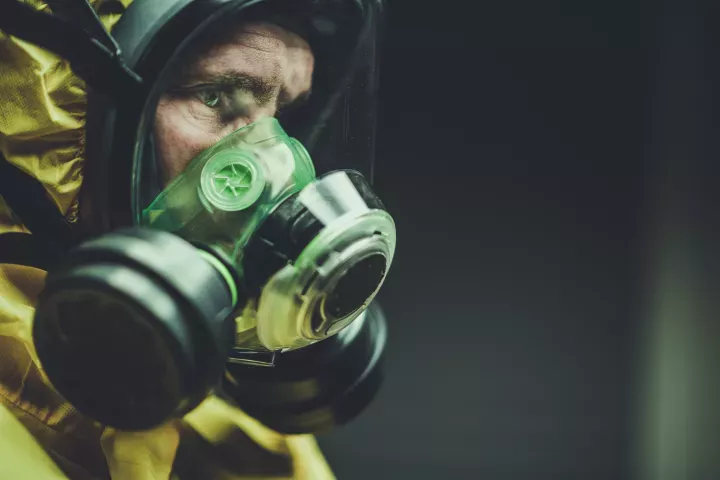
The Council of the Eurasian Economic Commission has adopted amendments to the Technical Regulation of the Customs Union "On the safety of personal protective equipment".
The amendments take into account the practical application of the regulation and provide for the inclusion of new products (along with their respective requirements), the clarification of existing requirements for regulated objects, as well as an adjustment of the conceptual framework and standard conformity assessment procedures.
For instance, the scope of the regulation will be expanded to include protective equipment against cuts from hand-held chainsaws, as well as insect and arachnid (tick) repellents, including the safety requirements for these products.
Furthermore, the existing safety requirements for a number of personal protective equipment items have been clarified – including protection against general industrial pollution, falls from a height, chemical exposure, elevated temperatures, and electric shock.
New safety requirements are being introduced for certain types of protective equipment. For example, these requirements concern the dynamic load of descender devices, including those with automatic control; the sound absorption values of hearing and respiratory protection devices; the thermal insulation performance of head and hand protection, as well as the thermal resistance and insulation of protective clothing intended for use in cold water.
In the course of updating the requirements, the terminology of the regulation is also being revised. Among other things, new terms and definitions are being introduced, such as "active substance," "protective device," "repellent," "respiratory protective device," and more.
The amendments will enter into force 12 months after their publication, with the exception of certain new requirements, the entry into force of which is linked to the inclusion of corresponding test methods in the lists of standards for the regulation.
How can we help?
In this rapidly changing regulatory environment, Schmidt & Schmidt provides comprehensive support for exporters to EAEU countries. Our service portfolio includes EAC certification, adaptation to specific product categories, and customized solutions to meet the technical and legal requirements of these markets. We are committed to facilitating companies' entry and expansion in these regions by providing the most up-to-date information and guidelines.
Technical expertise, diligence, and accuracy in the preparation of documents are prerequisites for the smooth distribution and operation of products, machinery, or equipment in the EAEU territory. Furthermore, the technical documentation must be compiled in Russian or in the official language of the respective member state where the product is to be sold or used.
To avoid any potential issues, we are happy to assist you in preparing new technical documentation or review existing documents for completeness as well as linguistic and terminological accuracy in Russian.
Thanks to years of experience, our experts can also provide you with specific industry knowledge in the fields of plant engineering, mechanical engineering, metal construction, measurement technology, electrical engineering, automation technology, medical technology, food technology, and the furniture industry.
What is an EAC Certification?
In our video, we explain what an EAC Certification is and how and where to certify or declare your products for introduction into the EAEU market.
The EAC Certification and the EAC Declaration are complex procedures that confirm your products' conformity with the applicable technical regulations of the EAEU and require extensive technical know-how. Schmidt & Schmidt offers you reliable support with certification for the Eurasian Economic Union market.