Summary: Technical Documentation & Translation for the EAEU
Accurate technical documentation is the absolute cornerstone for passing EAC conformity assessments and commissioning equipment in the Eurasian Economic Union. Schmidt & Schmidt provides GOST-compliant authoring, technical translation, and expert review of engineering files to ensure seamless market access.
- Regulatory Compliance: We prepare Technical Passports (PS), Safety Justifications (OB), and Instruction Manuals strictly following Eurasian GOST standards.
- Technical Localization: Precision translation of English or German manuals into Russian by engineers familiar with EAEU industrial terminology.
- Risk Mitigation: Flawless documents prevent customs rejections, certification failures, and delays during site commissioning (especially for hazardous facilities / OPO).
- Full-Service Engineering: From Strength Calculations to Ignition Hazard Assessments (ATEX/EAC Ex) and complex Certification Matrices for EPC contractors.
The Foundation of EAEU Conformity Assessment
The correct preparation, structuring, and translation of technical documentation is a critical prerequisite for successfully placing products on the market in the Eurasian Economic Union (EAEU).
In order to pass a conformity assessment—whether obtaining an EAC Certificate or an EAC Declaration—the manufacturer must submit a comprehensive technical dossier to the accredited certification body. Technical regulations, such as TR CU 010/2011 "On the safety of machinery and equipment" or TR CU 032/2013 "On the safety of pressure equipment", strictly define which documents are required to prove that the essential safety and health requirements have been met.
According to EAEU law, all technical documents submitted for conformity assessment must be drafted in Russian or in the official language of the Member State where the certification process is conducted.
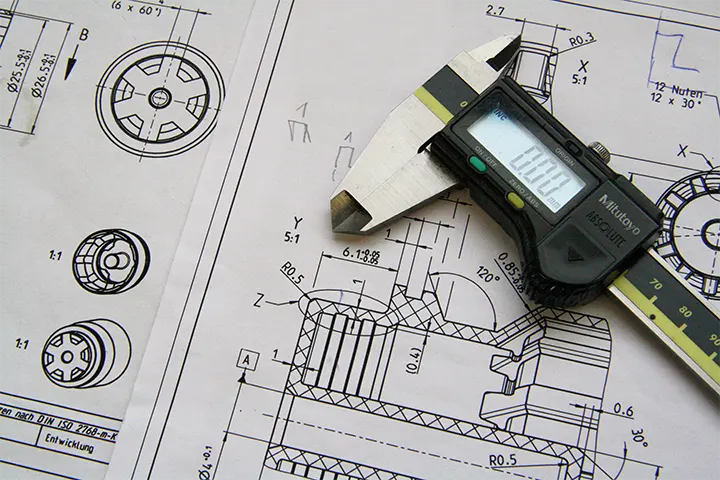
Why is the accuracy of technical documents so important?
Basis for EAC Conformity Assessment
The technical dossier acts as the legal proof of compliance. Certification experts rely entirely on these documents during the document review phase of an EAC Declaration or an EAC Certificate application. If the technical specifications, calculations, or manuals are incomplete, incorrect, or missing mandatory GOST standards, the certification body will refuse to issue the conformity document, preventing the product from entering the EAEU market.
Commissioning of Machinery and Hazardous Facilities
During the EAC Declaration process, the manufacturer bears full legal responsibility for the accuracy of the provided data. Therefore, the documents face their most rigorous scrutiny during actual commissioning on-site.
This is particularly critical for industrial plants classified as hazardous production facilities (OPO / HIF). Before such plants can be legally operated, they are subject to an Expertise of Industrial Safety (EPB) or require an official "Permit to Use". State inspectors (e.g., Rostekhnadzor in Russia) will meticulously check the translated operating manuals and technical passports. Any discrepancy or linguistic error can lead to a refusal of the commissioning permit, causing massive delays and financial losses.

Crucial aspects of documentation compliance
1. Linguistic Accuracy & Terminology
Documents cannot simply be translated word-for-word. They must utilize the correct engineering terminology as defined by the Eurasian GOST standards. Especially for the Instruction Manual, the language must be unambiguously clear to ensure safe operation.
2. Exact Technical Parameters
The technical data provided in the documents (voltages, pressure ratings, ATEX/EAC Ex zones) must correspond exactly to the parameters required by the relevant Technical Regulations. Inconsistencies cause severe customs delays.
3. Structural Completeness
EAEU regulations prescribe strict structural formats. For example, a Safety Justification for machinery must contain specific chapters detailing risk mitigation for every life-cycle stage, strictly following GOST 33855.
The most important technical documents for EAEU compliance


We translate and localize for the following sectors:





Our Complete Engineering and Translation Services
To avoid complications, customs rejections, or commissioning failures due to flawed documentation, our specialized engineers and technical translators handle the complete preparation of your dossier:
Preparation of New Documents
If you lack EAEU-compliant documentation, our engineers draft original Technical Passports, Safety Justifications, and Strength Calculations directly in Russian, strictly adhering to GOST requirements.
Technical Translation & Localization
We provide highly accurate translations of your existing English or German manuals into Russian, guaranteeing the correct usage of GOST engineering terminology.
Review & Gap Analysis
We review your existing CE technical files and translated documents for structural completeness and regulatory correctness to identify and close any compliance gaps before submission.
Verification of Technical Parameters
We cross-check the specifications inside your documentation against the limits set by the applicable EAEU Technical Regulations to ensure consistency across the entire dossier.
Costs for the preparation and translation of technical documentation
We attach great importance to price transparency. The costs for drafting, reviewing, or translating technical documents depend on several specific factors:
- The scope and word count of the text.
- The technical complexity and the specific industry sector.
- The required layout work (DTP) for integrating tables, CAD drawings, flowcharts, or graphs into the localized Russian documents.
- Whether documents are being translated from scratch or newly authored by our engineers based on your raw data.
Following an initial review of your source files, we will provide a precise, customized, and binding quotation. We offer a variety of payment options to accommodate our international clients' needs.