Summary: How Are the Costs of EAC Conformity Assessment Structured?
- No Fixed Lump-Sum Prices: The total cost of EAC conformity assessment depends on the product hazard classification, the applicable Technical Regulations (TR CU / TR EAEU), the form of proof (Certificate vs. Declaration), and the delivery type (serial manufacturing vs. batch/single unit).
- Certificate vs. Declaration as the Primary Cost Driver: An EAC Declaration is generally significantly more cost-effective (typically starting from €1,200 to €2,500), as it is primarily based on documentation reviews. An EAC Certificate mandates official laboratory testing, an on-site factory audit, and annual surveillance audits (total costs for a 5-year validity typically range from €7,000 to over €15,000).
- Consider Total Cost of Ownership (TCO): For 5-year serial certificates (Scheme 1C), initial issuance fees often account for only 50–60% of the overall budget. Mandatory annual surveillance inspections (inspection control) must be factored in from the outset to prevent administrative suspension in the official EAEU register.
- Customs-Compliant Sample Shipping (Code 061): Statutory laboratory trials require official import customs clearance of test samples under EEC Decision No. 130 using the dedicated customs procedure code 061. Low-cost certificates issued without physical sample customs entry face immediate revocation during regulatory audits.
- Strategic Cost Reduction (Compliant & Legitimate):
- Standards Demarcation: Excluding unwarranted Low Voltage certification (TR CU 004) for industrial machinery under TR CU 010 saves €3,000 to €5,000 in redundant testing expenses.
- Worst-Case Testing Families: Grouping extensive product catalogs into homogeneous model families dramatically reduces the number of required laboratory reports.
- Scheme 9C for Industrial Plants: Enables purely document-based certification of project-specific industrial equipment without destructive sample testing and without a factory audit.
- Sanctions-Compliant Execution via Kazakhstan: Schmidt & Schmidt coordinates testing, audits, and financial transactions legally in Euros through our entities in Kazakhstan—completely free from sanctions exposure under Regulation (EU) No 833/2014 and without travel restrictions for inspectors.
What Influences the Cost of EAC Conformity Assessment?
The cost of obtaining an EAC Certificate or registering an EAC Declaration cannot be answered with a flat rate. Total expenses are determined by the risk-based regulatory framework of the Eurasian Economic Union (Russia, Belarus, Kazakhstan, Armenia, and Kyrgyzstan).
While simple consumer goods follow streamlined declaration procedures, complex industrial equipment, explosion-proof assemblies, or pressure vessels require extensive safety justifications, type testing, and factory inspections.
The Six Core Cost Drivers in Project Calculations:
- Applicable Technical Regulations (TR CU / TR EAEU): Does the product fall under a single directive, or does multi-TR certification apply (e.g., Machinery + EMC + Ex-Protection)?
- Form of Conformity Assessment (Certificate vs. Declaration): Mandatory certification requires formal evaluation by an accredited certification body and incurs higher official processing fees.
- Selected Conformity Assessment Scheme: Batch deliveries (Schemes 3C, 4C, 9C) require no factory audit; 5-year serial approvals (Scheme 1C) obligate the manufacturer to initial audits and annual follow-up audits.
- Scope of Laboratory Testing: Number of model variants, destructive vs. non-destructive laboratory tests, and customs-cleared sample shipping under Decision No. 130.
- Drafting Technical Files to GOST Standards: Preparation of the Safety Justification (OB), Technical Passport (PS), and Operation Manual (RE) in Russian.
- Authorized Representative Services: Legally required representation within the EAEU customs territory by an Authorized Representative, including statutory 10-year technical file archiving.

Cost Benchmarks by Technical Regulation (Reference Overview)
The following benchmark table provides realistic cost ranges for typical industrial and consumer goods. Estimates are based on completed projects, distinguishing between initial approvals, audit requirements, and mandatory technical documentation:
| Technical Regulation (TR CU / TR EAEU) | EAC Declaration (Series / Batch) | EAC Certificate (Series) | Production Audit (Factory Visit) | Annual Surveillance Audit | GOST Files (Passport, OB, SDS) |
|---|---|---|---|---|---|
| TR CU 004/2011 Low-Voltage Equipment |
from €1,500 | from €2,800 | from €2,000 plus travel | from €1,800 | Passport: from €400 Manual: from €400 |
| TR CU 010/2011 Machinery and Equipment |
from €1,800 | from €3,200 | from €2,000 plus travel | from €2,000 | Safety Justification (OB): from €600 Passport (PS): from €450 |
| TR CU 020/2011 Electromagnetic Compatibility |
from €1,500 | from €2,500 | from €2,000 plus travel | from €1,800 | Technical Data Sheet: from €300 |
| TR CU 012/2011 Explosion Protection (ATEX) |
Declaration not permitted | from €4,800 | from €2,500 (ISO/IEC 80079-34) | from €2,500 | Ignition Hazard Assessment: from €800 Ex Passport: from €500 |
| TR CU 032/2013 Pressure Equipment (Cat. 1 to 4) |
from €2,200 (Cat. 1 & 2) | from €3,800 (Cat. 3 & 4) | from €2,200 plus travel | from €2,000 | Pressure Vessel Passport: from €650 Strength Calculations: from €800 |
| TR CU 009/2011 Perfumery & Cosmetics |
from €1,400 (Scheme 3D) from €2,200 (Scheme 6D) |
Certificate not applicable | Not required for declaration | No surveillance | SGR (Annex 12): from €3,800 Formulation Review: from €350 |
| TR CU 017/2011 Light Industry (Textiles/Apparel) |
from €900 (Layer 2/3) | from €1,900 (Layer 1) | from €1,800 plus travel | from €1,200 | Label Layout / Translation: from €250 |
| TR CU 025/2012 Furniture |
from €1,200 | from €2,200 (Children's furniture) | from €2,000 plus travel | from €1,800 | Safety Evidence: from €400 |
| TR EAEU 037/2016 RoHS (Hazardous Substances) |
from €900 (Dossier review) | Voluntary certification | Not applicable | Not applicable | Substance List Check: from €400 |
* Note: All stated budgets are net figures intended for preliminary planning. Final costs depend on model numbers, testing matrices, and auditor travel requirements.
Certificate vs. Declaration: The Structural Price Difference
An EAC Certificate systematically incurs higher expenses than an EAC Declaration. This variation is not arbitrary, but is grounded in statutory mandates regarding third-party conformity assessment involvement.
- EAC Declaration: Legal responsibility for conformity rests primarily with the applicant (Authorized Representative). The certification body merely verifies documentation completeness and registers the entry in the official EAEU register. While laboratory testing is often mandatory depending on the product (Schemes 3D, 4D, 6D), an official factory audit is not required in most cases.
- EAC Certificate: The accredited certification body assumes formal legal co-liability upon issuance. By law, it must perform an on-site production audit at the manufacturing plant prior to approval and execute recurring annual surveillance inspections throughout the 5-year validity period. These on-site operations generate auditor per diems, travel expenses, and re-testing costs.
No Freedom of Choice: The required form of proof is conclusively defined in the annexes of the relevant Technical Regulation (e.g., TR CU 010/2011 Annex 3). A manufacturer cannot opt for a declaration to reduce costs when a certificate is legally mandated—and vice versa.
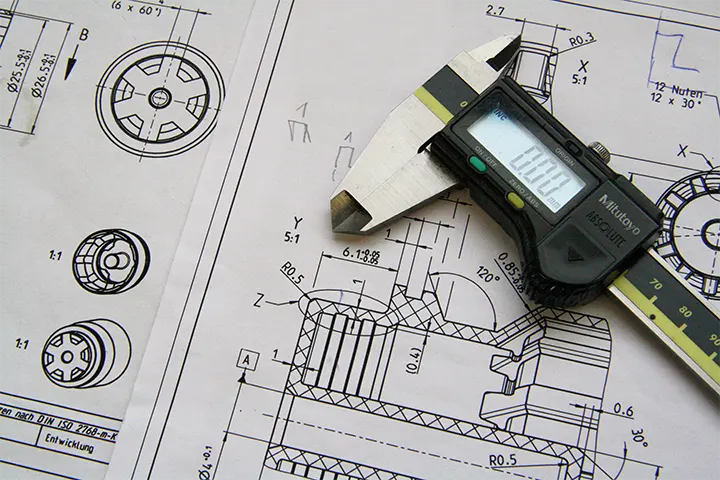
Total Cost of Ownership (TCO): Single Delivery vs. 5-Year Series
Manufacturers often compare only initial filing fees. For reliable budgeting, total lifecycle costs must be evaluated across the operational term:
| Cost Component | Single Shipment / Batch (e.g., Scheme 3C / 4C / 9C) | Serial Approval 5 Years (Scheme 1C / 3D) |
|---|---|---|
| Validity Period | Restricted to the specific delivery volume / project | Set for 1 to 5 years (Scheme 6D up to 7 years) |
| Initial Certification Fee | Moderate (technical documentation review / batch check) | Moderate to high (initial serial homologation) |
| Laboratory Testing | Sample batch testing (under Scheme 9C: €0) | Type testing in an accredited EAEU laboratory |
| Sample Logistics & Customs (Code 061) | One-time (completely waived under Scheme 9C) | One-time for representative type specimens |
| On-Site Factory Audit | No cost (not required) | €2,000 – €3,500 plus auditor travel expenses |
| Annual Surveillance Inspection | €0 (no ongoing surveillance obligation) | €1,800 – €2,500 annually (Years 2, 3, 4, and 5) |
| Authorized Representative | One-time project-based fee | Ongoing service and archiving fee (5-year coverage) |
| Financially Optimal For: | Custom machinery projects, turnkey plant delivery, one-off contracts | Ongoing serial distribution, catalog goods, mass manufacturing |
Strategic Cost Reduction: How Manufacturers Legally Protect Budgets
Sound regulatory compliance engineering allows companies to substantially reduce certification expenses in advance without compromising legal validity:
1. Standards Demarcation (TR CU 004 vs. 010)
The Pitfall: Inexperienced brokers frequently file redundant Low Voltage applications under TR CU 004/2011 for industrial machines.
The Savings: Under Article 1 of TR CU 004, machinery falling under TR CU 010/2011 is explicitly excluded from the Low Voltage directive. Electrical safety is integrated into the TR CU 010 review. The only parallel requirement is TR CU 020 (EMC). This eliminates €2,500 to €4,000 in unnecessary laboratory reports.
2. Scheme 9C for Industrial Plants
The Opportunity: When machinery or process skids are delivered to equip industrial facilities in the EAEU, Scheme 9c authorizes certification purely on the basis of technical dossier review.
The Savings: No destructive testing, no physical sample shipping, and no on-site factory visit by auditors. Typical savings: €5,000 to over €10,000 per project.
3. Worst-Case Testing Family Grouping
The Method: For extensive product catalogs, we consolidate similar models into homogeneous families based on structural design criteria (EEC Decision No. 44/2018).
The Savings: Only the model subjected to the highest operating stress (e.g., highest pressure, largest motor rating) undergoes testing. All derived variants are listed in the certificate annex without redundant laboratory trials.
4. Avoiding the "Family Cosmetics" Trap
The Hazard: Marketing standard cosmetics with slogans like "for the whole family" causes EAEU regulators to classify the product as children's cosmetics.
The Savings: Instead of a cost-effective EAC Declaration (from €1,400), the product requires lengthy State Registration (SGR from €4,000). Precise label wording prevents this exponential budget increase.
Warning on Dumping Offers: The Legal Risks of "Paper Certificates"
The market features dubious brokers advertising five-year EAC Certificates for €1,500 delivered within days. For corporate executives, this practice entails severe operational and personal liability.
How Illegitimate Certificates Originate:
These schemes rely on shell entities that generate fictitious test reports without laboratory trials and omit required factory audits. Because official registries electronically cross-check the customs entry number of test samples (procedure code 061 under Decision No. 130), counterfeit entries are uncovered during routine customs audits.
- Retroactive Revocation: The state accreditation authority shifts certificate status to "invalid" (*nedystvitelno*);
- Border Seizures: Shipments are intercepted at customs checkpoints, triggering demurrage charges and asset confiscation;
- Contractual Penalties: Industrial clients seek legal damages for operational disruptions;
- Personal Product Liability: In incident cases, management faces direct product liability exposure.
Authorized Representative: Why Distributor Solutions Prove Costly

Foreign manufacturers without a corporate seat in the EAEU cannot file certification applications directly. Many companies attempt to save administrative fees by naming a local distributor or commercial importer as applicant.
The Hidden Cost Trap: The distributor becomes the exclusive legal holder of the certificate. If commercial disputes emerge, prices shift, or a second distribution channel is established, the original importer can block certificate use. The manufacturer must then re-execute all testing, audits, and approvals from scratch.
Schmidt & Schmidt acts as an independent Authorized Representative: For a transparent annual fee, we hold your certification titles neutrally, manage mandatory 10-year technical document archiving, and ensure your ability to supply any commercial partner across the Union.
Sanctions-Compliant Billing & Execution via Kazakhstan
Handling certification fees and laboratory trials must comply with the provisions of Regulation (EU) No 833/2014 and Swiss SECO export controls.
Direct financial transactions to Russian or Belarusian testing bodies are blocked by banking compliance or risk violating sectoral sanctions and asset freezes.
Legal Certainty via Schmidt & Schmidt in Kazakhstan:
As a founding EAEU member state, Kazakhstan operates a fully recognized, state-accredited testing and certification infrastructure whose certificates carry legal validity across all member states:
- Contract execution and invoice payments are conducted legally in Euros directly through our German headquarters in Passau;
- Testing and factory audits are coordinated through our regional offices in Almaty and Astana using accredited Kazakh experts (eliminating Schengen visa barriers for inspectors);
- Sample shipments are routed via regular air cargo directly to Kazakhstan—avoiding seizure risks at EU external borders.
Detailed background information: EAC Certification in the Context of International Sanctions.
6 Steps to a Transparent Proposal with Schmidt & Schmidt
We structure your conformity assessment project with reliable cost and scheduling certainty: