Summary: TR EAEU 037/2016 on Hazardous Substances in Electrical and Electronic Equipment (EAC RoHS)
- What is TR EAEU 037/2016? The Eurasian equivalent of the European RoHS Directive, restricting the concentration of hazardous substances in electrical and electronic equipment (EEE) placed on the Eurasian Economic Union (EAEU) market.
- "Closed List" Scope (12 Categories): Unlike EU Directive 2011/65/EU (which covers all EEE unless excluded), TR EAEU 037/2016 applies exclusively to the 12 product groups listed in Annex 1 (household appliances, IT & telecom equipment, lighting, power tools, cables up to 500 V, circuit breakers, etc.).
- Restricted Substances & Amendments: Currently limits 6 hazardous substances (Lead, Mercury, Cadmium, Hexavalent Chromium, PBB, PBDE) in homogeneous materials, with draft EAEU amendments adding 4 phthalates (DEHP, BBP, DBP, DIBP) and WEEE-inspired waste disposal requirements.
- Mandatory Conformity Route: Requires a registered EAC Declaration (Schemes 1d, 2d, 3d, 4d, or 6d) filed by an EAEU-based Authorized Representative—or, at the applicant's choice, an EAC Certificate. EU RoHS declarations alone are not accepted at EAEU customs.
- Sanctions-Compliant Registration in Euros: Schmidt & Schmidt verifies Annex 1 applicability, reviews your EU RoHS test data, and registers your EAC Declaration via Germany and Kazakhstan (Sanctions Compliance).
What is TR EAEU 037/2016?
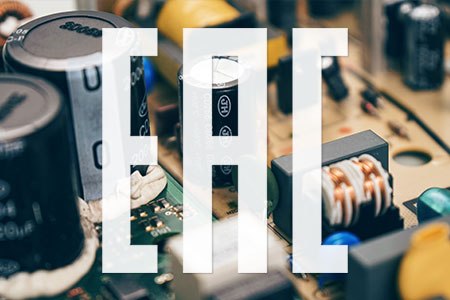
Technical Regulation TR EAEU 037/2016 "On Restriction of the Use of Certain Hazardous Substances in Electrical and Electronic Equipment" establishes mandatory environmental and product safety requirements for electrical and radio-electronic products placed on the market of the Eurasian Economic Union (EAEU) (Russia, Belarus, Kazakhstan, Armenia, and Kyrgyzstan).
Often referred to as "EAC RoHS", the regulation restricts the maximum allowable concentration of toxic heavy metals and brominated flame retardants in homogeneous materials to protect human health and the environment and prevent misleading consumer information.
- Adopted on: October 18, 2016 (Eurasian Economic Commission Council Decision No. 113)
- Entered into force on: March 1, 2018
- End of transition period: March 1, 2020 (since this date, full conformity assessment under TR EAEU 037/2016 is strictly mandatory for all covered goods)
While TR EAEU 037/2016 pursues the same environmental goals as European Directive 2011/65/EU (RoHS 2), its product scope, exemptions, and conformity assessment procedures differ substantially. Existing EU RoHS documentation and CE Declarations of Conformity do not replace a registered EAC Declaration.
Scope of Application: Annex 1 Categories & Exclusions
A decisive feature of TR EAEU 037/2016 is that it operates on a closed positive list: only products explicitly named in Annex 1 fall under its mandatory scope.
Covered Product Categories (Annex 1)
- Household electrical appliances and apparatus;
- Computers and peripheral equipment connected to computers;
- Telecommunications equipment (terminal telecom devices);
- Copying machines and other electrical office equipment;
- Electrified tools (hand-held and portable electrical power tools);
- Light sources and lighting equipment, including lighting built into furniture;
- Electronic musical instruments;
- Gaming and vending machines;
- Cash machines, ticket-printing machines, and electronic cash registers;
- Cables, wires, and cords rated up to 500 V AC/DC (excluding fiber-optic cables);
- Automatic circuit breakers and residual current devices (RCDs);
- Fire, security, and fire-security alarm detectors.
Products Outside the Scope (Exclusions)
- Electrical and electronic products rated up to 1,000 V AC or 1,500 V DC that are not listed in Annex 1 (e.g., industrial machinery, control cabinets, industrial sensors), unless otherwise specified;
- Components and spare parts intended exclusively for equipment not included in Annex 1;
- Electrical toys (regulated under TR CU 008/2011);
- Photovoltaic panels (solar modules) forming part of solar power installations;
- Equipment intended for ground-based and orbital space facilities;
- Equipment intended exclusively for air, water, road, rail, or underground transport;
- Batteries and accumulators, including those incorporated into other products;
- Used (second-hand) electrical and electronic equipment;
- Measuring instruments and medical devices.
Note: Exclusions must always be verified against the exact HS code (TN VED) and technical description in Annex 1. Exclusion from TR EAEU 037/2016 does not exempt a product from other applicable EAEU Technical Regulations (such as Low-Voltage or EMC rules).
Key Differences: EU RoHS (2011/65/EU) vs. TR EAEU 037/2016
Manufacturers exporting CE-marked electronics from Europe, North America, or Asia should pay close attention to the following regulatory differences:
| Criterion | EU Practice (RoHS Directive 2011/65/EU) | EAEU Practice (TR EAEU 037/2016) |
|---|---|---|
| Scope Principle | Open scope: Covers all electrical and electronic equipment (Category 11 catch-all) unless specifically exempted. | Closed list: Covers only the 12 specific product categories enumerated in Annex 1. |
| Restricted Substances | 10 substances (6 core heavy metals/flame retardants + 4 phthalates under Directive (EU) 2015/863). | Currently 6 core substances in Annex 2 (with 4 phthalates proposed in the EEC draft amendment). |
| Conformity Assessment | Internal production control / self-declaration (Module A) and CE marking. | Mandatory registration of an EAC Declaration in the official EAEU registry (or optional EAC Certificate). |
| Applicant / Holder | Manufacturer or EU importer. | Only a legal entity registered in the EAEU (importer or independent Authorized Representative). |
| Waste & Recycling Rules | Covered separately under EU WEEE Directive 2012/19/EU. | Being integrated directly into TR EAEU 037/2016 via upcoming amendments (crossed-out wheeled bin symbol ≥ 7 mm). |
Restricted Substances and Maximum Concentration Limits (Annex 2)
Annex 2 of TR EAEU 037/2016 defines the maximum permissible concentration by weight in any homogeneous material (a material of uniform composition throughout that cannot be mechanically disjointed into different materials), subject to the technical exemptions listed in Annex 3 (such as lead in high-melting-temperature solders or specific glass/ceramic components):
| Restricted Substance | Maximum Concentration by Weight in a Homogeneous Material |
|---|---|
| Lead (Pb) | 0.1% |
| Mercury (Hg) | 0.1% |
| Cadmium (Cd) | 0.01% |
| Hexavalent chromium (Cr VI) | 0.1% |
| Polybrominated biphenyls (PBB) | 0.1% |
| Polybrominated diphenyl ethers (PBDE) | 0.1% |
Regulatory Outlook: Planned Amendments to TR EAEU 037/2016 (Phthalates & WEEE Disposal Rules)
To further harmonize Eurasian legislation with European environmental standards—specifically EU RoHS 3 (Directive (EU) 2015/863) and the EU WEEE Directive (2012/19/EU)—the Eurasian Economic Commission (EEC) has prepared comprehensive amendments to TR EAEU 037/2016:
1. Addition of Four Phthalates & Updated Exemptions
The draft amendment expands Annex 2 by adding four restricted plasticizers, each limited to a maximum concentration of 0.1% by weight in homogeneous materials:
- Bis(2-ethylhexyl) phthalate (DEHP) – max. 0.1%;
- Butyl benzyl phthalate (BBP) – max. 0.1%;
- Dibutyl phthalate (DBP) – max. 0.1%;
- Diisobutyl phthalate (DIBP) – max. 0.1%.
In addition, the updated Annex 3 revises time-limited material exemptions (for example, limiting lead in galvanized steel up to 0.35% to a 3-year transitional period after entry into force) and clarifies exclusions for large-scale stationary industrial tools (LSSIT), large-scale fixed installations (LSFI), and professionally installed photovoltaic power systems, while expanding Annex 1 coverage for non-household appliances and accessories.
2. New Waste Disposal & Separate Collection Labelling (WEEE Alignment)

A major addition to TR EAEU 037/2016 (via a new Annex 4) introduces binding end-of-life and recycling obligations for electrical and electronic waste:
- Separate Collection Symbol: Products or their packaging—as well as accompanying operating documents—must bear the standardized crossed-out wheeled bin symbol with a minimum height of 7 mm.
- Mandatory Disclosures in the Operation Manual: Instructions must explicitly state that end-of-life equipment must not be disposed of with unsorted municipal household waste, explain potential harmful environmental and health effects of hazardous substances, and provide recycling guidance.
Conformity Assessment: EAC Declaration Schemes & Overlapping Regulations
Conformity with TR EAEU 037/2016 is confirmed by registering an EAC Declaration in the unified EAEU registry. At the applicant's request, declaration may also be replaced by a voluntary-in-form EAC Certificate (useful when certifying simultaneously under Low-Voltage and EMC directives).
Serial Production Schemes (Up to 5 Years)
- Scheme 1d: Based on the applicant's own evidentiary materials (e.g., internal factory lab reports or verified EU RoHS test reports) and production control;
- Scheme 3d: Based on sample testing conducted in an accredited EAEU testing laboratory;
- Scheme 6d: Based on testing in an accredited EAEU laboratory plus a certified Quality Management System (ISO 9001).
Batch / Single-Shipment Schemes
- Scheme 2d: For a defined contract batch based on the applicant's own evidentiary materials (valid for the specific batch quantity);
- Scheme 4d: For a defined contract batch or single unit based on sample testing in an accredited EAEU testing laboratory.
Overlapping EAEU Technical Regulations
Products falling under TR EAEU 037/2016 almost always require simultaneous conformity assessment under additional EAEU safety regulations:
- TR CU 004/2011 On safety of low-voltage equipment (for equipment operating at 50–1,000 V AC or 75–1,500 V DC);
- TR CU 020/2011 On electromagnetic compatibility (EMC) (for active electrical and electronic devices);
- TR CU 010/2011 On safety of machinery and equipment (for handheld power tools and motorized appliances).
Mandatory Documentation, Manual Disclosures & EAC Marking
To register an EAC Declaration under TR EAEU 037/2016, the applicant must compile a complete technical documentation file in Russian, including:
- Technical description, product specifications, BOM/material disclosures, and supplier RoHS declarations;
- Test reports (from an accredited EAEU laboratory or verified EU RoHS test reports under Schemes 1d/2d);
- Operation Manual in Russian stating the product type, brand, model, key technical ratings, manufacturer name and trademark, country of origin, date of manufacture, intended use, safe operation, storage, transport, fault handling, and disposal instructions;
- Details of the manufacturer and EAEU Authorized Representative, plus supply contract/invoice for batch schemes (2d/4d) or ISO 9001 certificate (6d).
EAC Conformity Marking

Once all applicable Technical Regulations (e.g., TR CU 004/2011, TR CU 020/2011, and TR EAEU 037/2016) have been fulfilled, the product must bear the EAC conformity mark. The mark must remain legible throughout the product's service life; where direct application on miniature components or cables is not feasible, placement on packaging and accompanying documentation is permitted per the regulation.
Your Added Value with Schmidt & Schmidt: Sanctions-Compliant EAC RoHS Approval
Determining whether your electrical or electronic product falls within the closed Annex 1 list of TR EAEU 037/2016—and registering the required EAC Declaration without customs delays—requires up-to-date regulatory expertise and strict export control compliance (Regulation (EU) No 833/2014 and Swiss SECO rules).
- Accurate Annex 1 & HS Code Screening: We verify whether your product requires an EAC Declaration under TR EAEU 037/2016 or qualifies for an official exemption.
- Independent EAEU Authorized Representative via Kazakhstan: We act as your registered applicant in the EAEU, coordinate Russian Operation Manuals and laboratory testing, and register your EAC Declaration in full compliance with international sanctions (Sanctions Compliance).
- Transparent Billing in Euros: All engagements are contracted and invoiced in Euros via our headquarters in Passau, with prompt delivery of all registered documents.
6 Steps to Your EAC Declaration under TR EAEU 037/2016
Contact Schmidt & Schmidt with your product description, technical specifications, and available EU RoHS documentation. Our specialists will assess the applicable conformity requirements and advise on the next steps.