Summary: EAC Conformity Assessment of Agricultural Machinery and Tractors
- Bifurcated Regulatory Framework:
- TR CU 031/2012 “On Safety of Agricultural and Forestry Tractors and Their Trailers”: Covers wheeled and crawler tractors (with a minimum design speed of 6 km/h), transport trailers, and safety-critical components (cabins, ROPS/FOPS, seats, lighting, braking systems, safety glass). The EAC Certificate is the sole admissible conformity assessment format (declarations are excluded).
- TR CU 010/2011 “On Safety of Machinery and Equipment”: Governs all trailed, mounted, semi-mounted, and self-propelled agricultural work implements (combine harvesters, seeders, tillage implements, balers, crop sprayers), as well as livestock and feed preparation equipment.
- Conformity Assessment Formats under TR CU 010/2011: Under current Annex 3, agricultural machinery is classified as high-risk equipment subject to mandatory EAC Certification (Schemes 1c, 3c, 9c). Selected auxiliary machines and industrial crawlers fall under the EAC Declaration (Schemes 1d–6d).
- Regulatory Updates & Staggered Timeline (Decision No. 36): Amendments to TR CU 010/2011 came into force on September 1, 2026. However, the revised product lists of Annex 3 do not take effect until April 1, 2028. Certificates and declarations issued prior to these amendments remain valid until their expiration, but no later than September 1, 2031.
- Surveillance Inspection Intervals (TR CU 031 vs. TR CU 010): While TR CU 010 requires annual factory surveillance under Scheme 1c, TR CU 031/2012 (Article 6, Cl. 5.6 as amended by Decision 127/2021) establishes a specific inspection cycle: not more than once a year and not less than once every two years.
- Electronic Passport for Self-Propelled Machines (ePSM): For all tractors, combine harvesters, and self-propelled sprayers, issuance and activation of an electronic machine passport (ePSM) in the unified interstate database is mandatory for customs clearance and operational road licensing.
- Multi-TR & Mechanical Interfaces: Onboard ECUs, ISOBUS terminals, and GNSS automated guidance systems fall under TR CU 020/2011 (EMC); spray tanks and pneumatic brake reservoirs fall under TR CU 032/2013. Power Take-Off (PTO) drivelines require unbroken protective shielding across the tractor, shaft, and implement connection points.
- Mandatory Authorized Representative: Foreign manufacturers without a registered legal entity in the EAEU must contractually appoint an Authorized Representative established within the EAEU customs territory.
- Sanctions Compliance via Kazakhstan: Schmidt & Schmidt provides fully compliant certification through our subsidiaries in Kazakhstan, strictly adhering to EU and US export control regulations (Regulation (EU) No 833/2014, Annexes VII and XXIII).
Safety Standards and Market Access for Agricultural and Forestry Equipment
Importing, distributing, and commissioning agricultural and forestry machinery, tractors, trailers, and implements in the Member States of the Eurasian Economic Union (Russia, Belarus, Kazakhstan, Armenia, Kyrgyzstan) requires mandatory proof of conformity with applicable EAEU Technical Regulations.
Agricultural equipment operates under severe mechanical, thermal, and dynamic stress across demanding terrains. Furthermore, the interaction between operator, heavy machinery, and rough ground conditions presents significant operational hazards. EAEU Technical Regulations establish harmonized health, safety, and environmental protection requirements across the entire product lifecycle—from engineering and fabrication to field maintenance and decommissioning.
A valid conformity document is the legal prerequisite for customs clearance, entry into national state registries, and the formal activation of the Electronic Machine Passport (ePSM).

Regulatory Division: TR CU 010/2011 vs. TR CU 031/2012
EAEU technical regulation establishes a strict legal distinction between mobile tractors/trailers and agricultural implements. This classification dictates the required conformity path and safety test protocols:
| Criterion | TR CU 031/2012 (Tractors & Trailers) | TR CU 010/2011 (Agricultural Machinery) |
|---|---|---|
| Covered Equipment & Vehicle Categories |
|
|
| Permissible Assessment Format | Exclusively EAC Certificate (declarations are legally excluded for vehicles) | EAC Certificate (Annex 3 list) or EAC Declaration (depending on equipment type) |
| Testing Baseline | Type approval testing pursuant to UN/ECE Regulations, OECD Test Codes, and EAEU standards | Type examination under the GOST EN ISO 4254 agricultural machinery safety series |
| Machine Passport Type | Electronic Passport for Self-Propelled Machines (ePSM) mandatory | ePSM for self-propelled machines; Technical Passport (PS) under GOST for mounted/trailed implements |
1. EAC Certification under TR CU 031/2012 (Tractors and Trailers)
Technical Regulation TR CU 031/2012 establishes mandatory standards for structural safety, ergonomics, and environmental impact for agricultural and forestry tractors with a design speed of at least 6 km/h.
Mandatory Test Parameters:
- Roll-Over Protective Structures (ROPS) and Falling Object Protective Structures (FOPS): Static and dynamic strength testing of protective structures or safety cabs under OECD Test Codes or GOST ISO 3471 / GOST ISO 3449.
- Operator Seat & Vibration Transmission: Measurement of whole-body vibration transmitted through the suspension seat to the driver (GOST ISO 5008).
- Field of Vision and Safety Glazing: Verification of the 360-degree operator field of vision and homologation of certified safety glass panes.
- Braking Systems: Performance verification of service, secondary, and parking brakes, including automatic breakaway braking devices for trailers.
- Acoustic Emissions: Sound pressure level limits inside the enclosed cabin at the driver's ear position and external drive-by noise limits.
- Diesel Engine Exhaust Emissions: Compliance with mandatory non-road diesel emission thresholds applicable within the EAEU.
EAC Certification Schemes under TR CU 031/2012:
| Scheme | Manufacturing Scope | Testing and Inspection Scope | Validity Period |
|---|---|---|---|
| 1C | Serial production | Type testing in an accredited testing laboratory + on-site manufacturing audit + periodic surveillance inspection (once every 1 to 2 years) | Strictly 5 years |
| 2C | Serial production (with QMS) | Type testing in an accredited laboratory + assessment of certified Quality Management System (ISO 9001 / IATF 16949) + periodic surveillance | Strictly 5 years |
| 3C | Batch delivery (contract-bound) | Testing of representative samples selected from the specific delivery batch; no factory audit required | Limited to batch volume (no time limit) |
| 4C | Single unit delivery (individual vehicle) | Testing of the specific single vehicle in an accredited testing laboratory; no factory audit required | Limited to single unit (PIN/VIN-bound) |
2. EAC Conformity Assessment under TR CU 010/2011 (Agricultural Machinery)
Agricultural implements, trailed machines, and self-propelled harvesters fall under Technical Regulation TR CU 010/2011.
Classification under Current Annex 3: Agricultural machinery is legally classified as high-risk equipment. Consequently, almost all machinery used for soil preparation, seeding, crop care, harvesting, and feed production requires mandatory EAC Certification.
Selected auxiliary implements, stationary processing conveyors, and industrial crawlers engineered for specialized earthmoving or industrial duties fall under the EAC Declaration.

Conformity Schemes under TR CU 010/2011:
| Procedure | Scheme | Scope | Assessment Scope | Validity |
|---|---|---|---|---|
| EAC Certification | 1C | Serial production | Laboratory sample testing + on-site manufacturing audit + annual surveillance audits | 1 to 5 years |
| 3C | Batch delivery | Testing of representative samples from the batch in an accredited laboratory; no factory audit | Limited to batch volume | |
| 9C | Single unit / small batch | Audit of engineering documentation and structural calculation files; non-destructive | Limited to delivery volume | |
| EAC Declaration | 1D / 2D | 1D: Serial / 2D: Batch | Manufacturer's internal test reports based on factory laboratory testing | 1 to 5 years |
| 3D / 4D | 3D: Serial / 4D: Batch | Mandatory testing of product samples in an accredited EAEU testing laboratory | 1 to 5 years | |
| 6D | Serial production | Testing in an accredited EAEU laboratory + certified ISO 9001 quality management system | Up to 5 years |
Electronic Passport for Self-Propelled Machines (ePSM)
For all self-propelled agricultural and forestry machinery (tractors, combine harvesters, forage harvesters, self-propelled crop sprayers, telehandlers), the issuance of an Electronic Passport for Self-Propelled Machines (ePSM) is legally mandatory across the EAEU.
The ePSM system (administered centrally by AO “Elektronny Pasport”) has fully replaced legacy paper passports (such as the Russian national PSM). A valid EAC Certificate constitutes the mandatory technical and legal foundation for activating the electronic machine passport in the unified interstate database.
Legal Consequence: Without an active ePSM status in the unified registry, customs authorities will not release the machine into free circulation, and national registration bodies (such as Gostekhnadzor in Russia) cannot issue road circulation and field operational permits.
Multi-TR Interfaces and Tractor-Implement Coupling
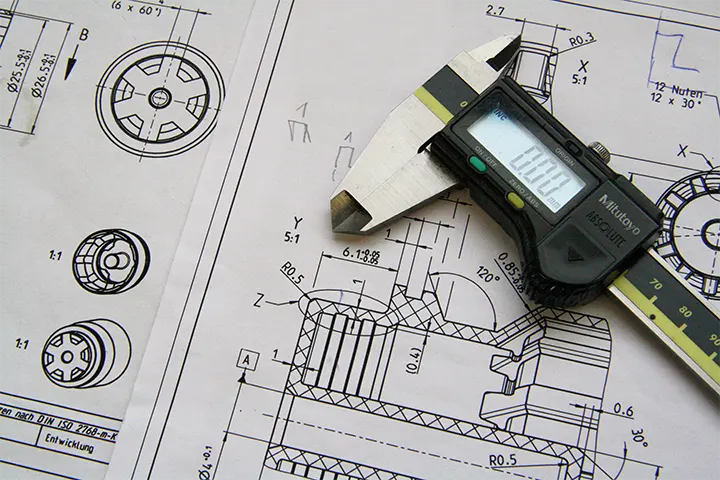
Modern agricultural machinery integrates mechatronics, satellite guidance, and high-pressure fluid circuits. Operating tractor-implement combinations introduces interface risks that must be addressed during compliance planning:
Power Take-Off (PTO) Safety
Drive shafts create severe entanglement hazards. Compliance requires complete enclosure shielding across the tractor master shield, the PTO driveline guard, and the implement input connection (GOST ISO 5673 / GOST ISO 5674).
Dynamic Axle Loads & Stability
Combining heavy mounted implements with a tractor redistributes axle loads. Steerability (minimum 20% front axle load during road transport) and braking balance must be documented in the technical pass.
TR CU 020/2011 (EMC)
Mandatory for all active electronic components, ISOBUS terminals, onboard ECUs, auto-guidance modules, touchscreens, and Doppler radar sensors.
TR CU 032/2013 (Pressure Equipment)
Applies to pressure tanks in crop sprayers, pneumatic brake air reservoirs, and hydraulic accumulators operating at pressures exceeding 0.5 bar.
FSB Notification (Telemetry & Radio)
Required for telematics units, fleet management gateways, and GNSS receivers utilizing standard commercial wireless encryption (Wi-Fi, Bluetooth, GSM/LTE).
Required Technical Documentation according to GOST Standards
European CE documentation alone is insufficient for EAEU compliance. Pursuant to TR CU 010/2011 and TR CU 031/2012, all technical files must be translated and localized into the Russian language (or the official state language of the respective Member State):
Safety Justification (OB)
Drafted in accordance with GOST 33855-2016. Contains a methodical risk assessment covering design, operation, and decommissioning. Mandatory for completing official state registration.
Technical Passport (PS)
Formulated under GOST 2.601 / GOST 2.610. Acts as the lifelong logbook of the machine, detailing technical specifications, dimensions, material certificates, lubrication charts, and warranty terms.
Operation Manual (RE)
Comprehensive instruction book outlining mechanical installation, PTO connection, hydraulic hookups, maintenance intervals, safety guard adjustments, and operator qualification requirements.
Supplementary Technical Documentation:
- Detailed assembly drawings, hydraulic schematics, and electrical circuit diagrams
- Structural strength calculations for load-bearing components (chassis frames, drawbars, three-point hitches)
- Existing OECD test reports for cabin protective structures (ROPS/FOPS) and engine emission certificates
- ISO 9001 Quality Management System certificate for the manufacturing plant
- Supply contract, commercial invoice, and shipping documentation (for batch- or unit-based certifications)
EAC Marking for Agricultural Machinery

Following the successful completion of the conformity assessment procedure, all machines and tractors must be affixed with the official EAC Mark prior to border clearance. The mark must be permanently, visibly, and indelibly stamped or printed on the machine's primary rating plate on the main chassis or cabin frame.
Mandatory Information on the Machine Nameplate:
- Full legal name of the manufacturer and registered trademark
- Exact model and commercial designation of the machine
- Vehicle Identification Number (VIN / PIN) or unique serial number
- Month and year of manufacture
- Rated engine power in kW / hp (for tractors and self-propelled units)
- Maximum permissible gross weight and axle load limits
- Country of origin
- Official EAC conformity mark (minimum height of 5 mm)
Authorized Representative in the EAEU

Foreign agricultural machinery manufacturers without a registered legal entity in an EAEU Member State cannot file for conformity assessments directly. Appointing an Authorized Representative domiciled within the EAEU customs territory is an unconditional legal requirement.
The Authorized Representative represents the manufacturer before accreditation and surveillance authorities, maintains the technical compliance file, and assumes shared legal product liability regarding mandatory safety standards.
Schmidt & Schmidt acts as an independent Authorized Representative. This structure prevents your local distributor or general importer from becoming the sole legal owner of the certificates, ensuring you retain the commercial freedom to supply multiple dealerships across the entire EAEU territory.
Sanctions Compliance for Agricultural Machinery and Heavy Tractors (EU & US)
The export of agricultural machinery, tractors, diesel engines, hydraulic assemblies, and electronic controllers is subject to strict export control restrictions under European Union regulations (Regulation (EU) No 833/2014) and US export controls (EAR).
Numerous equipment categories fall under customs tariff chapters HS 8432, 8433, and 8701. High-horsepower tractors, combine harvesters, high-pressure hydraulic proportional valves, and electronic controllers are explicitly restricted under sanctions annexes (such as Annex VII – Dual-Use or Annex XXIII – Industrial Goods). Every project requires comprehensive end-use and end-user verification (End-Use / End-User checks).
Legally Secure Routing via Kazakhstan: Schmidt & Schmidt maintains corporate offices in Almaty and Astana. As a full founding Member State of the EAEU, Kazakhstan operates accredited certification bodies and test laboratories whose certificates are recognized throughout the Union. We enable European agricultural machinery manufacturers to execute compliant testing and certification in full accordance with Western export control laws.
For detailed analysis, refer to our specialized article: EAC Certification within the Context of International Sanctions.

Duration, Costs, and Delivery of Documents
The processing timeline and costs of EAC certification for agricultural machinery and tractors depend on machine complexity, testing scope, and the selected certification scheme:
- EAC Declaration (Standard Implements): Processing time approximately 1 to 2 weeks.
- EAC Certificate (Batch / Single Unit): Processing time approximately 3 to 5 weeks (including accredited laboratory sample testing).
- EAC Certificate (Serial Production): Processing time approximately 6 to 10 weeks (including type testing and an on-site factory audit).
- Validity Period: Strictly 5 years for serial certificates under TR CU 031/2012; up to 5 years under TR CU 010/2011; limited to the delivery batch volume for batch-based schemes.
How the Certification Process Works with Schmidt & Schmidt
We manage your agricultural equipment approval project from technical classification to ePSM registry release: