
Diplomas, certificates, school-leaving certificates and other Armenian educational documents have official legal validity abroad (albeit with certain reservations). However, to be recognised and subsequently used in most other countries, they must first be legalised.
If you intend to use an Armenian diploma in a country that is a party to the 1961 Hague Convention, you can legalise it for university admission through a simplified procedure known as apostille certification.
Why and when is an apostille required?
An apostille is a special stamp that certifies the authenticity of an official document. It can be affixed to documents issued by government institutions, local authorities, educational institutions and organisations that have been granted special powers by the state.
Commercial documents cannot be apostilled. Therefore, if you have obtained a certificate for completing an educational course provided by a private company that does not hold an educational licence, it cannot be certified with an apostille. The apostille procedure can be used only for documents issued by accredited educational institutions holding an official state licence.
It is important to note that apostille certification confirms that a document has been issued and that the signature of the authorised official is authentic. However, it does not automatically grant the right to work in regulated professions, such as medicine or law, nor does it replace the recognition of higher education qualifications (nostrification).
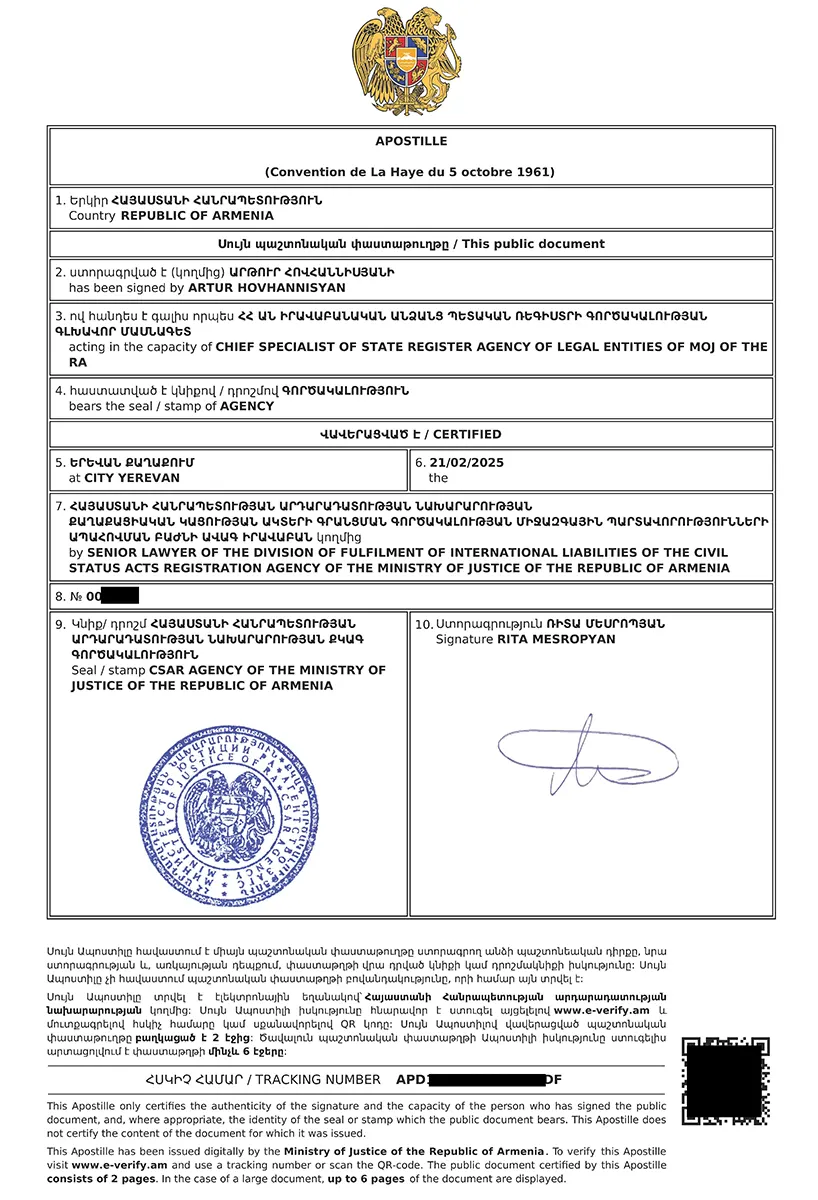
An apostille can be affixed only in the country where the document was issued. It is not possible to obtain one through diplomatic missions or consular offices.
When is an apostille not required?
When hiring employees for positions that do not involve special restrictions on access to information, most commercial organisations will not require them to have their diplomas or other educational documents legalised by means of apostille certification. Furthermore, a diploma does not need to be apostilled if a special mutual recognition arrangement for diplomas and academic degrees is in force between Armenia and another country. Such arrangements can affect eligibility for university admission or employment in a field corresponding to the qualification.
For example, Armenia is a party to the 1993 Minsk Convention and the 2002 Chisinau Convention. Therefore, an apostille is not required on diplomas obtained in Armenia for use in most CIS countries. A notarised translation of the diploma into the official language of the country where you intend to use the document is sufficient.
However, Ukraine withdrew from the Minsk Convention in December 2022, and Moldova adopted a similar decision in 2026. Therefore, Armenian diplomas and school-leaving certificates must be apostilled for use in those countries.
Before using an Armenian educational document, it is advisable to check with the receiving country whether apostille certification is required.
Educational documents issued in Armenia
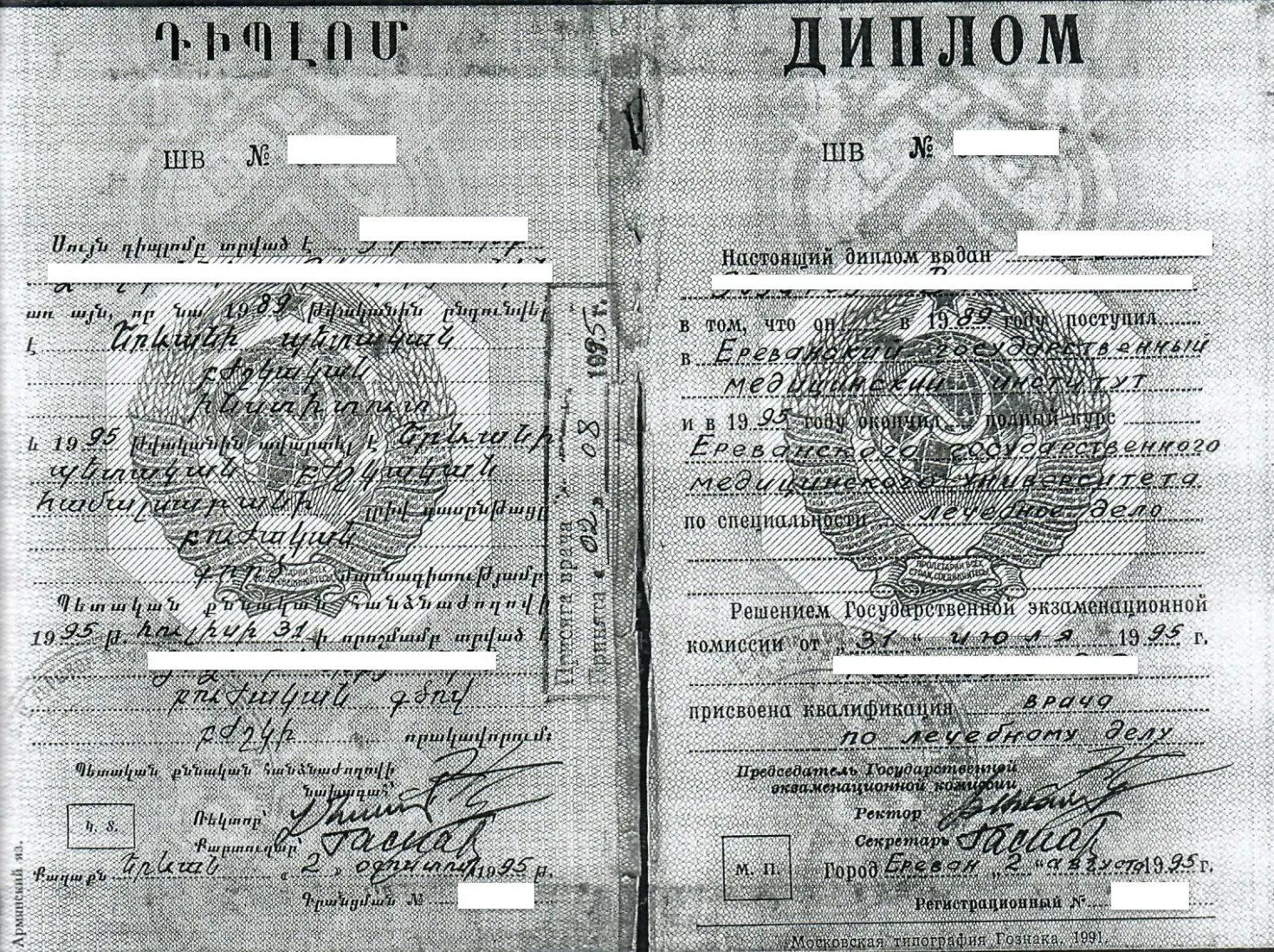
Educational documents in Armenia are issued upon completion of higher education institutions, vocational and technical schools, general education schools, courses and other educational programmes. The main types of educational documents issued in Armenia include:
- Certificate of Basic General Education (Վկայական հիմնական ընդհանուր կրթության);
- Certificate of Secondary (General) Education (Ատեստատ միջնակարգ (ընդհանուր) կրթության);
- Diploma in Initial Vocational Education (Դիպլոմ նախնական մասնագիտական (արհեստագործական) կրթության);
- Diploma of Junior Specialist (Դիպլոմ կրտսեր ճարտարագետի);
- Bachelor's degree diploma (Դիպլոմ բակալավրի աստիճան);
- Specialist diploma (Դիպլոմ մասնագետի);
- Master's degree diploma (Դիպլոմ մագիստրոսի աստիճան).
In addition, Armenia has officially approved the formats of certificates for postgraduate training, certificates conferring academic titles, and diplomas conferring academic degrees.
In certain cases, students may also receive statements or certificates.
Procedure for apostilling diplomas and school-leaving certificates in Armenia
Apostille certification of educational documents in Armenia falls within the competence of the Ministry of Justice. Since 2021, the apostille procedure in Armenia has been digitised. Applications for an apostille can be submitted either in paper form (in person, with proof of identity, the original document and a receipt confirming payment of the fee) or electronically. However, for educational documents specifically, applications can currently be submitted in person only.
A 16-digit tracking number and a QR code generated by the unified electronic management system known as the “Electronic Apostille” are affixed to the apostille. The code makes it possible to verify the authenticity of the document online by viewing its digital copy and the apostille itself.
Apostille certification in Armenia is governed by a joint order of the Armenian Ministry of Justice and Ministry of Foreign Affairs (No. 483-N of 5 October 2021 and No. 2056-N of 8 October 2021). The orders approved the “Procedure for Submitting Applications for the Certification of Official Documents with an Apostille; the Apostille Format; Verification Types and Conditions; Deadlines and Procedure for Implementing the Unified Electronic Management System ‘Electronic Apostille’; Data Storage and Destruction; Administration and Use Procedures; Technical Resources of the Unified Electronic Management System ‘Electronic Apostille’; the Procedure for Establishing Security Measures; and the List of Official Documents Subject to Apostille Certification”.
What is an apostille?
What is an apostille? Why do I need an apostille? How do I get an apostille? - Our video will explain everything you need to know about the apostille. If you have a document that needs to be certified with an apostille for use abroad, Schmidt and Schmidt will assist you! We provide apostille services in more than 100 countries worldwide.
Consular legalisation of diplomas and school-leaving certificates from Armenia
If the country in which you intend to use an Armenian educational document is not a party to the 1961 Hague Convention, such as the UAE, you will need to undergo the more expensive and complex procedure of consular legalisation to use the document.
Consular legalisation is a multi-stage procedure for verifying the authenticity of a document, used for countries that are not parties to the 1961 Hague Convention. To obtain consular legalisation for an Armenian diploma or school-leaving certificate, you must follow these steps:
- Obtain a certificate;
- Have the document legalised by the Ministry of Foreign Affairs of Armenia;
- Obtain a notarised translation of the document (if the certificate is in another language);
- Have the document legalised by the consulate or consular section of the embassy of the destination country.
Because of the number of steps involved, this procedure is time-consuming and quite expensive. Some countries do not have consulates in Armenia, so the final stage of legalisation may need to be completed in another country where the relevant consulate is located.
What is consular legalization?
In our video we are explaining what consular legalization is and where to apply for it.
Schmidt & Schmidt will assist you in all issues concerning the legalization.
Schmidt & Schmidt offers legalization in more than 80 countries all over the world.
Translation of educational documents
When using an Armenian educational document in a foreign country, you must obtain an official translation (notarised, sworn, court-certified or certified, as applicable) in accordance with the legal requirements of that country.
The translation must undergo a mandatory verification process. During this process, the completed translation is sent to the graduate for review to ensure that their first and last names, the subjects studied and the titles of academic papers have been translated correctly, as inaccuracies can arise during translation.
Depending on the requirements of national law, the official translation may be attached to a notarised copy of the document bearing an apostille.
Shipping documents from Armenia
Despite the complex international situation, it is still possible to ship documents from Armenia. However, for some destinations, shipping can only be arranged in several stages.
What comes next?
Once you have obtained a legalised diploma and a copy accompanied by a notarised translation, the documents can be considered officially suitable for use abroad.
In countries with which Armenia has no agreements on legal assistance and the recognition of foreign documents, a diploma must undergo a recognition procedure (nostrification) after apostille certification or consular legalisation and official translation before it can be used there.
How can we help?
If you are outside Armenia, we will be happy to assist you with apostille certification and legalisation of your documents for use abroad.
You can always contact Schmidt & Schmidt. We have extensive experience in legalising a wide range of documents and provide all the necessary services in this area, including obtaining notarised copies, translation, preparing the required powers of attorney, legalising documents with government authorities and foreign consulates, and delivering completed documents to most countries worldwide.
You can read more about the legalisation and apostille certification procedures on our website.