
Millions of citizens of the former USSR face the need to apostille Soviet birth certificates. However, there is no universal solution that applies to all countries of the post-Soviet space.
Although these documents were issued while the USSR existed, civil status records were maintained by the authorities of specific union republics — the RSFSR, the Ukrainian SSR, the Byelorussian SSR, and others. After the collapse of the USSR, the authority to issue duplicate documents, make amendments, and affix the apostille passed to the successor states. For this reason, any matter relating to a Soviet birth certificate can be resolved solely in the country on whose territory the document was issued.
Today, around 200 million people who were born in the USSR and received Soviet birth certificates live throughout the world. Holders of such documents live not only in the countries of the former Soviet Union, but also in Israel, Germany, the USA, Canada, Spain, Italy, the United Kingdom, Cyprus, and many other states.
Procurement of USSR documents for apostille
Before an apostille can be affixed to a USSR document, you must make sure that it is suitable for legalization. In many cases, Soviet documents issued decades ago are not accepted for apostille certification. The reason may be the poor condition of the form, the absence of required details, lamination, or loss of the original. In such situations, procurement of the document from the country where it was issued is required.
Procurement of USSR documents is the procedure for obtaining duplicate documents through civil registry (ZAGS) offices, archives, and other government institutions of the successor state. Most often, citizens procure Soviet birth certificates, marriage certificates, death certificates, and educational documents. Once a new certificate or archival document has been obtained, an apostille can be affixed in the country of issue, and the document can be used abroad to obtain citizenship, apply for a residence permit, enter into marriage, gain employment, pursue education, and complete other legally significant procedures.
Why apostilling Soviet documents is not a simple task
People born in the USSR quite often find that they need to use their Soviet birth certificate in foreign countries. If those countries are parties to the 1961 Hague Convention, the certificate must first be legalized by affixing an apostille. But how can this be done if the state that issued the certificate no longer exists?
There are no hopeless situations. That said, there is no single "recipe" that works across the entire post-Soviet space. And in a number of cases, legalization will involve certain difficulties — for example, if you have to obtain a modern duplicate of the certificate.
When a duplicate is procured, the new document is drawn up strictly on the basis of the civil status record preserved in the archives, and not on the old Soviet form. In practice, the data in the civil status record often differs from what was once entered in the "little green booklet" (owing to simple errors made by Soviet ZAGS staff when filling out documents by hand). As a result, in a modern duplicate the letters in surnames, the date of birth, the spelling of place names, or the parents' personal details may change, which leads to discrepancies with the rest of the applicant's set of documents. This is an extremely common problem, especially in the former republics of Central Asia. Further difficulties may arise from the fact that in a number of republics, duplicate documents are no longer issued in Russian and contain changes to the spelling of first names and surnames in line with current national language standards.
In some post-Soviet states, the status of USSR-era documents is a legal gap. The public legal instruments that set out the apostille procedure address the procedure specifically for the states that exist today. At the same time, most of these countries have not clearly defined at an official level their legal connection to the republics that were part of the USSR. Under Article 67.1 of the Constitution of the Russian Federation, the Russian Federation is the successor to the USSR on its territory. And the Law "On the Legal Succession of Ukraine" of 12 September 1991 proclaimed Ukraine the successor to the Ukrainian SSR and a partial successor to the USSR. But such legislative acts have not been adopted in every republic. Moreover, some of them have simply omitted from their legislation the question of legalizing Soviet documents (including birth certificates) for use abroad. In this case, the matter is resolved by means of non-public internal departmental instructions. As a result, applicants have to make inquiries individually each time.
Schmidt & Schmidt has compiled the existing practice for apostilling USSR-era birth certificates in various post-Soviet states.
Apostille in Russia
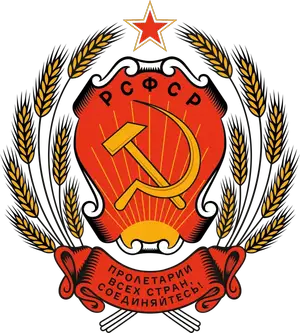
Russia recognizes USSR birth certificates on its territory. But the matter of apostilling them is rather complicated. In many constituent entities of the Federation, to apostille a USSR birth certificate you can apply to a multifunctional public and municipal services center (MFC) or to the central regional ZAGS body.
Please note: the Ministry of Justice of the Russian Federation and regional justice authorities have begun refusing en masse to apostille notarized copies of Soviet certificates if the original itself was issued in other union republics (for example, in the Ukrainian SSR or the Byelorussian SSR). They require that the document be procured and apostilled strictly in the country where the person was born. Do not waste money on notaries in Russia — this approach no longer guarantees a result.
In addition, if you were born in Crimea or in other disputed territories, European countries and the USA will definitely refuse to accept a duplicate issued by a Russian ZAGS office. Russian ZAGS offices are also currently extremely particular about foreign powers of attorney: if a document from Germany or Israel does not contain the exact wording "with the right to obtain duplicate certificates and to affix the apostille stamp," you will be refused.
There is no space for the apostille stamp on Soviet-style birth certificates. For this reason, apostilles are attached to the certificates on a separate sheet.
That said, in certain situations an apostille for Soviet birth certificates may be refused in Russia. First, certificates that are dilapidated, soiled, or otherwise damaged are not accepted for apostille certification; second, the ZAGS office will not apostille documents on which some required details are missing. For instance, in a number of regions the details of the staff who issued the documents were not entered on USSR birth certificates.
In addition, in certain constituent entities of the Russian Federation (in particular, in the Amur Region), Soviet birth certificates are not accepted for apostille at all.
If a birth certificate is damaged, is missing required details, or is not certified in a particular constituent entity of the Russian Federation, you need to apply to the ZAGS office of the relevant region for a modern-style duplicate and then apostille it at the same ZAGS office or through an MFC.
An apostille cannot be affixed in Russia to the originals of birth certificates issued in other former union republics. However, their notarized copies can be apostilled. This is done at the justice authority of the relevant region.
The originals of Soviet-style birth certificates issued within the groups of forces of the USSR Armed Forces abroad (in particular, in the GDR) cannot be certified with an apostille. You need to request information from the Unified State Register of Civil Status Records (EGR ZAGS), obtain a modern-style duplicate, and apostille that instead.
Apostille in Armenia
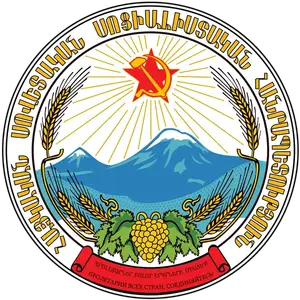
Armenia is one of the few post-Soviet states where there is no prohibition on apostilling Soviet-style birth certificates. The Ministry of Justice is responsible for apostilling birth certificates in Armenia. Since 2021, an electronic apostille system has been in operation in Armenia.
The electronic apostille in Armenia is a QR code. Be prepared for the possibility that conservative officials in Spain or Italy may be thrown off by the absence of a "wet" seal, so insist firmly at the Ministry of Justice on a paper printout with certification.
Apostille in Azerbaijan
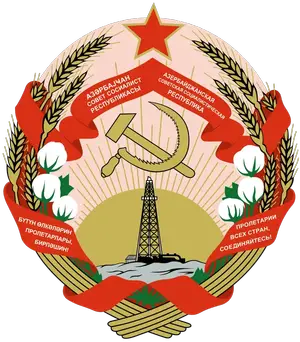
In Azerbaijan, it is not possible to apostille the original of a Soviet-style birth certificate. You need to apply to the relevant ZAGS office (through the centralized public services system via the ASAN xidmət centers or directly), obtain a modern duplicate of the certificate, and then certify it with an apostille at the Ministry of Justice (documents can also be submitted through the ASAN xidmət centers).
When a duplicate is issued, the ZAGS office will automatically replace the Soviet name of a city (for example, Kirovabad) with its modern name (Ganja). If the old name appears somewhere in your chain of documents (school certificates, passports), a serious legal deadlock will arise.
Apostille in Belarus
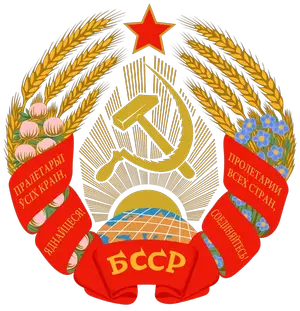
In Belarus, since 2022 apostilles have not been affixed to the originals of Soviet-style birth certificates. Those born in the Byelorussian SSR need to obtain a modern-style duplicate, which is then apostilled at the Ministry of Foreign Affairs.
The main trap is Decree No. 278. After its adoption, it became impossible to execute a power of attorney at a Belarusian consulate abroad — a document issued by a foreign notary is no longer accepted within Belarus by the ZAGS office. The only way to obtain a duplicate remotely is if you still have an old power of attorney executed on the territory of Belarus before you left.
Citizens of Belarus can affix the apostille either in person or by means of a notarized power of attorney issued by a Belarusian notary.
Since representatives of the Belarusian opposition living abroad are afraid to travel to Belarus, a number of countries (including Poland) semi-officially (through a system of "letters") allow Belarusian citizens to use Soviet birth certificates without an apostille. But this practice is unstable. Disputes over the submission of such documents constantly arise.
Apostille in Estonia
In Estonia, it is not possible to apostille the original of a Soviet-style birth certificate. You need to apply for a "certificate of a family event" at the ZAGS office in person, by email, or through a special portal. In Estonia, ZAGS documents are apostilled by notaries.
Archival extracts and duplicates are issued strictly in the state languages (Latvian, Lithuanian, Estonian) or on special multilingual CIEC forms (for the EU). Ordering a translation into Russian within these countries for subsequent use is pointless — it will have to be done again in the country of destination.
Apostille in Georgia
In Georgia, it is not possible to apostille the original of a Soviet-style birth certificate. You need to apply for a duplicate through the public services system (the House of Justice). The apostille can be affixed through the same agency.
If you were born in the territory of Abkhazia or South Ossetia during the Soviet period, the House of Justice of Georgia will not be able to issue you a duplicate, as the archives are not accessible. In this case, legalization is possible only through a lengthy judicial establishment of the fact of birth.
Apostille in Kazakhstan
In Kazakhstan, it is not possible to apostille the original of a Soviet-style birth certificate. You need to apply for a modern-style duplicate of the birth certificate through the "Government for Citizens" State Corporation (Public Service Centers — TsON). The apostille can be affixed through the same agency.
To submit an application for a duplicate through a TsON or the eGov portal, a non-resident must first obtain a Kazakhstani IIN (individual identification number) remotely. Without this digital number, the system will simply not accept the request from your representative.
Apostille in Kyrgyzstan
In Kyrgyzstan, it is not possible to apostille the original of a Soviet-style birth certificate. This rule is officially enshrined in public regulatory documents.
You need to apply for a modern-style duplicate of the birth certificate through the Tunduk app, choosing either delivery or in-person collection of the document. In Kyrgyzstan, birth certificates are apostilled by the Ministry of Justice.
Remote submission through Tunduk works perfectly only for those whose Soviet-era data has already been digitized and entered into the Unified State Population Register. If there is no record in the database, your representative with the power of attorney will have to go to the ZAGS office in person and dig through the paper archives.
Apostille in Latvia
In Latvia, it is not possible to apostille the original of a Soviet-style birth certificate. You need to apply for a modern-style duplicate of the birth certificate through the public services portal or the ZAGS offices. In Latvia, certificates are apostilled by sworn notaries.
Archival extracts and duplicates are issued strictly in the state languages (Latvian, Lithuanian, Estonian) or on special multilingual CIEC forms (for the EU). Ordering a translation into Russian within these countries for subsequent use is pointless — it will have to be done again in the country of destination.
Apostille in Lithuania
In Lithuania, it is not possible to apostille the original of a Soviet-style birth certificate. You need to apply for a special certificate (an extract from the ZAGS register). In Lithuania, birth certificates are apostilled by notary offices.
Archival extracts and duplicates are issued strictly in the state languages (Latvian, Lithuanian, Estonian) or on special multilingual CIEC forms (for the EU). Ordering a translation into Russian within these countries for subsequent use is pointless — it will have to be done again in the country of destination.
Apostille in Moldova
In Moldova, it is not possible to apostille the original of a Soviet-style birth certificate. At the regulatory level, the republic has established a ban on apostilling ZAGS documents issued before 2008. You need to apply for a modern-style duplicate of the certificate at the ZAGS office of your place of residence, the main ZAGS directorate, or the public services portal. In Moldova, birth certificates are apostilled by the Ministry of Justice through a special electronic apostille service.
A particular problem is Transnistria. Documents issued in the PMR are not recognized anywhere in the world. Those born there need to go through a "transformation" procedure — confirming the fact of birth in Chișinău, obtaining a Moldovan duplicate, and apostilling that instead.
Apostille in Tajikistan
In Tajikistan, it is not possible to apostille the original of a Soviet-style birth certificate. You need to apply for a modern-style duplicate of the birth certificate at the ZAGS office. In Tajikistan, the birth certificate is apostilled by the Ministry of Justice.
The main problem here is the preservation of the Soviet archives. A vast number of records from the 1970s and 1980s have been lost or filled out with wild errors in surnames, which is why the procurement of a duplicate through the ZAGS office often turns into the need for a manual search for documents through departmental archives.
Consular legalization in Turkmenistan
Turkmenistan is not a party to the 1961 Hague Convention, so the apostille procedure does not apply on its territory. To legalize a birth certificate, you need to apply to the Ministry of Foreign Affairs and then to the consulate (the consular section of the embassy) of the state where the document is intended to be used. As for the possibility of legalizing a Soviet-style certificate, conflicting information can be found on the Internet. There are references to consular legalization of Soviet certificates, but it is nonetheless more reliable to obtain a duplicate through the ZAGS offices.
Apostille in Ukraine
Since 2023, Ukraine officially does not accept any USSR documents for apostille, including birth certificates. You need to apply for a modern-style duplicate of the birth certificate at the ZAGS office. In Ukraine, birth certificates are accepted for apostille by ZAGS offices or notaries.
For citizens of Russia or people who have Russian/Belarusian border-crossing stamps in their passport, the procurement of duplicates is now practically blocked. Any powers of attorney executed in Russia or at Russian consulates abroad are not accepted by Ukrainian government authorities at all — the document must be executed strictly by a European notary and bear an apostille.
Apostille in Uzbekistan
In Uzbekistan, it is not possible to apostille the original of a Soviet-style birth certificate. You need to apply for a modern-style duplicate of the birth certificate at the ZAGS office. In Uzbekistan, the birth certificate is apostilled by the territorial justice authorities.
Besides the fact that the Soviet archives are often lost or filled out with errors, here there is a wild pitfall involving the disappearance of the patronymic. In the "first name" field they will write, say, Artur, while the "patronymic" field on the new form may simply be left blank. When this apostilled duplicate arrives in Germany or Israel, the official will say: "In your old Soviet copy you are Artur Borisovich, but here you are just Artur. These are two different people." You then have to obtain an additional certificate confirming that this is one and the same person.
What is an apostille?
What is an apostille? Why do I need an apostille? How do I get an apostille? - Our video will explain everything you need to know about the apostille. If you have a document that needs to be certified with an apostille for use abroad, Schmidt and Schmidt will assist you! We provide apostille services in more than 100 countries worldwide.
Translation of a birth certificate
When a birth certificate is used in a foreign country, an official translation is generally required — notarized, sworn, or certified, depending on the requirements of the legislation of the country of destination.
The translation of a birth certificate calls for particular care: first names, surnames, and place names must be rendered accurately and in accordance with the transliteration standards accepted in the country of destination. To avoid inaccuracies, the prepared translation undergoes a procedure of verification against the original.
Depending on the requirements of the receiving party, the official translation may be attached to the apostilled original or to a notarized copy of the certificate.
Sending documents from post-Soviet states
If you live outside the country where the birth certificate was issued, obtaining a duplicate and an apostille remotely is realistic. Despite the difficult international situation, sending documents from most post-Soviet states is possible, although in a number of destinations it is carried out in several stages.
Specialized companies take on the entire cycle: requesting a duplicate from the ZAGS offices, apostilling, translation, and delivery of the completed documents to the applicant's country of residence.
How can we help?
If you are outside the country where your Soviet birth certificate was issued, Schmidt & Schmidt is ready to take on the entire process of legalizing the document.
We provide a full range of services: obtaining a duplicate of the certificate from the ZAGS offices, apostilling, notarized translation, if necessary consular legalization, and delivery of the completed documents to most countries of the world.
You can read more about the legalization and apostille procedure on our website.