Home

Main navigation

  • News
  • Services
    • Certification for Kazakhstan and EAEU
    • Apostille and consular legalization of foreign documents
    • Extracts from foreign commercial registers and accounting statements
    • Extracts from foreign land and property registers
    • Procurement of documents worldwide
    • Certified translations for international document processing
    Our Services
    Our Services

    Document legalization & procurement: apostille and consular legalization for any country. Extracts from commercial registers and land registries from 100+ countries. Official documents from foreign authorities and archives. Notarized translations. EAC certification for exports to the Eurasian Economic Union.

    Personal and corporate documents. Fixed pricing, clear timelines, dedicated project manager for every project.

  • Company
    • Team
    • Our references
    • Our story
    • Customer reviews
    • Affiliate program
    Our Company
    Our Company

    Schmidt & Schmidt is an internationally operating consulting company based in Passau. We specialize in document legalization and procurement, as well as EAC certification for exports to the Eurasian Economic Union.

    We work from offices in Germany (Passau), Turkey (Ankara), Kazakhstan (Astana), and China (Shanghai). Services available in English, German, Turkish, Chinese, and other languages. More than 10,000 completed projects since 2011.

  • Career
    • Employee onboarding
    • Remuneration
    • What to expect when you apply?
    Join our Team!
    Career opportunities

    Since our foundation, we have been helping clients worldwide with comprehensive corporate services, EAC certification, document procurement, and legalization. We work directly with government authorities and embassies in over 100 countries through our offices in Germany, Turkey, Kazakhstan, and China.

    If you are interested in joining a dynamic, fast-growing international company with excellent opportunities for career advancement, we look forward to receiving your resume.

  • Contact

Selection and shipment of samples for EAC Certification and EAC Declaration

EAC Certification consulting
  • Competent
  • Swift
  • Reliable
Apply for certification
EAC Certificate of Conformity to Technical Regulations of the Eurasian Economic Union
  1. Home
  2. Services
  3. Certification for Kazakhstan and EAEU
  4. Selection and shipment of samples for EAC Certification and EAC Declaration

Contact person

Marina Weger

Marina Weger

Senior consultant
+49 851 226 083 3
marina.weger@schmidt-export.com

Table of Contents

  1. Summary: Selection, Sampling, and Dispatch of Test Samples
  2. Why Legally Compliant Sample Import Determines Certification Success
  3. Statutory Framework: EEC Decision No. 130 and Procedure Code 061
  4. Sample Selection and Sampling Protocols (Sampling under GOST 58972-2020)
  5. Sample Quantities, the Worst-Case Principle, and Testing Groups
  6. Critical Warning: No EAC Marking on Test Samples!
  7. Conditional Release of Industrial Equipment (Art. 126 EAEU Customs Code)
  8. Sanctions Compliance & Secure Sample Dispatch via Kazakhstan
  9. Step-by-Step Sample Shipping Workflow with Schmidt & Schmidt

Summary: Selection, Sampling, and Dispatch of Test Samples

  • Mandatory Customs Procedure under Decision No. 130: Test samples for EAC conformity assessment must never be imported as standard postal parcels ("samples of no commercial value") or in passenger hand luggage. Customs clearance under an official customs declaration (DT) utilizing the dedicated customs procedure code 061 ("goods imported as samples and specimens for research and testing") is legally mandatory.
  • The Critical Risk of Simplified Postal Declarations: Following the comprehensive digitalization of state registers, the DT registration number is electronically matched with customs databases upon certificate issuance. If an official customs declaration under code 061 is missing, the registry software automatically blocks the entry of the test report, or the certificate is declared null and void during regulatory post-clearance audits.
  • Sampling Protocol under GOST 58972-2020: Sample selection follows rigorous regulatory standards. For EAC Certification (Scheme 1c), sampling must be executed directly at the manufacturing plant by accredited assessors and documented in an official Sampling Act (*Akt otbora prob*); for EAC Declarations, the manufacturer selects representative specimens under its own responsibility.
  • Strict Prohibition of Markings Prior to Approval: Prior to the formal completion of conformity assessment, test samples must not bear an EAC Mark. Affixing the conformity mark before certificate issuance is classified by customs authorities as an act of consumer deception and will result in immediate customs seizure.
  • Conditional Release (Art. 126 EAEU Customs Code): For large, non-divisible industrial machinery, goods may be imported under customs supervision and assembled directly at the recipient's bonded premises prior to testing. The importer is granted a strict statutory deadline of 45 days to complete on-site testing and submit the final EAC Certificate to customs.
  • Sanctions-Compliant Logistics via Kazakhstan: As test sample shipments directly to Russia or Belarus are blocked by Western trade embargoes (Regulation (EU) No 833/2014, Annexes VII and XXIII) and carrier suspensions, Schmidt & Schmidt routes sample logistics directly to accredited testing centers in Kazakhstan—fully transport-secure and compliant with international sanctions.

Why Legally Compliant Sample Import Determines Certification Success

Importing product samples for conformity assessment within the Eurasian Economic Union (Russia, Belarus, Kazakhstan, Armenia, Kyrgyzstan) involves a tightly interconnected framework of customs law and technical regulation.

In past years, manufacturers frequently dispatched test specimens via standard courier express with proforma invoices under 200 Euros declaring "samples of no commercial value." In the current regulatory environment, this practice inevitably leads to project failure: state supervisory agencies (such as Rosakkreditatsiya in Russia or the NCA in Kazakhstan) have synchronized their digital platforms directly with state customs clearance databases.

Consequences for International Exporters: When uploading the test report into the centralized state registry, the system mandates the entry of the official customs declaration number (DT) for the tested samples. If this customs record cannot be verified, the certification body is legally barred from issuing the registration—or the certificate will be revoked retroactively during post-clearance customs audits, leading to administrative fines and immediate border blockades.

Sample Shipment for EAC Certification and Declaration

Statutory Framework: EEC Decision No. 130 and Procedure Code 061

The statutory basis for sample importation is established by EEC Board Decision No. 130 ("On the Regulation on the Procedure for Importing Products...") in conjunction with Customs Union Commission Decision No. 378:

  • Customs Procedure Code 061: In Box 37 of the customs declaration (DT), the declarant must explicitly state procedure code 061 ("goods imported as samples and specimens for research and testing"). Box 31 must include the mandatory notation: "Samples for the purpose of confirming compliance with TR CU/TR EAEU technical regulations".
  • Mandatory Tripartite Documentation: The customs entry dossier must include:
    • The formal contract between the foreign manufacturer (or its Authorized Representative) and the accredited certification body or testing laboratory;
    • An official notification letter issued by the certification body confirming the exact sample quantities (unit count, weight, dimensions) strictly required for the test program;
    • A proforma invoice containing explicit model codes, part numbers, and serial designations matching the technical dossier.
Warning Regarding Simplified Postal Clearance: While customs legislation provides simplified procedures for low-value mail shipments below certain thresholds, these mechanisms do not generate a full DT customs declaration with procedure code 061. Because official EAEU registries require a verified DT number for serial certification, we strongly advise international manufacturers against sending unescorted test samples via standard postal channels.

Sample Selection and Sampling Protocols (Sampling under GOST 58972-2020)

Sampling procedures are governed by the intergovernmental standard GOST 58972-2020 ("Conformity assessment. General rules for sampling for product testing"). This standard ensures that selected units are fully representative of ongoing serial manufacturing:

Procedural Parameter EAC Certification (e.g., Scheme 1c, 2c) EAC Declaration (e.g., Scheme 3d, 6d)
Who conducts sampling? An accredited assessor from the certification body or an authorized inspection body on-site at the factory. The manufacturer independently or its appointed authorized representative in agreement with the laboratory.
Sampling Location Finished goods warehouse at the manufacturing facility or a bonded customs warehouse prior to final clearance. The manufacturer's plant, distribution warehouse, or finished goods inventory.
Mandatory Document Official Sampling Act (*Akt otbora prob*), signed by the auditor and plant director, stamped with the factory seal. Internal manufacturer sample dispatch sheet documenting batch numbers, manufacturing dates, and origin.
Verification of Representativeness Randomized selection from a completed, quality-cleared commercial batch; samples must be identical to serial production. Selection of a worst-case representative model in accordance with the technical specifications.

Sample Quantities, the Worst-Case Principle, and Testing Groups

Determining the required sample quantity depends on the test methods applied (destructive vs. non-destructive testing) and the prescriptions of the applicable Technical Regulations.

The accredited certification body issues an official sampling quantity notification to the manufacturer. Typical industry benchmarks include:

  • Industrial Machinery and Equipment (TR CU 010/2011): Typically 1 unit per representative product line (testing is generally non-destructive);
  • Low-Voltage and EMC Equipment (TR CU 004/2011 / TR CU 020/2011): 1 to 2 units (allowing parallel testing for electrical safety and electromagnetic compatibility);
  • Textiles and Apparel (TR CU 017/2011): 3 to 5 units per material composition (destructive testing for tensile strength, colorfastness, and hazardous chemical content);
  • Personal Protective Equipment (TR CU 019/2011): Frequently multiple pairs or units, as helmets, fall arrest harnesses, and safety shoes undergo destructive impact and puncture testing.

Cost Optimization through Testing Families: For diverse product portfolios with multiple configurations, our engineering team constructs homogeneous testing groups. We select and test the single model operating under the highest mechanical, electrical, or thermal stress levels (the "worst-case" model). Once it passes laboratory trials, all derived models are included in the certificate appendix without duplicate testing.

Sample Selection Using the Worst-Case Principle

Critical Warning: No EAC Marking on Test Samples!

Labeling Prohibition Prior to Approval: At the time of customs transit and laboratory evaluation, test samples must under no circumstances bear the EAC Mark. EAEU law strictly forbids affixing conformity markings prior to the formal conclusion and registration of the conformity assessment. A test sample carrying a premature EAC logo is treated by customs officers as an act of fraud and is liable to administrative confiscation. The EAC mark may only be affixed to serial products after the certificate is legally registered.

Conditional Release of Industrial Equipment (Art. 126 EAEU Customs Code)

For heavy industrial machinery, large power transformers, or pressure vessels that cannot be evaluated within a testing laboratory, EAEU customs law provides the statutory mechanism of Conditional Release (*Uslovny vypusk*).

Pursuant to Article 126 of the EAEU Customs Code and national implementing statutes (such as Russian Federal Law No. 289-FZ), customs authorities may authorize the release of goods before conformity certificates are finalized:

  • Purpose-Bound Transit: The machinery is transported under customs bond directly to the final installation site (e.g., the customer's manufacturing plant or a bonded facility);
  • Use Restriction: Pending certificate issuance, the machinery may be physically erected and installed, but must not be put into commercial operation or transferred to third parties;
  • 45-Day Statutory Window: The importer is granted a strict statutory window of up to 45 days to host accredited experts for on-site witness testing, execute mandatory trials, and submit the final EAC Certificate to customs;
  • Release into Free Circulation: Only upon electronic verification of the submitted certificate does customs grant final, unconditional release into free circulation.
Conditional Release of Industrial Equipment under Art. 126

Sanctions Compliance & Secure Sample Dispatch via Kazakhstan

Under international sanctions frameworks (EU Regulation (EU) No 833/2014 and Swiss SECO export controls), dispatching commercial prototypes or engineering samples directly to Russia or Belarus creates severe regulatory and legal liabilities for corporate executives.

Primary Trade and Operational Hurdles:

  • Dual-Use & Goods Embargoes: Numerous industrial machines, valves, electrical modules, and advanced polymers fall under strict export bans (Annexes VII and XXIII); shipping functional samples to Russian test institutes constitutes an export violation;
  • Sanctioned Test Centers: Multiple state-run testing bodies in Russia appear on international sanctions lists, resulting in financial transaction blocks by Western banks;
  • Logistics Bottlenecks: Major international freight and express delivery services (DHL, FedEx, UPS) have suspended operations to Russia; test shipments routed across EU external land borders face systematic interception and seizure.

The Legally Secure Route via Schmidt & Schmidt in Kazakhstan:
As a founding EAEU member state, Kazakhstan operates a fully harmonized, internationally recognized accreditation infrastructure:

  • Test samples from Western manufacturers are routed directly to our regional offices or accredited partner laboratories in Almaty or Astana—completely compliant with export control regulations and shipped via routine air freight;
  • Testing is executed according to identical intergovernmental GOST standards; the generated test reports and resulting EAC certificates possess full legal validity across all EAEU member states;
  • All commercial contracts and service billings are handled in Euros through our German corporate headquarters in Passau;
  • Operating as an independent Authorized Representative, we ensure your ownership rights over test reports and technical files remain entirely independent of local distributors.

For detailed background analysis, consult our briefing: EAC Certification in the Context of International Sanctions.

Sanctions-Compliant Sample Shipping via Kazakhstan

Step-by-Step Sample Shipping Workflow with Schmidt & Schmidt

We manage your testing logistics smoothly through all customs and laboratory phases:

01 Test Program Structuring

We coordinate applicable GOST test standards with the accredited laboratory and determine the minimal, legally compliant sample quantity.

02 Sampling Act & Contracts

We draft the formal Sampling Act (*Akt otbora prob*) and conclude testing service agreements with the accredited test center.

03 Customs Documentation Drafting

We prepare the proforma invoice with mandatory statutory notations and obtain the official notification letter from the certification body.

04 Clearance under Code 061

Our customs brokers manage official import clearance for the test samples under mandatory procedure code 061, securing the verified DT number.

05 Laboratory Testing Oversight

Samples undergo testing in the laboratory; our technical engineers monitor testing progress and ensure compliance with project timelines.

06 Report Handover & Certificate Issuance

Once test reports are finalized, the EAC Certificate is formally registered. All original records are delivered to you via express courier.

updated: 11 November 2026
Apply for certification

What is an EAC Certification?

In our video, we explain what an EAC Certification is and how and where to certify or declare your products for the introduction on the EAEU market.

The EAC Certification and the EAC Declaration are complex procedures that attest your products the conformity with the technical regulations of the EAEU and require a lot of know-how. Schmidt & Schmidt will support you with the certification of your products for the EAEU market.

EAC certification for the Eurasian Economic Union is our core expertise

Who we are

Schmidt & Schmidt Exporting to the Eurasian Economic Union requires EAC certificates and technical conformity assessments. We've been working with EAEU technical regulations since 2011 and have developed a clear process with understandable steps.

We help you prepare all required technical documentation and technical passports for your products. Our specialists review your technical files, identify gaps, and ensure complete compliance with EAEU technical regulations. This is often the most critical step in the certification process.

Schmidt & Schmidt works directly with accredited certification bodies in Kazakhstan, Belarus, Armenia, and Kyrgyzstan. We serve manufacturers of machinery, industrial equipment, electrical devices, and medical technology. Each project has a dedicated project manager who explains every step in English. Transparent procedures, fixed pricing, quick results.

Frequently asked questions about EAC certificates and declarations

1. What is an EAC certificate?

The EAC certificate of the Eurasian Economic Union (EAEU) is an official document that proves the conformity of products with the harmonized technical regulations of the EAEU member states. Products whose conformity with the technical regulations is confirmed by an EAC certificate may be moved and sold within the entire customs territory of the EAEU.

2. What is an EAC declaration?

The EAC declaration of the Eurasian Economic Union (EAEU) is an official document that confirms that products meet the minimum requirements of the technical regulations of the EAEU. An EAC declaration is issued by the manufacturer, the importer or an authorized representative and is registered in the official EAEU register. Products whose conformity with the technical regulations is confirmed by the declaration may be freely moved and sold within the customs territory of the EAEU member states.

3. What is the difference between an EAC certificate and an EAC declaration?

The EAC certificate is issued only after a conformity assessment carried out by a certification body accredited in one of the EAEU member states. Certification is based on technical documentation, internal test reports or test reports provided by accredited laboratories, and, where applicable, on-site production audits. The certificate is printed on an official secure form and authenticated by the signature and seal of the accredited body. It is usually issued for "complex" products that require enhanced control by the authorities.

With the EAC declaration, the manufacturer, importer or authorized representative declares the conformity of the products with the minimum requirements of the EAEU technical regulations. Unlike the certificate, the declaration is formally issued by the applicant. Tests can be carried out internally or by a laboratory. The EAC declaration is drawn up on regular paper but must be registered in the unified EAEU register by an accredited certification body.

4. How long does the EAC certification process take?

The duration of the EAC certification process depends on the product type, the applicable technical regulations and the required scope of testing. For straightforward products it may take a few weeks, while complex projects with laboratory tests and a production audit can take several months. A complete and well-prepared technical documentation significantly reduces processing time.

5. How long is an EAC certificate or declaration valid?

The validity period of an EAC certificate or declaration is defined by the applicable technical regulations and the chosen certification scheme. One-time deliveries are usually certified for a specific batch, while serial production can be certified for several years, provided that all conditions are met. For long-term certificates, regular inspections or surveillance audits may be required to maintain validity.
You find more answers here!
Frequently asked questions about EAC certificates and declarations
 EAC conformity  Consulting

Consultancy on EAC conformity assessment

Many exporters find it difficult to keep track of the large number of technical rules and regulations between EAC marking, EAC certification und EAC declaration , state registration and GOST norms. In order to ensure a smooth entry into the EAEU market, we offer a wide range of seminars, lectures, workshops and consultancy services that can be customised to meet individual needs.

Among other things, we share in-depth knowledge of the technical regulation and certification system of the EAEU, as well as the individual steps of conformity assessment and the preparation of the necessary technical documentation.

Thanks to their many years of experience, our experts can also provide you with specific industry knowledge from plant engineering, mechanical engineering, metal construction, measurement technology, electrical engineering, automation technology, medical technology, food technology and the furniture industry.

Request consultation!
Preparation of technical documentation

Preparation of technical documentation for EAC certification

The technical documentation plays a major role in introducing new products to the Eurasian Economic Union. They not only provide the basis for conformity assessment, but are also crucial when commissioning, for example, a new machine. Especially the following documents are important:

Technical Passport
Safety justification
Instruction Manual
Safety Data Sheet
Test Report
Ignition Hazard Assessment

Technical expertise, diligence and accuracy in the preparation of the documents are one prerequisite for problem-free distribution and use of the products, machines or plants in the area of the EAEU. It is also mandatory to write the technical documentation in Russian or in the official language of the respective member country in which the product is to be distributed or used.

To avoid any problems, we will be happy to help you create new technical documents or check existing documents for completeness, as well as for linguistic and terminological correctness in Russian.


Request the preparation of technical documents!
Type examination for EAC conformity assessment

Type examination for EAC conformity assessment

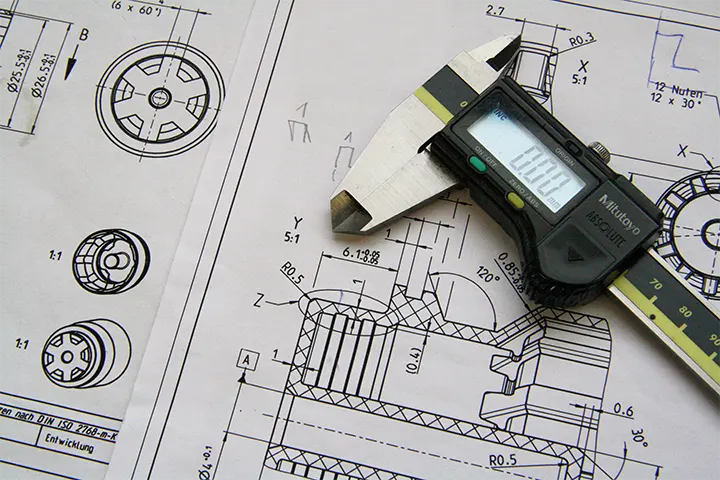
An important step in the conformity assessment procedure is the testing of product samples, during which the conformity of the products with the respective Technical Regulations of the EAEU is verified. In the case of EAC certification, this may only be carried out in accredited laboratories and must follow specific rules. If it is an EAC declaration, the tests can also be carried out in non-accredited laboratories. A test report is then prepared, which contains the test results as well as information about the manufacturer and the test method.

There are some important points to consider in both the shipment of the samples and the testing process itself. Unfortunately, some unserious certification bodies have also gained access to the market, so great care must be taken when choosing a certification body. To ensure that the sample examinations run smoothly, we support you in

  • the selection of suitable samples for testing,
  • customs clearance
  • and referral to trusted certification bodies and testing laboratories.
Request type examination!
Technical translation

Technical translation

In order to export goods and equipment to EAEU countries, technical documents and their correct translations into Russian or into the official language of the EAEU member must be submitted. To translate such documents, the translator must have extensive knowledge of a specific technical area as well as knowledge of highly specialized terminology.

Our specialists have many years of experience in the translation of technical documents such as operating manuals, technical passports, safety considerations, risk assessments, device passes, test reports, etc. Schmidt & Schmidt's translators speak Russian, English, German, French and Italian.

We guarantee you a timely, high-quality and accurate translation of all required documents.

Order a technical translation!

Why clients choose us

Qualified Team of Experts

Our specialists have many years of hands-on experience in export certification for the Eurasian market.

Certification of All Product Types

We work with clients from all branches of industry — from machinery and electronics to food and cosmetics.

Fast Order Processing

We handle each client's needs individually and process requests quickly to meet your deadlines.

Deep Knowledge of Technical Regulations

Our technical and legal expertise ensures full compliance with EAEU requirements and high quality of service.

Free Delivery of Documents

Your certified documents will be delivered free of charge in the shortest possible time.

Access to Five Markets at Once

An EAC certificate is valid across all five EAEU member states: Russia, Kazakhstan, Belarus, Armenia, and Kyrgyzstan.

Subscribe to our newsletter.

Stay informed on our latest news.

Subscribe

News EAC certification

Anti-Circumvention Measures of the 20th Russia sanctions package of the EU

Anti-Circumvention Measures of the 20th Russia sanctions package of the EU

On 23 April 2026, the European Union adopted Council Regulation (EU) 2026/506, introducing another package of sanctions against Russia. The regulation expands existing restrictions, strengthens anti-circumvention measures, and introduces new compliance obligations for businesses operating internationally.

Marina Weger
27 May 2026
Important changes of TR CU 032/2013 Safety of pressure equipment

Important changes of TR CU 032/2013 Safety of pressure equipment

On 22 May 2026, Order No. 71 of the Board of the Eurasian Economic Commission (EEC), dated 19 May 2026, was officially published. The document approves a draft amendment to Technical Regulation TR CU 032/2013 “On the Safety of Equipment Operating Under Excessive Pressure”.

Marina Weger
26 May 2026
Technical Regulation for machinery and equipment enters into force in a new version from September 1, 2026

Technical Regulation for machinery and equipment enters into force in a new version from September 1, 2026

On April 8, 2026, Decision No. 36 of the Council of the Eurasian Economic Commission (EEC) dated March 13, 2026, was officially published. This decision introduces significant amendments to the Technical Regulation of the Customs Union "On the safety of machinery and equipment" (TR CU 010/2011).

Marina Weger
20 April 2026
Amendments to the Technical Regulation "On the safety of personal protective equipment"

Amendments to the Technical Regulation "On the safety of personal protective equipment"

The Council of the Eurasian Economic Commission has adopted amendments to the Technical Regulation of the Customs Union "On the safety of personal protective equipment".

The amendments take into account the practical application of the regulation and provide for the inclusion of new products (along with their respective requirements), the clarification of existing requirements for regulated objects, as well as an adjustment of the conceptual framework and standard conformity assessment procedures.

Marina Weger
30 March 2026

Pagination

  • Next page ››

Our team

Alexej Schmidt

Alexej Schmidt

Managing partner
Andrej Schmidt

Andrej Schmidt

Managing partner and head of marketing and distribution department
Dr. Olga Kylina, LL.M.

Dr. Olga Kylina, LL.M.

Senior consultant, head of legal services department
Marina Weger

Marina Weger

Senior consultant
Valeria Nikolaeva

Valeria Nikolaeva

Senior consultant
Anna Khan

Anna Khan

Senior consultant

Pagination

  • Next page ››

Our customers are our pride

Ziehm Imaging GmbH
Voith
EMAG Maschinenfabrik GmbH
WEGeuro, S.A.
Profuga GmbH
Karl Dungs GmbH & Co. KG
Helaba - Landesbank Hessen-Thüringen
Plattenhardt + Wirth GmbH
EAC Certificate
Shell
NETZSCH
EagleBurgmann
EAC Certification TR CU 012/2011
EAC declaration of conformity
EAC Certification
EAC
Thomas-Krenn AG
Schoepf GmbH
Thyssenkrupp
BNP Paribas
Commercial Register extract
logistics germany russia
import to Russia
TR CU certificate
TR CU certificate
extract from trade register
TR CU certificate
certification for Russia
EAE certification
EAE certification
certification for Russia
Export to Russia
EAE certification
Hofmann Maschinen- und Anlagenbau GmbH
EAE certification
extract from trade register
EAE certification
EAE certification
extract from trade register
certification for Russia
Export to Russia
extract from trade register
delivery from Germany
eac certificate
Trade register extract
eac certificate
Dassault Systemes
EAC-Certification
Raiffeisen
HOCHTIEF
ABB
EAC Certification
Legalisation von Dokumenten und Apostille
EAC Certification
Eaton
Schmidt & Schmidt OHG
+49 851 226 083 01
kontakt@schmidt-export.de

Bahnhofstrasse 32
94032 Passau
Germany
LLP Schmidt & Schmidt
+7 717 269 6317
kontakt@schmidt-and-schmidt.kz

md. Samal, 12
010000 Astana
Kazakhstan
Shanghai Schmidt Business Consulting Co., Ltd.
+86 130 021 859 39
contact.shanghai@schmidt-export.de
WeChat: 13002185939

Room 206-A22, Building B, No. 1602 Zhongshan West Road
Xuhui District
200233 Shanghai
China
Schmidt and Schmidt Danışmanlık LTD. ŞTİ.
+90 312 963 212 9
kontakt@schmidt-export.de

Kızılırmak Mah. Dumlupınar Blv
No:3C-1, İç Kapı:160, Next Level
06520 Çankaya Ankara
Türkiye
Visa
Mastercard
SEPA Überweisung
PayPal
UnionPay
Alipay
Wise

Footer menu

  • Contact
  • Guarantee
  • Imprint
  • Privacy policy
  • Legal agreements
  • Withdrawal policy
  • Site map
  • Payment terms
  • Cookie policy
  • HOME

Search

  • English
  • Deutsch
  • Русский
  • Français
  • Italiano
  • 中文
  • Türkçe
  • Қазақ тілі
  • Español
+49 851 226 083 01
kontakt@schmidt-export.de
Marina Weger

Marina Weger

Senior consultant
+49 851 226 083 3
marina.weger@schmidt-export.com