Summary: The Test Report in the EAC Conformity Assessment Procedure
- Core Legal Function: The official test report (Russian: Протокол испытаний) is the foundational evidentiary document required for issuing EAC Certificates and registering EAC Declarations. It provides empirical laboratory proof that a product complies with the mandatory safety requirements of the applicable Technical Regulations (TR CU / TR EAEU).
- Binding Formal and Accreditation Standards: Drafting is subject to strict statutory format requirements under GOST 58973-2020 ("Conformity assessment. Rules for drafting test reports") as well as laboratory quality criteria under GOST ISO/IEC 17025-2019 and EEC Council Decision No. 44/2018 (Section VI).
- Strict 1-Year Filing Window for Serial Production: For serial certifications (Schemes 1c, 3d, 6d), the test report must be no older than 1 year at the date of certificate or declaration registration. For batch deliveries (Scheme 4d), reports from analogous products can be utilized for up to 2 years under strict formulation and component identity criteria.
- Digital Registry Entry & Customs Cross-Check: Every test report must be uploaded by the accredited testing body directly into the state electronic registry (e.g., FSIS / Rosakkreditatsiya or the state register of Kazakhstan). During this upload, the system automatically matches the customs entry number of the sample import (Code 061). Reports issued without legally cleared sample imports are legally void.
- Status of European Test Reports (CE/EN): Test reports from European testing bodies (TÜV, DEKRA, SGS) may serve as supplementary technical evidence in the compliance dossier, but never replace an accredited EAEU test report. Mandatory testing must be performed by a laboratory officially listed in the unified EAEU register.
- Sanctions-Compliant Execution via Kazakhstan: Facing international sanctions (Regulation (EU) No 833/2014) and banking transaction blocks, Schmidt & Schmidt conducts laboratory testing for international manufacturers via state-accredited testing centers in Kazakhstan—with full legal validity throughout the entire Economic Union.
Legal Foundations and Formal Criteria under GOST 58973-2020
A test report within the regulatory system of the Eurasian Economic Union is not an informal technical summary, but a strictly standardized legal document. It provides official metrological proof that an item conforms to the safety provisions of the applicable Technical Regulations.
Procedurally, drafting is governed by EEC Council Decision No. 44/2018 and the methodological standard GOST 58973-2020. The latter establishes mandatory requirements for document structure, registration number assignment, security markings, and archiving protocols. These rules are reinforced by the general technical competence requirements for testing facilities set out in GOST ISO/IEC 17025-2019.
Significance for International Manufacturers: Because test reports are uploaded directly into central state registries, minor editorial discrepancies—such as unaligned model designations, mismatched manufacturer addresses, or outdated standard revisions—cause automated registration rejections or lead to post-clearance certificate cancellations during customs audits.
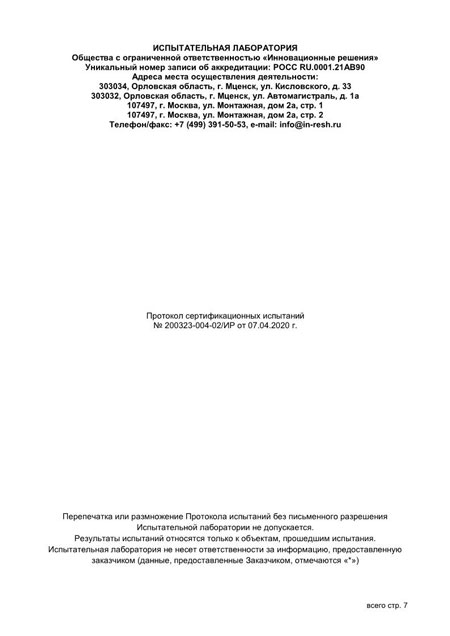
Mandatory Elements of a Compliant EAEU Test Report
A test report possesses official evidentiary value only when it comprehensively displays all structural data points mandated by GOST 58973-2020 and the conformity assessment schemes:
1. Laboratory & Applicant Identification
- Unique, sequential registration number and official issuance date;
- Full legal entity name, registered address, and state accreditation number of the testing laboratory;
- Legal details of the applicant and its appointed Authorized Representative;
- Full manufacturer name and physical manufacturing plant address;
- Explicit reference to the official Sampling Act (*Akt otbora prob*), including the date and location of sampling.
2. Sample & Methodological Data
- Exact product designations, model codes, article numbers, serial numbers, and quantity of tested samples;
- Applied testing and measurement methods citing specific GOST, GOST IEC, or GOST ISO standards;
- List of test equipment and measuring instruments utilized, including valid calibration and verification certificates;
- Actual measured laboratory values shown in direct comparison with normative threshold limits;
- Unambiguous concluding statement certifying whether each individual parameter passed or failed.
Testing Parameters Across EAEU Technical Regulations
The test parameters recorded in the report reflect the specific risk profiles defined in the applicable Technical Regulations. Relying on superficial baseline tests is insufficient:
| Technical Regulation | Core Laboratory Test Areas | Mandatory Measured Parameters & Criteria |
|---|---|---|
| TR CU 010/2011 Machinery Safety |
Mechanical safety, acoustic noise, vibration, emergency stop functionality, protective guards | Sound pressure emission levels, vibration acceleration, safety switch response times, structural load-bearing capacity |
| TR CU 004/2011 Low Voltage |
Electrical safety, insulation coordination, thermal heating, clearance and creepage distances | Insulation resistance (≥ 2 MΩ), dielectric withstand voltage (test voltage in V), touch leakage current, temperature rise under rated load |
| TR CU 020/2011 EMC |
Electromagnetic compatibility: emissions and immunity | Conducted and radiated emissions (dBμV), electrostatic discharge immunity (ESD in kV), electrical fast transient/burst, and high-energy surge immunity |
| TR CU 012/2011 Explosion Protection (Ex) |
Types of explosion protection (Ex d, Ex e, Ex i, Ex m, etc.), enclosure integrity | Flameproof joint width and gap length, reference explosion containment pressures, maximum surface temperature, IP ingress protection against dust/water |
| TR CU 032/2013 Pressure Equipment |
Burst and yield pressure strength, material toughness, weld joint integrity | Hydrostatic proof test pressure (bar), Charpy V-notch impact toughness (J) at sub-zero temperatures, non-destructive weld testing (NDT) |
| TR CU 019/2011 PPE |
Mechanical protection, heat resistance, chemical barrier performance | Safety toecap impact resistance (200 J), midsole puncture resistance (≥ 1,100 N), flame transmission time, chemical permeation breakthrough time |
| TR CU 009/2011 Cosmetics |
Microbiological safety, toxic heavy metals, clinical irritancy | Total viable count of aerobic mesophilic microorganisms, limits for lead, arsenic, mercury, pH levels, in vitro cytotoxicity and mucosal irritation index |
Validity Terms & Deadlines: The 1-Year Rule for Serial Certification
The legal validity of a test report differs fundamentally between the initial application phase and ongoing market surveillance:
- The 1-Year Filing Window: When registering serial certificates (Scheme 1c) and serial declarations (Schemes 3d, 6d), the test report issued by the accredited laboratory must be no older than 1 year from its date of issuance. If a report is issued on March 15, the corresponding conformity document must be registered no later than March 14 of the following year.
- Two-Year Rule for Batches (Scheme 4d): For single shipments or batch declarations, Article 6 of TR CU 009/2011 and corresponding provisions in other regulations permit earlier test reports to be utilized for up to 2 years, provided exact formulation and component identity is technically established.
- Validity Throughout Certificate Lifecycle: Once the EAC Certificate or EAC Declaration (valid for up to 5 years) is officially registered, the underlying test report remains legally valid for the entire term of the approval, provided no safety-critical design or formulation modifications occur.
- Statutory 10-Year Archiving Obligation: Following certificate expiration or after placing the final unit of a production series on the market, the Authorized Representative and the testing body must retain the complete test report and technical dossier for at least 10 years for government inspection.

Digital Registry Verification and Customs Clearance of Samples (Code 061)
With the digitalization of EAEU accreditation registries (such as the Russian FGIS system and the unified Union register), issuing detached paper-based test reports is obsolete.
Today, the accredited testing laboratory uploads the structured metadata of the report directly into the central state system, triggering automated cross-checks against customs databases:
- Mandatory Customs Declaration Number (DT): When registering the report, the laboratory must record the official registration number of the customs declaration (DT) under which the test samples were cleared using dedicated customs procedure code 061 ("goods imported as samples for testing");
- Automated Blocking Mechanism: If the customs entry is missing or the quantity imported does not match the laboratory's test protocol, the software automatically blocks the publication of the report;
- Post-Clearance Customs Audits: Border authorities perform post-clearance audits to verify that active certificates are substantiated by validly registered test reports backed by legal sample entries. Testing documents issued without physical sample customs entries lead to cargo impoundments and certificate revocations.
Read more on sampling logistics: Selection, Sampling, and Customs Shipment of Test Samples.

Why European Test Reports (CE / EN Standards) Do Not Suffice
A frequent misconception among international manufacturers is assuming existing CE test reports issued under harmonized EN standards can substitute for an EAEU test report. The legal frameworks differ fundamentally:
| Evaluation Criteria | European Test Report (CE / EN Standards) | EAEU Test Report (TR CU / GOST Standards) |
|---|---|---|
| Testing Facility | EU Notified Body or in-house manufacturer laboratory (depending on the EU module). | Exclusively a state-authorized testing facility listed in the official unified EAEU accreditation register. |
| Legal Jurisdiction | Applies to the European Economic Area (EEA); holds no direct legal validity in the EAEU. | Official legal document with unhindered validity across all five EAEU member states. |
| Methodological Standards | European standards (EN, ISO, IEC). | Intergovernmental GOST standards mandated by the official lists supporting each Technical Regulation. |
| Permissible Application | Serves as a valuable technical reference to streamline the required EAEU test matrix. | Mandatory legal prerequisite for publishing the EAC Certificate in the official register. |
Sanctions Compliance & Secure Laboratory Testing via Kazakhstan
For industrial and consumer goods manufacturers, commissioning testing laboratories in the Russian Federation or Belarus carries serious sanctions and corporate liability risks under EU Regulation (EU) No 833/2014 and Swiss SECO provisions.
Numerous state institutes are directly designated on sanctions lists, while dual-use and trade embargoes prohibit exporting functional prototypes to Russian entities.
The Secure Route via Schmidt & Schmidt in Kazakhstan:
As a founding EAEU member state, Kazakhstan maintains a fully harmonized, internationally recognized state accreditation system whose test reports are accepted throughout all five member states:
- Testing is conducted in modern testing facilities located in Almaty and Astana;
- Sample shipments from Western countries are delivered directly via standard air freight routes without border seizures, in full compliance with Western export control laws;
- Contracts and financial transactions are executed in Euros through our German corporate headquarters in Passau;
- Operating as an independent Authorized Representative, we protect your ownership rights over test reports and maintain the statutory 10-year technical archive.
Detailed analysis: EAC Certification in the Context of International Sanctions.

Step-by-Step Test Report Management with Schmidt & Schmidt
We manage your laboratory testing from initial standards analysis through to registry publication: