Home

Main navigation

  • News
  • Services
    • Certification for Kazakhstan and EAEU
    • Apostille and consular legalization of foreign documents
    • Extracts from foreign commercial registers and accounting statements
    • Extracts from foreign land and property registers
    • Procurement of documents worldwide
    • Certified translations for international document processing
    Our Services
    Our Services

    Document legalization & procurement: apostille and consular legalization for any country. Extracts from commercial registers and land registries from 100+ countries. Official documents from foreign authorities and archives. Notarized translations. EAC certification for exports to the Eurasian Economic Union.

    Personal and corporate documents. Fixed pricing, clear timelines, dedicated project manager for every project.

  • Company
    • Team
    • Our references
    • Our story
    • Customer reviews
    • Affiliate program
    Our Company
    Our Company

    Schmidt & Schmidt is an internationally operating consulting company based in Passau. We specialize in document legalization and procurement, as well as EAC certification for exports to the Eurasian Economic Union.

    We work from offices in Germany (Passau), Turkey (Ankara), Kazakhstan (Astana), and China (Shanghai). Services available in English, German, Turkish, Chinese, and other languages. More than 10,000 completed projects since 2011.

  • Career
    • Employee onboarding
    • Remuneration
    • What to expect when you apply?
    Join our Team!
    Career opportunities

    Since our foundation, we have been helping clients worldwide with comprehensive corporate services, EAC certification, document procurement, and legalization. We work directly with government authorities and embassies in over 100 countries through our offices in Germany, Turkey, Kazakhstan, and China.

    If you are interested in joining a dynamic, fast-growing international company with excellent opportunities for career advancement, we look forward to receiving your resume.

  • Contact

EAC Certification of agricultural equipment

EAC Certification consulting
  • Competent
  • Swift
  • Reliable
Apply for certification
EAC Certificate of Conformity to Technical Regulations of the Eurasian Economic Union
  1. Home
  2. Services
  3. Certification for Kazakhstan and EAEU
  4. EAC Certification of agricultural equipment

Contact person

Marina Weger

Marina Weger

Senior consultant
+49 851 226 083 3
marina.weger@schmidt-export.com

Table of Contents

  1. Summary: EAC Conformity Assessment of Agricultural Machinery and Tractors
  2. Safety Standards and Market Access for Agricultural and Forestry Equipment
  3. Regulatory Division: TR CU 010/2011 vs. TR CU 031/2012
  4. 1. EAC Certification under TR CU 031/2012 (Tractors and Trailers)
  5. 2. EAC Conformity Assessment under TR CU 010/2011 (Agricultural Machinery)
  6. Electronic Passport for Self-Propelled Machines (ePSM)
  7. Multi-TR Interfaces and Tractor-Implement Coupling
  8. Required Technical Documentation according to GOST Standards
  9. EAC Marking for Agricultural Machinery
  10. Authorized Representative in the EAEU
  11. Sanctions Compliance for Agricultural Machinery and Heavy Tractors (EU & US)
  12. Duration, Costs, and Delivery of Documents
  13. How the Certification Process Works with Schmidt & Schmidt

Summary: EAC Conformity Assessment of Agricultural Machinery and Tractors

  • Bifurcated Regulatory Framework:
    • TR CU 031/2012 “On Safety of Agricultural and Forestry Tractors and Their Trailers”: Covers wheeled and crawler tractors (with a minimum design speed of 6 km/h), transport trailers, and safety-critical components (cabins, ROPS/FOPS, seats, lighting, braking systems, safety glass). The EAC Certificate is the sole admissible conformity assessment format (declarations are excluded).
    • TR CU 010/2011 “On Safety of Machinery and Equipment”: Governs all trailed, mounted, semi-mounted, and self-propelled agricultural work implements (combine harvesters, seeders, tillage implements, balers, crop sprayers), as well as livestock and feed preparation equipment.
  • Conformity Assessment Formats under TR CU 010/2011: Under current Annex 3, agricultural machinery is classified as high-risk equipment subject to mandatory EAC Certification (Schemes 1c, 3c, 9c). Selected auxiliary machines and industrial crawlers fall under the EAC Declaration (Schemes 1d–6d).
  • Regulatory Updates & Staggered Timeline (Decision No. 36): Amendments to TR CU 010/2011 came into force on September 1, 2026. However, the revised product lists of Annex 3 do not take effect until April 1, 2028. Certificates and declarations issued prior to these amendments remain valid until their expiration, but no later than September 1, 2031.
  • Surveillance Inspection Intervals (TR CU 031 vs. TR CU 010): While TR CU 010 requires annual factory surveillance under Scheme 1c, TR CU 031/2012 (Article 6, Cl. 5.6 as amended by Decision 127/2021) establishes a specific inspection cycle: not more than once a year and not less than once every two years.
  • Electronic Passport for Self-Propelled Machines (ePSM): For all tractors, combine harvesters, and self-propelled sprayers, issuance and activation of an electronic machine passport (ePSM) in the unified interstate database is mandatory for customs clearance and operational road licensing.
  • Multi-TR & Mechanical Interfaces: Onboard ECUs, ISOBUS terminals, and GNSS automated guidance systems fall under TR CU 020/2011 (EMC); spray tanks and pneumatic brake reservoirs fall under TR CU 032/2013. Power Take-Off (PTO) drivelines require unbroken protective shielding across the tractor, shaft, and implement connection points.
  • Mandatory Authorized Representative: Foreign manufacturers without a registered legal entity in the EAEU must contractually appoint an Authorized Representative established within the EAEU customs territory.
  • Sanctions Compliance via Kazakhstan: Schmidt & Schmidt provides fully compliant certification through our subsidiaries in Kazakhstan, strictly adhering to EU and US export control regulations (Regulation (EU) No 833/2014, Annexes VII and XXIII).

Safety Standards and Market Access for Agricultural and Forestry Equipment

Importing, distributing, and commissioning agricultural and forestry machinery, tractors, trailers, and implements in the Member States of the Eurasian Economic Union (Russia, Belarus, Kazakhstan, Armenia, Kyrgyzstan) requires mandatory proof of conformity with applicable EAEU Technical Regulations.

Agricultural equipment operates under severe mechanical, thermal, and dynamic stress across demanding terrains. Furthermore, the interaction between operator, heavy machinery, and rough ground conditions presents significant operational hazards. EAEU Technical Regulations establish harmonized health, safety, and environmental protection requirements across the entire product lifecycle—from engineering and fabrication to field maintenance and decommissioning.

A valid conformity document is the legal prerequisite for customs clearance, entry into national state registries, and the formal activation of the Electronic Machine Passport (ePSM).

EAC certification of agricultural machinery and tractors

Regulatory Division: TR CU 010/2011 vs. TR CU 031/2012

EAEU technical regulation establishes a strict legal distinction between mobile tractors/trailers and agricultural implements. This classification dictates the required conformity path and safety test protocols:

Criterion TR CU 031/2012 (Tractors & Trailers) TR CU 010/2011 (Agricultural Machinery)
Covered Equipment & Vehicle Categories
  • Agricultural and forestry wheeled tractors (minimum design speed ≥ 6 km/h)
  • Tracked / crawler tractors
  • Tractor transport trailers and semi-trailers
  • Separately marketed safety-critical components (Annex 1: cabins, ROPS/FOPS, drawbar couplings, seats, tires, lighting)
  • Self-propelled harvesters (combines, forage harvesters, beet harvesters)
  • Trailed, mounted, and semi-mounted tillage implements (plows, harrows, cultivators)
  • Seeders, planters, fertilizer spreaders
  • Field crop sprayers and irrigation machinery
  • Forestry machinery (harvesters, forwarders, wood chippers)
  • Livestock equipment, milking installations, and feed mills
Permissible Assessment Format Exclusively EAC Certificate (declarations are legally excluded for vehicles) EAC Certificate (Annex 3 list) or EAC Declaration (depending on equipment type)
Testing Baseline Type approval testing pursuant to UN/ECE Regulations, OECD Test Codes, and EAEU standards Type examination under the GOST EN ISO 4254 agricultural machinery safety series
Machine Passport Type Electronic Passport for Self-Propelled Machines (ePSM) mandatory ePSM for self-propelled machines; Technical Passport (PS) under GOST for mounted/trailed implements

1. EAC Certification under TR CU 031/2012 (Tractors and Trailers)

Technical Regulation TR CU 031/2012 establishes mandatory standards for structural safety, ergonomics, and environmental impact for agricultural and forestry tractors with a design speed of at least 6 km/h.

Mandatory Test Parameters:

  • Roll-Over Protective Structures (ROPS) and Falling Object Protective Structures (FOPS): Static and dynamic strength testing of protective structures or safety cabs under OECD Test Codes or GOST ISO 3471 / GOST ISO 3449.
  • Operator Seat & Vibration Transmission: Measurement of whole-body vibration transmitted through the suspension seat to the driver (GOST ISO 5008).
  • Field of Vision and Safety Glazing: Verification of the 360-degree operator field of vision and homologation of certified safety glass panes.
  • Braking Systems: Performance verification of service, secondary, and parking brakes, including automatic breakaway braking devices for trailers.
  • Acoustic Emissions: Sound pressure level limits inside the enclosed cabin at the driver's ear position and external drive-by noise limits.
  • Diesel Engine Exhaust Emissions: Compliance with mandatory non-road diesel emission thresholds applicable within the EAEU.

EAC Certification Schemes under TR CU 031/2012:

Scheme Manufacturing Scope Testing and Inspection Scope Validity Period
1C Serial production Type testing in an accredited testing laboratory + on-site manufacturing audit + periodic surveillance inspection (once every 1 to 2 years) Strictly 5 years
2C Serial production (with QMS) Type testing in an accredited laboratory + assessment of certified Quality Management System (ISO 9001 / IATF 16949) + periodic surveillance Strictly 5 years
3C Batch delivery (contract-bound) Testing of representative samples selected from the specific delivery batch; no factory audit required Limited to batch volume (no time limit)
4C Single unit delivery (individual vehicle) Testing of the specific single vehicle in an accredited testing laboratory; no factory audit required Limited to single unit (PIN/VIN-bound)
Surveillance Inspection Cycle (TR CU 031/2012): Pursuant to Article 6, Clause 5.6 (as amended by EAEU Decision No. 127/2021), surveillance audits for serial certificates under TR CU 031/2012 are conducted not more than once a year and not less than once every two years. This statutory interval differs from standard machinery regulations and must be specified in the conformity contract.

2. EAC Conformity Assessment under TR CU 010/2011 (Agricultural Machinery)

Agricultural implements, trailed machines, and self-propelled harvesters fall under Technical Regulation TR CU 010/2011.

Classification under Current Annex 3: Agricultural machinery is legally classified as high-risk equipment. Consequently, almost all machinery used for soil preparation, seeding, crop care, harvesting, and feed production requires mandatory EAC Certification.

Selected auxiliary implements, stationary processing conveyors, and industrial crawlers engineered for specialized earthmoving or industrial duties fall under the EAC Declaration.

Testing agricultural machinery under TR CU 010/2011
Regulatory Timeline Note (Decision No. 36): While general amendments to TR CU 010/2011 took effect on September 1, 2026, the complete revision of product classifications in Annex 3 (Item 15 of the amendments) is deferred until April 1, 2028. Product categorization must strictly follow the currently valid Annex 3 lists. Existing certificates remain valid until their expiration, but no later than September 1, 2031.

Conformity Schemes under TR CU 010/2011:

Procedure Scheme Scope Assessment Scope Validity
EAC Certification 1C Serial production Laboratory sample testing + on-site manufacturing audit + annual surveillance audits 1 to 5 years
3C Batch delivery Testing of representative samples from the batch in an accredited laboratory; no factory audit Limited to batch volume
9C Single unit / small batch Audit of engineering documentation and structural calculation files; non-destructive Limited to delivery volume
EAC Declaration 1D / 2D 1D: Serial / 2D: Batch Manufacturer's internal test reports based on factory laboratory testing 1 to 5 years
3D / 4D 3D: Serial / 4D: Batch Mandatory testing of product samples in an accredited EAEU testing laboratory 1 to 5 years
6D Serial production Testing in an accredited EAEU laboratory + certified ISO 9001 quality management system Up to 5 years

Electronic Passport for Self-Propelled Machines (ePSM)

For all self-propelled agricultural and forestry machinery (tractors, combine harvesters, forage harvesters, self-propelled crop sprayers, telehandlers), the issuance of an Electronic Passport for Self-Propelled Machines (ePSM) is legally mandatory across the EAEU.

The ePSM system (administered centrally by AO “Elektronny Pasport”) has fully replaced legacy paper passports (such as the Russian national PSM). A valid EAC Certificate constitutes the mandatory technical and legal foundation for activating the electronic machine passport in the unified interstate database.

Legal Consequence: Without an active ePSM status in the unified registry, customs authorities will not release the machine into free circulation, and national registration bodies (such as Gostekhnadzor in Russia) cannot issue road circulation and field operational permits.
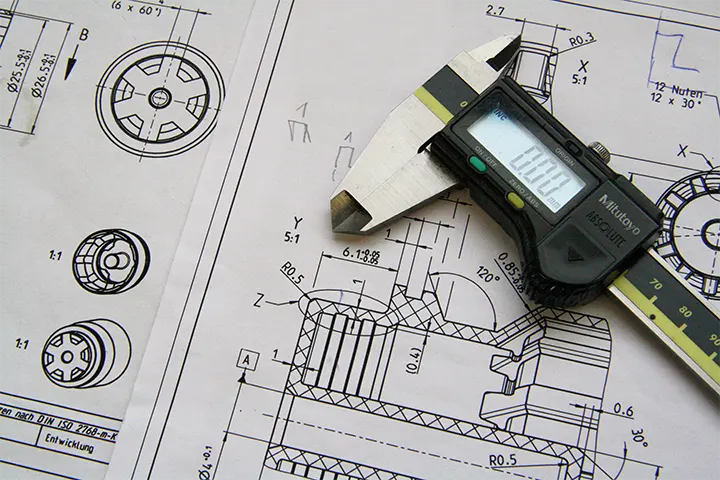
Electronic passport for self-propelled machines ePSM

Multi-TR Interfaces and Tractor-Implement Coupling

Modern agricultural machinery integrates mechatronics, satellite guidance, and high-pressure fluid circuits. Operating tractor-implement combinations introduces interface risks that must be addressed during compliance planning:

Power Take-Off (PTO) Safety

Drive shafts create severe entanglement hazards. Compliance requires complete enclosure shielding across the tractor master shield, the PTO driveline guard, and the implement input connection (GOST ISO 5673 / GOST ISO 5674).

Dynamic Axle Loads & Stability

Combining heavy mounted implements with a tractor redistributes axle loads. Steerability (minimum 20% front axle load during road transport) and braking balance must be documented in the technical pass.

TR CU 020/2011 (EMC)

Mandatory for all active electronic components, ISOBUS terminals, onboard ECUs, auto-guidance modules, touchscreens, and Doppler radar sensors.

TR CU 032/2013 (Pressure Equipment)

Applies to pressure tanks in crop sprayers, pneumatic brake air reservoirs, and hydraulic accumulators operating at pressures exceeding 0.5 bar.

FSB Notification (Telemetry & Radio)

Required for telematics units, fleet management gateways, and GNSS receivers utilizing standard commercial wireless encryption (Wi-Fi, Bluetooth, GSM/LTE).

Required Technical Documentation according to GOST Standards

European CE documentation alone is insufficient for EAEU compliance. Pursuant to TR CU 010/2011 and TR CU 031/2012, all technical files must be translated and localized into the Russian language (or the official state language of the respective Member State):

Safety Justification (OB)

Drafted in accordance with GOST 33855-2016. Contains a methodical risk assessment covering design, operation, and decommissioning. Mandatory for completing official state registration.

Technical Passport (PS)

Formulated under GOST 2.601 / GOST 2.610. Acts as the lifelong logbook of the machine, detailing technical specifications, dimensions, material certificates, lubrication charts, and warranty terms.

Operation Manual (RE)

Comprehensive instruction book outlining mechanical installation, PTO connection, hydraulic hookups, maintenance intervals, safety guard adjustments, and operator qualification requirements.

Electronic Manuals under Decision No. 36: Operation manuals may be provided in electronic format pursuant to Decision No. 36. However, paper-format documentation remains legally mandatory for equipment deployed at hazardous industrial facilities (OPO).

Supplementary Technical Documentation:

  • Detailed assembly drawings, hydraulic schematics, and electrical circuit diagrams
  • Structural strength calculations for load-bearing components (chassis frames, drawbars, three-point hitches)
  • Existing OECD test reports for cabin protective structures (ROPS/FOPS) and engine emission certificates
  • ISO 9001 Quality Management System certificate for the manufacturing plant
  • Supply contract, commercial invoice, and shipping documentation (for batch- or unit-based certifications)

EAC Marking for Agricultural Machinery

EAC conformity mark

Following the successful completion of the conformity assessment procedure, all machines and tractors must be affixed with the official EAC Mark prior to border clearance. The mark must be permanently, visibly, and indelibly stamped or printed on the machine's primary rating plate on the main chassis or cabin frame.

Mandatory Information on the Machine Nameplate:

  • Full legal name of the manufacturer and registered trademark
  • Exact model and commercial designation of the machine
  • Vehicle Identification Number (VIN / PIN) or unique serial number
  • Month and year of manufacture
  • Rated engine power in kW / hp (for tractors and self-propelled units)
  • Maximum permissible gross weight and axle load limits
  • Country of origin
  • Official EAC conformity mark (minimum height of 5 mm)

Authorized Representative in the EAEU

Authorized Representative in the EAEU for Agricultural Equipment

Foreign agricultural machinery manufacturers without a registered legal entity in an EAEU Member State cannot file for conformity assessments directly. Appointing an Authorized Representative domiciled within the EAEU customs territory is an unconditional legal requirement.

The Authorized Representative represents the manufacturer before accreditation and surveillance authorities, maintains the technical compliance file, and assumes shared legal product liability regarding mandatory safety standards.

Schmidt & Schmidt acts as an independent Authorized Representative. This structure prevents your local distributor or general importer from becoming the sole legal owner of the certificates, ensuring you retain the commercial freedom to supply multiple dealerships across the entire EAEU territory.

Sanctions Compliance for Agricultural Machinery and Heavy Tractors (EU & US)

The export of agricultural machinery, tractors, diesel engines, hydraulic assemblies, and electronic controllers is subject to strict export control restrictions under European Union regulations (Regulation (EU) No 833/2014) and US export controls (EAR).

Numerous equipment categories fall under customs tariff chapters HS 8432, 8433, and 8701. High-horsepower tractors, combine harvesters, high-pressure hydraulic proportional valves, and electronic controllers are explicitly restricted under sanctions annexes (such as Annex VII – Dual-Use or Annex XXIII – Industrial Goods). Every project requires comprehensive end-use and end-user verification (End-Use / End-User checks).

Legally Secure Routing via Kazakhstan: Schmidt & Schmidt maintains corporate offices in Almaty and Astana. As a full founding Member State of the EAEU, Kazakhstan operates accredited certification bodies and test laboratories whose certificates are recognized throughout the Union. We enable European agricultural machinery manufacturers to execute compliant testing and certification in full accordance with Western export control laws.

For detailed analysis, refer to our specialized article: EAC Certification within the Context of International Sanctions.

Sanctions screening for agricultural machinery exports

Duration, Costs, and Delivery of Documents

The processing timeline and costs of EAC certification for agricultural machinery and tractors depend on machine complexity, testing scope, and the selected certification scheme:

  • EAC Declaration (Standard Implements): Processing time approximately 1 to 2 weeks.
  • EAC Certificate (Batch / Single Unit): Processing time approximately 3 to 5 weeks (including accredited laboratory sample testing).
  • EAC Certificate (Serial Production): Processing time approximately 6 to 10 weeks (including type testing and an on-site factory audit).
  • Validity Period: Strictly 5 years for serial certificates under TR CU 031/2012; up to 5 years under TR CU 010/2011; limited to the delivery batch volume for batch-based schemes.
Following registration in the official EAEU state registry, you will immediately receive an electronic confirmation copy. Original certificates printed on counterfeit-proof official forms and ePSM registry confirmation records will be delivered directly to your company address via international express courier.

How the Certification Process Works with Schmidt & Schmidt

We manage your agricultural equipment approval project from technical classification to ePSM registry release:


01 Classification & Standards Review

We analyze your technical specifications, determine HS codes (8432, 8433, 8701), and delineate the applicable regulatory scope between TR CU 010/2011 and TR CU 031/2012.

02 GOST Technical Documentation

Our engineers draft the Safety Justification (OB) under GOST 33855, compile the Technical Passport (PS), and localize the Operation Manual into technical Russian.

03 Sample Logistics & Testing

We manage customs clearance for test samples and coordinate mechanical safety, braking, noise, and vibration testing in accredited EAEU laboratories.

04 On-Site Factory Audit

For serial certifications, we coordinate the mandatory production audit at your manufacturing facility and prepare your quality management team for the inspection.

05 EAEU Registry & ePSM Release

We submit the final dossier to official registries and transmit the required technical data parameters to activate the electronic machine passport.

06 Delivery & Surveillance Audits

You receive the official hard copies by express courier. Acting as your Authorized Representative, we coordinate the mandatory surveillance inspections (every 1 to 2 years under TR CU 031).

updated: 10 November 2026
Apply for certification

What is an EAC Certification?

In our video, we explain what an EAC Certification is and how and where to certify or declare your products for the introduction on the EAEU market.

The EAC Certification and the EAC Declaration are complex procedures that attest your products the conformity with the technical regulations of the EAEU and require a lot of know-how. Schmidt & Schmidt will support you with the certification of your products for the EAEU market.

EAC certification for the Eurasian Economic Union is our core expertise

Who we are

Schmidt & Schmidt Exporting to the Eurasian Economic Union requires EAC certificates and technical conformity assessments. We've been working with EAEU technical regulations since 2011 and have developed a clear process with understandable steps.

We help you prepare all required technical documentation and technical passports for your products. Our specialists review your technical files, identify gaps, and ensure complete compliance with EAEU technical regulations. This is often the most critical step in the certification process.

Schmidt & Schmidt works directly with accredited certification bodies in Kazakhstan, Belarus, Armenia, and Kyrgyzstan. We serve manufacturers of machinery, industrial equipment, electrical devices, and medical technology. Each project has a dedicated project manager who explains every step in English. Transparent procedures, fixed pricing, quick results.

Frequently asked questions about EAC certificates and declarations

1. What is an EAC certificate?

The EAC certificate of the Eurasian Economic Union (EAEU) is an official document that proves the conformity of products with the harmonized technical regulations of the EAEU member states. Products whose conformity with the technical regulations is confirmed by an EAC certificate may be moved and sold within the entire customs territory of the EAEU.

2. What is an EAC declaration?

The EAC declaration of the Eurasian Economic Union (EAEU) is an official document that confirms that products meet the minimum requirements of the technical regulations of the EAEU. An EAC declaration is issued by the manufacturer, the importer or an authorized representative and is registered in the official EAEU register. Products whose conformity with the technical regulations is confirmed by the declaration may be freely moved and sold within the customs territory of the EAEU member states.

3. What is the difference between an EAC certificate and an EAC declaration?

The EAC certificate is issued only after a conformity assessment carried out by a certification body accredited in one of the EAEU member states. Certification is based on technical documentation, internal test reports or test reports provided by accredited laboratories, and, where applicable, on-site production audits. The certificate is printed on an official secure form and authenticated by the signature and seal of the accredited body. It is usually issued for "complex" products that require enhanced control by the authorities.

With the EAC declaration, the manufacturer, importer or authorized representative declares the conformity of the products with the minimum requirements of the EAEU technical regulations. Unlike the certificate, the declaration is formally issued by the applicant. Tests can be carried out internally or by a laboratory. The EAC declaration is drawn up on regular paper but must be registered in the unified EAEU register by an accredited certification body.

4. How long does the EAC certification process take?

The duration of the EAC certification process depends on the product type, the applicable technical regulations and the required scope of testing. For straightforward products it may take a few weeks, while complex projects with laboratory tests and a production audit can take several months. A complete and well-prepared technical documentation significantly reduces processing time.

5. How long is an EAC certificate or declaration valid?

The validity period of an EAC certificate or declaration is defined by the applicable technical regulations and the chosen certification scheme. One-time deliveries are usually certified for a specific batch, while serial production can be certified for several years, provided that all conditions are met. For long-term certificates, regular inspections or surveillance audits may be required to maintain validity.
You find more answers here!
Frequently asked questions about EAC certificates and declarations
 EAC conformity  Consulting

Consultancy on EAC conformity assessment

Many exporters find it difficult to keep track of the large number of technical rules and regulations between EAC marking, EAC certification und EAC declaration , state registration and GOST norms. In order to ensure a smooth entry into the EAEU market, we offer a wide range of seminars, lectures, workshops and consultancy services that can be customised to meet individual needs.

Among other things, we share in-depth knowledge of the technical regulation and certification system of the EAEU, as well as the individual steps of conformity assessment and the preparation of the necessary technical documentation.

Thanks to their many years of experience, our experts can also provide you with specific industry knowledge from plant engineering, mechanical engineering, metal construction, measurement technology, electrical engineering, automation technology, medical technology, food technology and the furniture industry.

Request consultation!
Preparation of technical documentation

Preparation of technical documentation for EAC certification

The technical documentation plays a major role in introducing new products to the Eurasian Economic Union. They not only provide the basis for conformity assessment, but are also crucial when commissioning, for example, a new machine. Especially the following documents are important:

Technical Passport
Safety justification
Instruction Manual
Safety Data Sheet
Test Report
Ignition Hazard Assessment

Technical expertise, diligence and accuracy in the preparation of the documents are one prerequisite for problem-free distribution and use of the products, machines or plants in the area of the EAEU. It is also mandatory to write the technical documentation in Russian or in the official language of the respective member country in which the product is to be distributed or used.

To avoid any problems, we will be happy to help you create new technical documents or check existing documents for completeness, as well as for linguistic and terminological correctness in Russian.


Request the preparation of technical documents!
Type examination for EAC conformity assessment

Type examination for EAC conformity assessment

An important step in the conformity assessment procedure is the testing of product samples, during which the conformity of the products with the respective Technical Regulations of the EAEU is verified. In the case of EAC certification, this may only be carried out in accredited laboratories and must follow specific rules. If it is an EAC declaration, the tests can also be carried out in non-accredited laboratories. A test report is then prepared, which contains the test results as well as information about the manufacturer and the test method.

There are some important points to consider in both the shipment of the samples and the testing process itself. Unfortunately, some unserious certification bodies have also gained access to the market, so great care must be taken when choosing a certification body. To ensure that the sample examinations run smoothly, we support you in

  • the selection of suitable samples for testing,
  • customs clearance
  • and referral to trusted certification bodies and testing laboratories.
Request type examination!
Technical translation

Technical translation

In order to export goods and equipment to EAEU countries, technical documents and their correct translations into Russian or into the official language of the EAEU member must be submitted. To translate such documents, the translator must have extensive knowledge of a specific technical area as well as knowledge of highly specialized terminology.

Our specialists have many years of experience in the translation of technical documents such as operating manuals, technical passports, safety considerations, risk assessments, device passes, test reports, etc. Schmidt & Schmidt's translators speak Russian, English, German, French and Italian.

We guarantee you a timely, high-quality and accurate translation of all required documents.

Order a technical translation!

Why clients choose us

Qualified Team of Experts

Our specialists have many years of hands-on experience in export certification for the Eurasian market.

Certification of All Product Types

We work with clients from all branches of industry — from machinery and electronics to food and cosmetics.

Fast Order Processing

We handle each client's needs individually and process requests quickly to meet your deadlines.

Deep Knowledge of Technical Regulations

Our technical and legal expertise ensures full compliance with EAEU requirements and high quality of service.

Free Delivery of Documents

Your certified documents will be delivered free of charge in the shortest possible time.

Access to Five Markets at Once

An EAC certificate is valid across all five EAEU member states: Russia, Kazakhstan, Belarus, Armenia, and Kyrgyzstan.

Subscribe to our newsletter.

Stay informed on our latest news.

Subscribe

News EAC certification

Anti-Circumvention Measures of the 20th Russia sanctions package of the EU

Anti-Circumvention Measures of the 20th Russia sanctions package of the EU

On 23 April 2026, the European Union adopted Council Regulation (EU) 2026/506, introducing another package of sanctions against Russia. The regulation expands existing restrictions, strengthens anti-circumvention measures, and introduces new compliance obligations for businesses operating internationally.

Marina Weger
27 May 2026
Important changes of TR CU 032/2013 Safety of pressure equipment

Important changes of TR CU 032/2013 Safety of pressure equipment

On 22 May 2026, Order No. 71 of the Board of the Eurasian Economic Commission (EEC), dated 19 May 2026, was officially published. The document approves a draft amendment to Technical Regulation TR CU 032/2013 “On the Safety of Equipment Operating Under Excessive Pressure”.

Marina Weger
26 May 2026
Technical Regulation for machinery and equipment enters into force in a new version from September 1, 2026

Technical Regulation for machinery and equipment enters into force in a new version from September 1, 2026

On April 8, 2026, Decision No. 36 of the Council of the Eurasian Economic Commission (EEC) dated March 13, 2026, was officially published. This decision introduces significant amendments to the Technical Regulation of the Customs Union "On the safety of machinery and equipment" (TR CU 010/2011).

Marina Weger
20 April 2026
Amendments to the Technical Regulation "On the safety of personal protective equipment"

Amendments to the Technical Regulation "On the safety of personal protective equipment"

The Council of the Eurasian Economic Commission has adopted amendments to the Technical Regulation of the Customs Union "On the safety of personal protective equipment".

The amendments take into account the practical application of the regulation and provide for the inclusion of new products (along with their respective requirements), the clarification of existing requirements for regulated objects, as well as an adjustment of the conceptual framework and standard conformity assessment procedures.

Marina Weger
30 March 2026

Pagination

  • Next page ››

Our team

Alexej Schmidt

Alexej Schmidt

Managing partner
Andrej Schmidt

Andrej Schmidt

Managing partner and head of marketing and distribution department
Dr. Olga Kylina, LL.M.

Dr. Olga Kylina, LL.M.

Senior consultant, head of legal services department
Marina Weger

Marina Weger

Senior consultant
Valeria Nikolaeva

Valeria Nikolaeva

Senior consultant
Anna Khan

Anna Khan

Senior consultant

Pagination

  • Next page ››

Our customers are our pride

Ziehm Imaging GmbH
Voith
EMAG Maschinenfabrik GmbH
WEGeuro, S.A.
Profuga GmbH
Karl Dungs GmbH & Co. KG
Helaba - Landesbank Hessen-Thüringen
Plattenhardt + Wirth GmbH
EAC Certificate
Shell
NETZSCH
EagleBurgmann
EAC Certification TR CU 012/2011
EAC declaration of conformity
EAC Certification
EAC
Thomas-Krenn AG
Schoepf GmbH
Thyssenkrupp
BNP Paribas
Commercial Register extract
logistics germany russia
import to Russia
TR CU certificate
TR CU certificate
extract from trade register
TR CU certificate
certification for Russia
EAE certification
EAE certification
certification for Russia
Export to Russia
EAE certification
Hofmann Maschinen- und Anlagenbau GmbH
EAE certification
extract from trade register
EAE certification
EAE certification
extract from trade register
certification for Russia
Export to Russia
extract from trade register
delivery from Germany
eac certificate
Trade register extract
eac certificate
Dassault Systemes
EAC-Certification
Raiffeisen
HOCHTIEF
ABB
EAC Certification
Legalisation von Dokumenten und Apostille
EAC Certification
Eaton
Schmidt & Schmidt OHG
+49 851 226 083 01
kontakt@schmidt-export.de

Bahnhofstrasse 32
94032 Passau
Germany
LLP Schmidt & Schmidt
+7 717 269 6317
kontakt@schmidt-and-schmidt.kz

md. Samal, 12
010000 Astana
Kazakhstan
Shanghai Schmidt Business Consulting Co., Ltd.
+86 130 021 859 39
contact.shanghai@schmidt-export.de
WeChat: 13002185939

Room 206-A22, Building B, No. 1602 Zhongshan West Road
Xuhui District
200233 Shanghai
China
Schmidt and Schmidt Danışmanlık LTD. ŞTİ.
+90 312 963 212 9
kontakt@schmidt-export.de

Kızılırmak Mah. Dumlupınar Blv
No:3C-1, İç Kapı:160, Next Level
06520 Çankaya Ankara
Türkiye
Visa
Mastercard
SEPA Überweisung
PayPal
UnionPay
Alipay
Wise

Footer menu

  • Contact
  • Guarantee
  • Imprint
  • Privacy policy
  • Legal agreements
  • Withdrawal policy
  • Site map
  • Payment terms
  • Cookie policy
  • HOME

Search

  • English
  • Deutsch
  • Русский
  • Français
  • Italiano
  • 中文
  • Türkçe
  • Қазақ тілі
  • Español
+49 851 226 083 01
kontakt@schmidt-export.de
Marina Weger

Marina Weger

Senior consultant
+49 851 226 083 3
marina.weger@schmidt-export.com