Summary: EAC Certification for Machinery and Equipment
- Applicable Regulations: Primarily TR CU 010/2011, often combined with TR CU 004/2011 (LVD) and TR CU 020/2011 (EMC).
- Mandatory for: The import, sale, and commissioning of industrial, agricultural, and household machinery in the EAEU (Russia, Belarus, Kazakhstan, Armenia, Kyrgyzstan).
- Applicant Requirements: Foreign manufacturers must appoint an Authorized Representative based in the EAEU.
- Proof of Conformity: EAC Certificate (for high-risk equipment like lifting and mining machinery) or EAC Declaration (for standard industrial equipment).
- Important Exceptions: Used machinery and spare parts used exclusively for repair are not subject to EAC conformity assessment.
- Key Documents: A Safety Justification and a Technical Passport are strictly mandatory for all machinery.
- Validity: Up to 5 years for serial production; for single shipments/batches, it is limited to the respective contract.
EAC Conformity Assessment for Machinery
For the import, sale, and operation of machinery in Russia and other member states of the Eurasian Economic Union, an EAC Certificate or an EAC Declaration is mandatory. The conformity assessment confirms that the equipment meets the strict safety requirements of the EAEU.
Because modern machinery is complex, it is rarely subject to just one regulation. Normally, machinery and equipment must comply with a combination of the following technical regulations (often referred to as the "Machinery Complex"):
- TR CU 010/2011 On the safety of machinery and equipment
- TR CU 004/2011 On the safety of low-voltage equipment
- TR CU 020/2011 On electromagnetic compatibility
Depending on the specific scope of application, other technical regulations—such as TR CU 012/2011 (ATEX) for explosive environments or TR CU 032/2013 for pressure equipment — may also apply.
Classification: EAC Certificate vs. EAC Declaration
Appendix 3 of the technical regulation TR CU 010/2011 contains precise lists dividing machinery into two categories: those requiring a strict EAC Certificate (issued by an accredited body after testing and audits) and those requiring an EAC Declaration (based on manufacturer evidence and lab tests).
Requires an EAC Certificate:
High-risk machinery, including:
- Woodworking equipment for household use
- Off-road vehicles, snowmobiles, and their trailers
- Workshop and garage equipment
- Agricultural and forestry machinery
- Machinery for livestock, poultry, and fodder production
- Mechanized and electrical tools
- Equipment for mining and mining transport
- Drilling rigs and mine ventilation systems
- Hoisting machines and lifting equipment (cranes, tackles)
Requires an EAC Declaration:
Standard industrial equipment, including:
- Turbines, gas turbines, and diesel generators
- Crushing plants, conveyors, and loading machines
- Cryogenic equipment, compressors, and chillers
- Metalworking and industrial woodworking machines
- Welding, painting, and gas-powered equipment
- Construction and earth-moving machinery
- Industrial fans, air conditioners, and heaters
- Printing machines and industrial laundry machines
- Industrial fittings and pumping equipment
Specific Industry Focus Areas
Machinery for animal husbandry and agriculture: This broad category includes sowing and harvesting mechanization, cattle and poultry farm machinery, feed production equipment, and auxiliary tools like gasoline chain saws. Due to interaction with operators and environment, these require an EAC Certificate.
Mining Equipment: Machines for coal extraction, rock drilling, tunnel boring, explosion path containment, and mine transportation (scraper conveyors, winches) operate in extreme conditions and pose severe risks, mandating strict EAC Certification.
Lifting Equipment: Garage lifts, overhead cranes, and load-lifting mechanisms must undergo rigorous testing and often production audits to secure an EAC Certificate, ensuring structural integrity and preventing catastrophic failures.
Conformity Assessment Schemes
The EAEU legislation provides various schemes for EAC certification and declaration. The choice of scheme depends on whether you are importing a single batch, supplying under an ongoing contract, or seeking approval for long-term serial production.
Schemes for EAC Certification (TR CU 010/2011)
| Scheme | Application | Requirements |
|---|---|---|
| 1C | Serial production (1 to 5 years) | Sample testing in an accredited EAEU lab + Production audit on-site + Annual surveillance (inspection control). |
| 3C | Batch delivery / Single shipment | Sample testing in an accredited EAEU lab. No production audit required. |
| 9C | Limited equipment for specific EAEU enterprises | Conformity assessment based strictly on technical documentation. Typically used for highly complex, single-build industrial plants. |
Schemes for EAC Declaration (TR CU 010/2011)
| Scheme | Application | Requirements |
|---|---|---|
| 1D | Serial production | Type testing conducted by the manufacturer. |
| 2D | Batch delivery | Type testing conducted by the manufacturer. |
| 3D | Serial production | Product samples must be tested by a laboratory accredited in the EAEU. |
| 4D | Batch delivery | Product samples must be tested by a laboratory accredited in the EAEU. |
| 5D | Equipment used in hazardous facilities | Type examination of the design; often used when final assembly and testing can only occur at the installation site. |
| 6D | Serial production (High reliability) | Requires testing in an EAEU lab AND a certified Quality Management System (ISO 9001). |
Required Technical Documentation
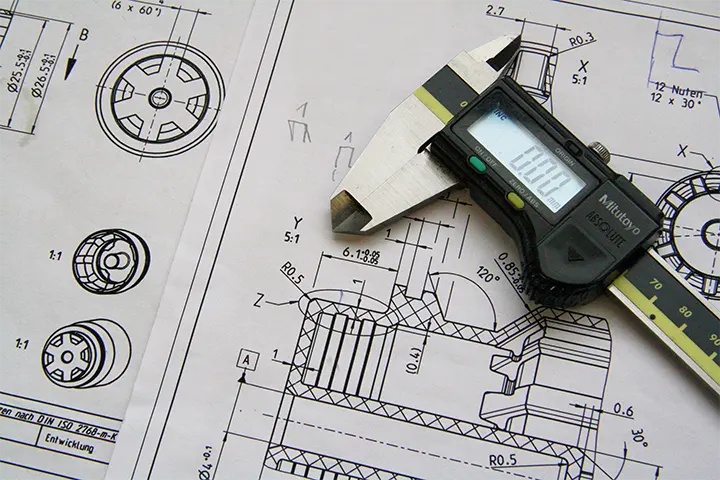
A successful EAC conformity assessment depends heavily on the quality of the technical documentation. All documents must be submitted in Russian or the official language of the respective EAEU member state.
The mandatory documentation package includes:
- Safety Justification (Obosnovanie Bezopasnosti): A crucial risk analysis document unique to the EAEU, detailing how hazards are mitigated throughout the machine's lifecycle.
- Technical Passport: The main identification document containing technical specifications, operating parameters, and manufacturer guarantees.
- Instruction and Operating Manuals: Must include installation, maintenance, and disposal instructions.
- Detailed technical descriptions and operational parameters.
- Technical drawings, electrical diagrams, and hydraulic/pneumatic schemes.
- Existing test reports and factory quality records.
- ISO 9001 quality management system certificate (if applicable).
The Certification Matrix for Complex Plants
For large-scale industrial projects, production lines, or complex plants, it is highly recommended to create a Certification Matrix. This matrix acts as a roadmap, providing an overview of which specific components of the plant require which specific EAEU certificates or declarations (e.g., separating the pressure vessels, Ex-proof motors, and general conveyors). This prevents customs delays and optimizes certification costs.
Product and Packaging Marking

Machinery that successfully passes the conformity assessment must be marked with the official EAC conformity mark. Placing products on the EAEU market without this mark is strictly prohibited and leads to fines and confiscation at customs.
Requirements for the Nameplate
The machine must feature a durable, legible nameplate permanently attached to it, displaying:
- The manufacturer's name and trademark
- The exact designation of the machine (type, brand, model)
- Month and year of manufacture
- The EAC Mark
If the machine's size or nature prevents attaching a nameplate, this information must be printed on the packaging and explicitly stated in the instruction manual.
Requirements for the Instruction Manual
Under TR CU 010/2011, the operating manual is heavily regulated and must contain:
- Information on construction, operational parameters, and specifications.
- Safe procedures for assembly, commissioning, maintenance, and repair.
- Storage conditions and specified service life (after which the machine must be decommissioned, overhauled, or disposed of).
- A list of foreseeable critical personnel errors that could lead to an accident, and emergency response instructions.
- Information on the required qualification level of operating personnel.
Authorized Representative

Manufacturers who are not established in a Member State of the Eurasian Economic Union (EAEU) do not have the right to apply for EAC certification or an EAC declaration independently.
To legally certify and export machinery, the foreign manufacturer must appoint an Authorized Representative located within the EAEU. This representative acts as the legal applicant before the EAEU certification bodies and takes on the responsibility for the safety and quality of the machinery on the EAEU market.
Schmidt & Schmidt supports manufacturers from Europe, America, and Asia by providing a reliable Authorized Representative service. Through our legally compliant solution via Kazakhstan, we ensure that your machinery is certified smoothly, legally, and in full compliance with EAEU technical regulations.
Compliance with EU and US Sanctions for Machinery
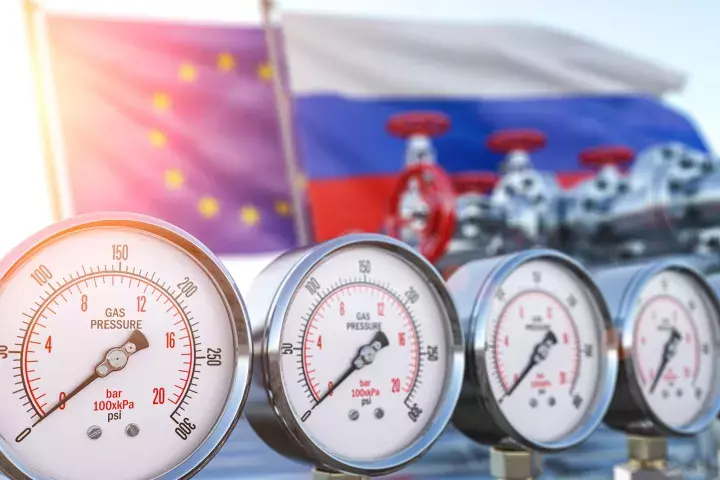
Machinery, industrial equipment, and their electronic components frequently fall under "dual-use" categories. Therefore, European and international manufacturers must ensure strict compliance with EU and US sanctions when exporting to Russia and Belarus, alongside fulfilling EAEU technical regulations.
Sanctions may restrict the export of specific machine types (e.g., advanced CNC machines, oil & gas drilling equipment, or specific electronic controllers). Furthermore, cooperating with sanctioned certification bodies, testing labs, or end-users in Russia and Belarus is legally prohibited. Non-compliance can lead to blocked shipments, severe fines, and criminal liability.
Even if an EAC certificate is formally obtained, it does not bypass international export controls. Close coordination between your compliance department and your certification partner is essential.
Schmidt & Schmidt provides a legally compliant solution via Kazakhstan. As a full EAEU member state, Kazakhstan can issue EAC Certificates valid throughout the Union. We conduct all conformity assessment procedures in strict alignment with European and US sanctions regulations, ensuring safe and legal market access.
Cost, Duration, and Validity
The validity period of an EAC Certificate or Declaration for machinery ranges from 1 to 5 years for serial production. For single shipments or batches, the certificate is valid indefinitely but only applies to the specific units listed in the commercial contract.
The duration and costs associated with EAC conformity assessment depend on several factors:
- The complexity of the machine and the number of applicable TR CU regulations.
- The chosen certification scheme (e.g., whether a production audit is required).
- The scope of necessary laboratory testing.
- The completeness and quality of the provided technical documentation.
How to apply for Certification?
To help you enter the Eurasian Economic Union (EAEU) market quickly and in full legal compliance, we support you throughout the entire EAC certification process—from the initial request to the delivery of the original documents.