We provide extracts from the Commercial Register of Germany with translation and apostille.
When are extracts from the register required?
An extract from the commercial register is the primary document confirming the legal status and authority of a German company's management. It is required to verify corporate legal details in any official interaction with government and financial institutions.
Main use cases:
- Banking operations: opening accounts, obtaining loans, and passing compliance checks;
- Transactions and contracts: verifying signatory authority and the legal standing of a counterparty;
- Notarial acts: executing real estate transactions or amendments to a company's articles of association;
- Tenders and licensing: confirming registration to participate in procurement tenders and obtain permits;
- Legal proceedings: filing lawsuits and confirming the status of a defendant or plaintiff;
- Investment audit: verifying share ownership history (due diligence).
What is the Commercial Register of Germany?
The Commercial Register of Germany (Handelsregister) is a public federal information resource maintained by authorized local courts under the coordination of the German Ministry of Justice. All legal entities, companies, partnerships, associations, and non-profit organizations in Germany, as well as foreign companies operating in Germany, undergo mandatory registration in the commercial register.
The commercial register consists of two sections:
- Section A (HRA): contains information on unincorporated businesses (partnerships, sole proprietors);
- Section B (HRB): contains information on incorporated legal entities (GmbH, AG, UG).
At the same time, the register does not contain information on sole proprietors and civil law partnerships (GbR) unless they have registered voluntarily.
The register contains information on more than 5.5 million companies and more than 4.6 million individuals.
Documents from the register are available only in German, although the search interface of the state portal supports several languages, including German, English, French, and Spanish.
An extract from the Commercial Register of Germany (Handelsregisterauszug) is an official document issued by the registration courts containing publicly available information about an enterprise.
In accordance with European legislation, the Commercial Register of Germany has been maintained exclusively in electronic form since 2007. Both data entry and the retrieval of extracts are carried out via an electronic document management system.
To obtain an extract, you must provide the name of the organization and/or its registration number.
All documents from the German register are provided in their original language (German). If necessary, they can be translated into another language and subsequently certified.
Specifics of obtaining a hard-copy extract
If you require an official hard-copy document with a seal (for example, for an apostille or judicial authorities), an electronic extract will not suffice, and the retrieval procedure becomes significantly more complex.
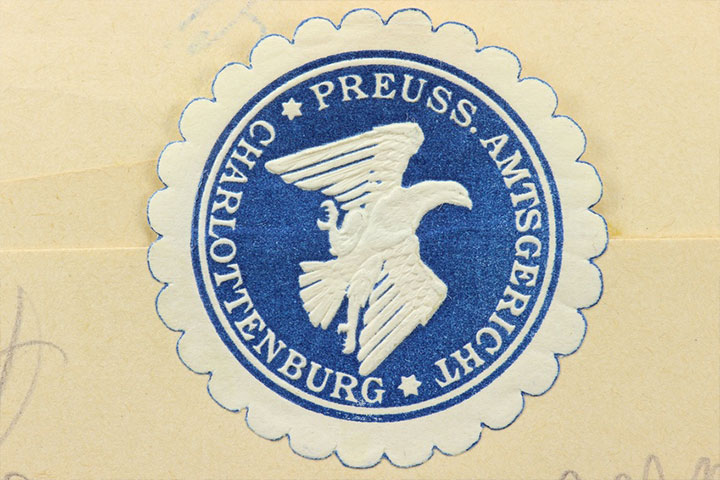
Obtaining hard-copy extracts from the register (Amtlicher Ausdruck) requires an official request through the relevant local court (Amtsgericht) acting as the registration court at the company's place of registration. The paper document is prepared by the court registry, certified with the signature of an authorized officer and an official seal, and then sent to the applicant by post.
This process takes from several days to a couple of weeks and always incurs a fee: the court fee is paid separately against an issued invoice.
This format is necessary for international document circulation when further certification of the extract by the President of the Regional Court (Landgericht), apostille stamping, or consular legalization is required.

A current extract from the register (Aktueller Ausdruck) is an official document containing up-to-date information on the legal status of a German company at the time of the request. This is the most frequently requested document.
A current extract from Germany contains:
- company name;
- legal form;
- registered address;
- business activities;
- date of registration;
- details of directors and authorized signatories;
- amount of share capital;
- ongoing liquidation or insolvency proceedings.
* Some of the specified details may not be available for a particular organization or may be provided for an additional fee.
Processing time — from 30 minutes.
Cost of the extract with apostille: 220 €

A chronological extract (Chronologischer Ausdruck) contains data on all changes in an organization since the transition to the electronic register, as well as information on inactive companies (including records of insolvency and liquidation).
A chronological extract records changes in:
- company name;
- articles of association;
- management composition;
- registered address;
- operational status of the enterprise.
* Some data may not be available for a particular organization or may be provided for an additional fee.
Processing time — from 30 minutes.
Cost of the extract with apostille: 220 €
A historical extract (Historischer Ausdruck) contains archival information on an organization prior to the transition to electronic record-keeping, entered into the register before 2007.
A historical extract contains:
- company name;
- legal form;
- registered address;
- business activities;
- date of registration;
- details of executives and authorized signatories;
- amount of share capital.
* Some archival data may not be available for a particular organization or may be provided for an additional fee.
Processing time — from 30 minutes.
Cost of the extract with apostille: 220 €

Annual financial statement data (Jahresabschluss) provides a comprehensive overview of a German enterprise's financial position (balance sheet, profit and loss statement).
Annual financial statement data includes:
- company name;
- balance sheet and notes to the financial statements.
* The scope of disclosed financial statements depends on the size category of the enterprise (small, medium, or large business).
Processing time — from 30 minutes.
Cost of the extract with apostille: 220 €

The list of shareholders (Gesellschafterliste) is a document containing information on the shareholders of a limited liability company (GmbH) and the size of their respective shares.
The register provides a complete chronology of shareholder compositions since the company's incorporation. Lists are available as separate documents recorded as of the date each change was registered.
Please note: for joint-stock companies (AG), a list of shareholders is not maintained in the commercial register—this data is kept internally by the company itself or by a share registrar.
Processing time — from 30 minutes.
Cost of the document with apostille: 220 €

Copies of statutory documents — the archive of the Commercial Register of Germany contains company registration files, including the text of the articles of association (Satzung / Gesellschaftsvertrag), minutes of shareholder meetings, and specimen signatures of managing directors.
Processing time — from 30 minutes.
Cost of the document with apostille: from 220 €
Searching and obtaining an extract is possible using the following criteria:
- full name of the organization;
- partial name and registered address;
- company registration number (HRB/HRA) and place of registration.
Documents on liquidated companies
Data on companies struck off the register is preserved in electronic and paper archives. For such cases, a chronological (CD) or historical (HD) extract is issued with a note on liquidation (Liquidation) or final removal from the register (Löschung).
These documents are required for court proceedings to confirm the termination of a legal entity's legal capacity, substantiate legal succession, or hold former executives secondarily liable. Shareholder lists and articles of association of dissolved companies also remain available for retrieval in hard copy with an apostille.
Main legal forms of business entities in Germany
Incorporated legal entities:
- AG — stock corporation;
- GmbH — limited liability company;
- UG — entrepreneurial company (limited liability company with minimum share capital);
- KGaA — partnership limited by shares;
- eG — registered cooperative;
- e. V. — registered association (non-profit organization);
- InvAG — investment stock corporation.
Unincorporated business entities:
- e. K. / e. Kfm. / e. Kffr. — registered sole trader;
- GbR — civil law partnership;
- KG — limited partnership;
- OHG — general partnership;
- PartG — partnership company for liberal professions.
In addition to the above, hybrid legal forms are widespread in Germany, such as: AG & Co. KG, GmbH & Co. KG, GmbH & Co. OHG, and UG & Co. KG. As a rule, these are limited partnerships in which a corporate legal entity acts as the general partner (bearing unlimited liability).
Annual Accounting and Financial Statements of German Enterprises (Jahresabschluss)
Schmidt & Schmidt provides annual accounting and financial statement data of German legal entities in electronic form with translation.
In accordance with the provisions of the German Commercial Code (HGB) and the Accounting Law Modernization Act (BilMoG), all commercial companies in Germany are required to submit and publish financial statements annually. Publication is carried out electronically through the state portals of the Commercial Register (Handelsregister), the Federal Gazette (Bundesanzeiger), and the Company Register (Unternehmensregister).
Companies whose securities are traded on a stock exchange prepare reports in accordance with IFRS standards, while other enterprises apply German national accounting standards (HGB).
Who is required to publish financial statements:
- Limited liability companies (GmbH, UG);
- Stock corporations (AG, KGaA);
- Registered cooperatives (eG);
- Limited partnerships with a legal entity as general partner (GmbH & Co. KG);
- Branches and permanent establishments of foreign companies.
Preparation and disclosure deadlines: medium-sized and large companies must prepare their annual report within the first 3 months of the new financial year, and small businesses within 6 months. Final disclosure of the financial statements (Offenlegung) in the Federal Gazette must take place no later than 12 months after the end of the reporting period.
Components of a company's financial statements (Jahresabschluss):
- Balance sheet (Bilanz): assets, equity, and liabilities;
- Profit and loss statement (Gewinn- und Verlustrechnung, GuV): revenue, expenses, and financial result;
- Notes to the financial statements (Anhang): accounting policies and breakdown of balance sheet items;
- Management report (Lagebericht): mandatory for medium-sized and large enterprises;
- Cash flow statement (Kapitalflussrechnung): for holding and public structures;
- Independent auditor's report (Bestätigungsvermerk): when undergoing a statutory audit.
Depending on the business size category (micro, small, medium, or large enterprise), the volume of financial statements varies from an abridged 2–3 page balance sheet to comprehensive reports spanning several hundred pages.
Search criteria: to obtain financial statement data, you must provide the full company name and city of registration or the commercial register number (HRB / HRA).
The processing time for an electronic request is from 30 minutes to one business day.
Register of Beneficial Owners in Germany
Germany operates a separate Transparency Register (Transparenzregister), which records ultimate beneficial owners (individuals who directly or indirectly control more than 25% of shares or voting rights). The register operates as a full register (Vollregister), meaning companies are required to submit information to it directly, regardless of entries in the Handelsregister.
Broad public access to the register is restricted in accordance with the 2022 ruling of the Court of Justice of the European Union. To obtain data, an applicant must provide documented proof of a legitimate interest (berechtigtes Interesse). Competent government authorities, courts, notaries, and lawyers retain access to the information in the course of their professional duties.
What other important registers exist in Germany?
In Germany, the commercial register is not a universal repository of data for all types of organizations. If a company is not found in the Handelsregister, it may be registered in a specialized register:
- Vereinsregister (VR): register of associations and non-profit organizations (e.V. associations);
- Partnerschaftsregister (PR): register of professional partnerships (lawyers, auditors, architects, doctors);
- Genossenschaftsregister (GnR): register of cooperatives (eG);
- Gewerberegister: municipal trade register of sole proprietors and tradespeople;
- Gesellschaftsregister (GsR): register of civil law partnerships (eGbR, operating since 2024);
- Stiftungsverzeichnis: registers of foundations maintained at the state and federal levels.
Apostille for Extracts from Germany
An apostille is a standardized procedure for authenticating official documents in accordance with the requirements of the Hague Convention of October 5, 1961.
Germany acceded to the Hague Convention Abolishing the Requirement of Legalisation for Foreign Public Documents on December 15, 1965 (entered into force on February 13, 1966).
Documents issued in Germany and properly apostilled have full legal force in the territory of the signatory countries of the Hague Convention once a notarized translation is completed.
The procedure for obtaining an extract with an apostille typically takes 2 to 3 weeks.
In addition, you can order a certified translation of documents from German through us.
Difference between electronic and apostilled extracts
| Feature | Electronic extract (PDF) | Hard-copy extract with apostille |
|---|---|---|
| Legal status | Informational electronic document. Does not contain official seals and is not eligible for legalization. | Official document bearing the signature of a court clerk, an official seal, and an "Apostille" stamp. |
| Legal force | Suitable for preliminary counterparty due diligence and drafting contracts. | Holds official legal force for courts, notaries, and banks. |
| Retrieval procedure | Ordering and downloading from the state database of the commercial register. | Requesting an original hard copy from the local court (Amtsgericht) followed by certification at the regional court. |
| Processing time | From 30 minutes on a business day. | 2–3 weeks (court issuance + apostille + shipping). |
| Cost | 20 € | 220 € |
Certified Translation
Extracts and other documents from the German commercial register can be translated by a certified translator and notarized, or certified by a sworn translator directly in Germany. Schmidt & Schmidt provides a full range of professional legal translation services. The cost is calculated individually based on the volume of the specific document.
Courier Delivery
Once the extract has been issued and the apostille affixed, the original document is delivered to the client via international post or express courier. We use reliable logistics solutions and tracking services, monitoring delivery at every stage of transit. Courier delivery of an apostilled document is billed separately according to courier service rates.
Validity period of an extract from the Commercial Register of Germany
German legislation does not establish a maximum validity period for an extract: the document reflects the company's status at the specific moment of issuance. However, the regulations of receiving authorities (courts, banks, notaries) determine the acceptable age of the document:
- Electronic extract (for informational purposes): current as of the date of download. For compliance and counterparty checks, it is recommended to use an extract no older than 1–2 weeks.
- Hard-copy extract with apostille (for legal procedures): valid for 30 days from the date of issuance or apostille stamping. The extract itself must be certified within a reasonable timeframe prior to submission to court.
We provide extracts from the commercial register in strict compliance with the legislation of the Federal Republic of Germany and data protection regulations (GDPR).
Requests are processed within one business day.
You can check the availability of records for a company of interest in the Commercial Register of Germany free of charge on our website.