Schmidt & Schmidt provides full-service apostille certification and consular legalization for public documents issued in the Republic of Serbia — including remote document retrieval, certified translation into English (or any other target language), and worldwide courier delivery. You can order an apostille for extracts from the Serbian trade register, land register extracts from Serbia, civil status certificates, court records, and educational credentials.
Serbian public documents are frequently required abroad for residency and citizenship applications (e.g., USCIS, UK Home Office, IRCC), international marriages, university admissions, credential evaluations (such as WES or UK ENIC), employment vetting, inheritance proceedings, or corporate onboarding and banking compliance. To be legally recognized by foreign authorities, Serbian documents generally require authentication via a Hague Apostille — unless an international treaty provides an explicit exemption.
The Apostille (or “Hague Apostille”) is an official certificate that authenticates the origin of a public document. It confirms the authenticity of the signature, the capacity in which the signatory acted, and the identity of the seal or stamp affixed to the document, without certifying the accuracy of the underlying content. The procedure is governed by the Hague Convention of 5 October 1961 Abolishing the Requirement of Legalisation for Foreign Public Documents.
Serbia is a Contracting Party to the 1961 Hague Apostille Convention by succession. According to the HCCH Status Table, the Federal Republic of Yugoslavia declared succession on 26 April 2001, with the Convention entering into force retroactively as of 27 April 1992; on 5 July 2006, the depositary (the Ministry of Foreign Affairs of the Netherlands) notified Contracting States that the Republic of Serbia continues the international legal personality of the State Union of Serbia and Montenegro. Serbian documents bearing an apostille are recognized across more than 125 Contracting Parties — including the United States, the United Kingdom, Canada, Australia, and all EU Member States — without any further embassy legalization.
Important regional distinctions apply depending on where you present the document: while the US, the UK, Canada, Ireland, and Australia strictly require a Hague Apostille (plus a certified English translation) on Serbian public records, Serbia is also a party to the Vienna CIEC Convention No. 16 of 1976. Multilingual civil status extracts (birth, marriage, death) issued under the CIEC model are accepted without an apostille in 23 other European contracting states (such as Germany, France, Italy, Spain, Austria, and Switzerland). More on CIEC exemptions.
Key Facts at a Glance
- An apostille verifies the authenticity of the official signature, the signatory’s capacity, and the seal — not the content of the document itself
- Designated Competent Authorities in Serbia are the Basic Courts of first instance (Osnovni sud) and the Ministry of Justice (Ministarstvo pravde)
- A Basic Court authenticates documents issued within its municipal jurisdiction (provided a specimen signature is on file); the Ministry of Justice can authenticate documents from any judicial district in Serbia
- Official court fee per HCCH records: 2,090 RSD (approx. EUR 18 / USD 20) per document; statutory court tariffs are subject to periodic indexation
- When specimen signatures are on file, courts often issue the apostille on the same day of in-person submission; online filing and electronic apostilles (e-Apostilles) are not currently available
- Applications may be submitted in person or through an authorized representative — a formal notarized power of attorney is generally not required for standard court apostille submission
- Multilingual civil status certificates under Vienna CIEC Convention No. 16 are exempt from apostille in 23 European countries, but not in the UK, USA, Canada, or Australia
- Serbia is not an EU Member State: Regulation (EU) 2016/1191 exempting public documents from apostille within the EU does not apply to Serbian documents
- For non-Hague destination countries (e.g., UAE, Qatar, Kuwait), a four-step consular legalization chain is mandatory (Basic Court → Ministry of Justice → Ministry of Foreign Affairs → Embassy)
- Schmidt & Schmidt handles remote document procurement, apostille certification, embassy legalization, and certified English translations across all cities in Serbia
Glossary: Key Serbian Legal & Official Terms
| Apostille | Apostil / Apostille (Апостиљ) |
| Basic Court (Court of First Instance) | Osnovni sud |
| President of the Court | Predsednik suda |
| Ministry of Justice | Ministarstvo pravde |
| Ministry of Foreign Affairs | Ministarstvo spoljnih poslova |
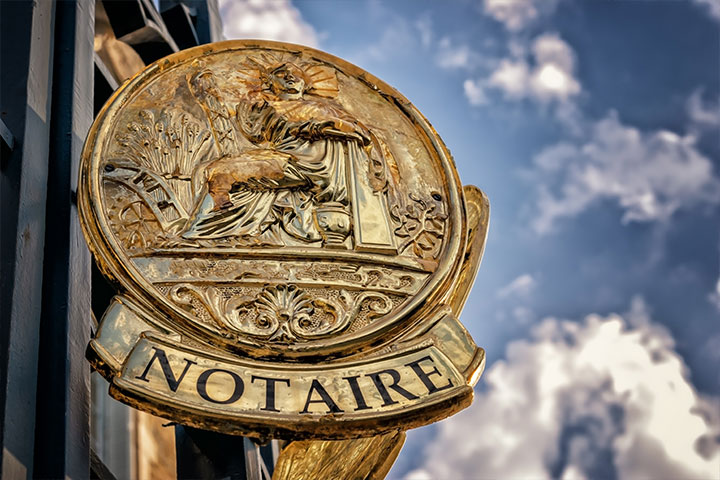
| Public Notary | Javni beležnik |
| Sworn Court Interpreter | Sudski tumač |
| Authentication / Certification | Overa |
| Birth Certificate (Register Extract) | Izvod iz matične knjige rođenih |
| Business Registers Agency | Agencija za privredne registre (APR) |
| Real Estate Cadastre (Land Register) | Katastar nepokretnosti |
Which Documents Can Be Apostilled in Serbia?
An apostille can be affixed to public documents issued by state authorities, courts, municipal registries, or public notaries in the Republic of Serbia (as well as eligible official records issued by its predecessor states, the Federal Republic of Yugoslavia and the SFR Yugoslavia, in an official language). Purely private documents without notarial or official certification cannot be apostilled directly.
| Can Be Apostilled | Cannot Be Apostilled Directly |
|---|---|
|
|
Designated Competent Apostille Authorities in Serbia

According to official HCCH records, two categories of authorities are authorized to issue apostilles in Serbia: the Basic Courts of first instance (Osnovni sud) and the Ministry of Justice. The apostille is signed by the President of the Court or an authorized judge and bears the official seal of the court. Contact details for all regional courts are listed on the Serbian judiciary portal portal.sud.rs.
| Authority | Jurisdiction & Role |
|---|---|
| Basic Court (Osnovni sud) | Issues apostilles for public documents executed, issued, or notarized by authorities and notaries located within that court’s territorial jurisdiction (subject to specimen signature verification). Example for Belgrade: First Basic Court in Belgrade (Prvi osnovni sud u Beogradu, Bulevar Nikole Tesle 42a, Tel. +381 11 655 38 73). |
| Ministry of Justice (Ministarstvo pravde) | Authorized to affix apostilles to eligible public documents from any judicial district across Serbia, provided the Ministry holds a deposited specimen signature and seal of the issuing official (Sector for International Legal Assistance, Nemanjina 22–26, 11000 Belgrade, Tel. +381 11 3622 352). |
| Public Notary (Javni beležnik) | Notarizes private documents, powers of attorney, corporate resolutions, and certified copies prior to apostille submission at the Basic Court. |
| Ministry of Foreign Affairs (Ministarstvo spoljnih poslova) | Involved exclusively in full consular legalization for non-Hague countries, authenticating the signature and seal of the Ministry of Justice before embassy attestation. |
Procedure, Processing Times, and Official Fees
Filing rules follow the administrative procedures of the competent Serbian Basic Courts (as documented by municipal courts such as Belgrade and Sombor and Serbia’s official HCCH questionnaire responses). Because reception hours and processing routines vary slightly by municipality, verifying local court jurisdiction prior to filing is essential.
| Submission Aspect | How It Works in Practice |
|---|---|
| In-Person Filing | Documents are presented physically at the court registry counter. The clerk verifies territorial jurisdiction over the issuing body and checks the official’s signature against deposited court specimens. |
| Filing via Representative | Per HCCH guidelines, requests may be lodged in person, by a family member, or by an authorized representative. For straightforward apostille certification of an existing document, courts generally do not require a special notarized power of attorney. |
| Mail, Online & e-Apostille | Email or web-portal filings are not accepted because the physical document must be inspected. Serbia does not currently issue electronic apostilles (e-Apostilles); electronic registry records must first be obtained as certified paper originals. |
| Processing Time | When specimen signatures are on file, courts frequently issue the apostille on the same business day. Including pre-screening, local court filing, optional document retrieval, and international courier shipping, end-to-end turnaround typically takes 5 to 14 business days. |
Official Court Fees: According to HCCH disclosures, the statutory fee is 2,090 RSD per document (comprising a 1,900 RSD court certification fee and a 190 RSD application fee; authenticating a sworn court interpreter’s signature carries a reduced fee of 490 RSD). Courts advise paying the fee only after the registry clerk has inspected the document and confirmed its eligibility. As Serbian administrative tariffs are periodically indexed, exact amounts should be confirmed at the time of filing.
Validity Period: The apostille stamp itself does not expire. However, receiving institutions abroad — such as immigration authorities, marriage registrars, and banks — routinely require the underlying certificate (especially police clearances, civil status extracts, and corporate registry extracts) to have been issued within the last 3 to 6 months.
Document Format and Formal Requirements
In Serbia, the apostille takes the form of a square stamp (at least 9 cm per side) or a printed sticker bearing an official ink seal and handwritten signature, affixed either directly onto the reverse of the original document or onto an attached allonge sheet bound to the record. It carries the mandatory French title “Apostille (Convention de La Haye du 5 octobre 1961)”, with the remaining fields completed in Serbian.
Document Requirements for Smooth Authentication:
- The document must be an intact original public record (or an official duplicate/certified copy issued by the competent body); laminated certificates are rejected.
- All signatures and official seals must be clear, legible, and match the specimen deposited with the Basic Court or Ministry of Justice.
- The record must be free of uncertified alterations, strikethroughs, or foreign markings; multi-page documents must be properly bound, numbered, and sealed.
Specific Rules by Document Category
Civil Status Certificates (Birth, Marriage, Death, Single Status)
Standard Serbian civil registry extracts are apostilled at the Basic Court covering the issuing municipality. For use in 23 participating European countries, requesting a multilingual extract under Vienna CIEC Convention No. 16 eliminates the need for an apostille altogether. For the United States, the United Kingdom, Canada, Australia, and other non-CIEC jurisdictions, a standard domestic certificate with a Hague Apostille and certified English translation is required.
Police Clearance / Criminal Record Certificates
Criminal record certificates used for visas, residency, citizenship, or employment abroad typically carry strict validity windows (often 90 days). We recommend obtaining and apostilling the certificate shortly before your submission deadline.
Educational Documents (Diplomas, Degrees, Transcripts)
State-recognized diplomas, degree certificates, and academic transcripts (Dodatak diplomi) intended for foreign universities, credential evaluation agencies (such as WES, ECE, or UK ENIC), or professional licensing boards are apostilled by the competent Basic Court. Note that an apostille authenticates signatures and seals on the academic record; it does not replace academic equivalence or licensing assessment in the destination country.
Corporate & Land Register Extracts
Unstamped PDF printouts downloaded from the Serbian Business Registers Agency (APR) or Real Estate Cadastre cannot be apostilled. For international banking (KYC/AML), foreign branch registration, or litigation, an officially signed and sealed paper extract must be obtained from the registry prior to court authentication.
Notarial Deeds, Powers of Attorney, and Translations
Powers of attorney, affidavits, corporate resolutions, and certified copies executed before a Serbian Public Notary (Javni beležnik) are apostilled by the Basic Court in the notary’s district. Note that when an apostille is placed on a notarized copy, it authenticates the notary’s signature rather than the original issuer’s signature.
Using Serbian Documents in the EU and Under Bilateral Treaties
EU Regulation (EU) 2016/1191 Does Not Apply
Regulation (EU) 2016/1191 of 6 July 2016 abolishes the apostille requirement for certain public documents circulating between EU Member States. Because Serbia is not an EU Member State, this Regulation does not apply to Serbian documents. Unless a specific bilateral treaty or the CIEC Convention applies, EU authorities require a Hague Apostille on Serbian records.
Multilingual Extracts Under the Vienna CIEC Convention No. 16
Serbia is a party to the Vienna CIEC Convention of 8 September 1976 on the issue of multilingual extracts from civil status records (birth, marriage, and death). Extracts issued on the standardized multilingual CIEC form are exempt from apostille and legalization across all 24 Contracting States: Austria, Belgium, Bosnia and Herzegovina, Bulgaria, Cabo Verde, Croatia, Estonia, France, Germany, Italy, Lithuania, Luxembourg, Moldova, Montenegro, Netherlands, North Macedonia, Poland, Portugal, Romania, Serbia, Slovenia, Spain, Switzerland, and Türkiye.
Bilateral Legal Assistance Agreements
Serbia continues several bilateral treaties on legal assistance inherited from former Yugoslavia — including agreements with Austria, Belgium, Belarus, Bosnia and Herzegovina, Bulgaria, Croatia, Cyprus, the Czech Republic, France, Greece, Hungary, Mongolia, Montenegro, North Macedonia, Poland, Romania, the Russian Federation, Slovakia, Slovenia, and Ukraine. However, the scope of exemption varies strictly by treaty and document type (for example, Italian authorities routinely still request an apostille in practice, while Algeria, Iraq, and Libya require full diplomatic/consular legalization). Always verify acceptance rules with the receiving authority in advance.
Consular Legalization of Serbian Documents for Non-Hague Countries
If your Serbian document is intended for a country that is not a party to the 1961 Hague Convention (such as the United Arab Emirates, Qatar, Kuwait, Egypt, Jordan, Lebanon, or Taiwan), an apostille will not be recognized. Instead, the document must undergo multi-stage consular legalization.
Consular legalization is the multi-step authentication procedure required to grant a public document full legal effect in a non-Hague jurisdiction, culminating in final attestation by the diplomatic or consular mission of the destination country.
According to the Ministry of Foreign Affairs of Serbia, full consular legalization follows four mandatory steps:
- Basic Court (Osnovni sud): The President of the Basic Court (or an authorized judge) authenticates the signature and seal of the issuing official or notary.
- Ministry of Justice of Serbia (Ministarstvo pravde): Authenticates the signature and official seal of the President of the Basic Court.
- Ministry of Foreign Affairs of Serbia (Ministarstvo spoljnih poslova): Authenticates the signature and seal of the Ministry of Justice (Legalization Department in Belgrade, weekday morning counter hours).
- Embassy or Consulate of the Destination Country: Affixes the final consular legalization stamp for use in the receiving state (embassies frequently require a certified translation into the destination country’s official language).
Main Differences Between an Apostille and Consular Legalization
| Feature | Hague Apostille | Consular Legalization |
|---|---|---|
| Where Accepted | All 125+ Contracting Parties to the 1961 Hague Convention (including USA, UK, Canada, Australia, EU). | Countries outside the Hague Convention (e.g., UAE, Qatar, Kuwait, Egypt, Taiwan). |
| Authorities Involved | Single step: competent Serbian Basic Court or Ministry of Justice. | Four steps: Basic Court → Ministry of Justice → MFA Serbia → Foreign Embassy. |
| Complexity & Cost | Low to moderate; fast, standardized procedure. | High; multiple government pre-certifications plus consular fees. |
| Foreign Embassy Attestation | Not required. | Mandatory final stage at the destination state’s mission. |
Common Pitfalls When Applying for a Serbian Apostille Independently
While obtaining an apostille at a court counter may seem straightforward, applicants handling the process from abroad frequently encounter costly rejections and delays:
-
1
Applying to the Wrong Municipal Court
A Basic Court can only authenticate documents issued within its specific territorial jurisdiction. Presenting a certificate from another municipality results in immediate refusal unless routed properly through the Ministry of Justice. -
2
Missing Specimen Signature on File
If the signing registrar, notary, or official has not yet deposited their specimen signature and seal with the court, authentication cannot proceed until the specimen is officially registered. -
3
Assuming EU or CIEC Exemptions Apply Worldwide
Submitting un-apostilled Serbian records to EU authorities under the mistaken belief that EU Regulation 2016/1191 covers Serbia — or submitting multilingual CIEC extracts in the UK, US, or Canada where the CIEC Convention is not recognized — leads to automatic rejection. -
4Ordering the Translation in the Wrong FormatTranslations prepared by a Serbian court interpreter remain foreign documents abroad and often require a second apostille on the interpreter’s signature — yet still risk rejection by local courts in Europe, or fail to include the specific signed Certificate of Accuracy required by USCIS, UK Home Office, or WES.
-
5
Laminated, Damaged, or Outdated Originals
Laminated certificates or worn Yugoslavia-era records with faded ink seals cannot be apostilled; a fresh official extract must be procured first.
Official Reference Links: Serbian & International Authorities
- HCCH – Designated Competent Authorities of Serbia (courts, Ministry of Justice, and fee details)
- HCCH – Apostille Convention Status Table (complete list of Contracting Parties)
- Ministry of Foreign Affairs of Serbia – Document Certification (apostille & consular legalization rules)
- Ministry of Foreign Affairs of Serbia – List of Bilateral Exemption Treaties (PDF)
- CIEC – Convention No. 16 on multilingual extracts from civil status records
Procurement of Documents from Serbia
If your original Serbian certificates have been lost, damaged, laminated, or require a fresh issue date for immigration or banking purposes, obtaining duplicates from abroad can be challenging. Our team procures new original documents across all municipalities in Serbia remotely, arranges immediate apostille or embassy legalization, and dispatches them to you via international courier.
Certified Translation of Documents from Serbia
Foreign authorities, universities, courts, and banks require Serbian documents and their apostilles to be accompanied by an official translation. We provide certified translations from Serbian into English (with a signed Certificate of Accuracy accepted in the US, UK, Canada, and Australia) as well as sworn translations for European jurisdictions. Pricing is calculated transparently based on document word count and complexity.
Does the Translation Have to Be Apostilled?
If a document is translated in Serbia by a Serbian court interpreter (Sudski tumač), that translation is treated abroad as a foreign document and generally requires its own apostille certifying the interpreter’s signature — and even then, certain foreign registries only accept locally certified translators. To avoid double fees and rejection risks, we strongly recommend first obtaining the apostille on the original document in Serbia, and then having both the original and the apostille translated in the destination jurisdiction (or via an internationally recognized certified translator).
Summary Checklist by Document Type
The table below outlines the standard preparation steps required before presenting Serbian documents abroad:
| Document Type | Preliminary Step in Serbia | Requirement Abroad |
|---|---|---|
| Civil Status Certificates (birth, marriage, death) | None (if recent unlaminated original) | Original + Apostille + Certified Translation (or CIEC multilingual form for 23 European states). |
| Police Clearance Certificate | Request shortly before submission | Original + Apostille + Certified Translation. |
| Educational Diplomas & Transcripts | Include Diploma Supplement / Transcript | Original (or notarized copy where accepted) + Apostille + Certified Translation. |
| Powers of Attorney & Notarial Deeds | Notarization before a Serbian Public Notary (Javni beležnik) | Original notarial instrument + Basic Court Apostille. |
| Trade & Land Register Extracts | Obtain official signed & sealed paper extract | Sealed original extract + Apostille + Certified Translation. |
| Court Judgments & Divorce Decrees | Ensure final binding force stamp is affixed | Official court copy + Basic Court Apostille + Certified Translation. |
| Documents for Non-Hague States (e.g., UAE, Qatar) | Basic Court → Ministry of Justice → MFA Serbia | Final consular attestation at the destination country’s embassy in Belgrade. |
Frequently Asked Questions (FAQ) About Apostilles in Serbia
According to the Hague Conference (HCCH), the designated Competent Authorities are the Basic Courts of first instance (Osnovni sud) and the Ministry of Justice of the Republic of Serbia (Ministarstvo pravde). A Basic Court issues apostilles for documents originating from authorities or notaries within its municipal jurisdiction, whereas the Ministry of Justice in Belgrade can authenticate documents from any judicial district in Serbia provided the official’s specimen signature and seal are deposited on file.
Yes, in almost all cases. The United States, the United Kingdom, Canada, and Australia require a Hague Apostille (plus a certified English translation) on Serbian public documents. Because Serbia is not an EU Member State, EU Regulation 2016/1191 does not exempt Serbian documents within the EU either — except where a specific bilateral treaty applies or when using a multilingual birth, marriage, or death extract issued under Vienna CIEC Convention No. 16 in one of its 23 other European contracting states.
Per HCCH records, the statutory court fee is 2,090 RSD per document (1,900 RSD certification fee plus 190 RSD application fee; subject to periodic tariff indexation). When the signing official’s specimen signature is already registered with the court, the apostille is often affixed on the same business day. Including document pre-check, local filing, optional translation, and international courier delivery, complete processing typically takes 5 to 14 business days.
No. Serbia currently issues only physical paper apostilles bearing a wet signature and official court seal, and courts do not accept email or online applications because the original record must be inspected in person. Even for electronic registries such as the Serbian Business Registers Agency (APR), a signed and sealed paper extract must be obtained for apostille certification.
Yes. Personal appearance by the document holder is not mandatory at Serbian Basic Courts. Schmidt & Schmidt can authenticate your existing originals or procure fresh duplicate certificates on your behalf anywhere in Serbia and ship the apostilled documents to your address worldwide.
In most cases, it is best to obtain the apostille on the Serbian original first and then have both the document and its apostille translated according to the rules of the destination country (for example, a certified English translation with a signed Certificate of Accuracy for the US, UK, or Canada, or a locally sworn translator in EU jurisdictions). A translation completed in Serbia is treated abroad as a foreign document and may require an additional apostille.
Documents bound for countries outside the 1961 Hague Convention require four-step consular legalization: (1) authentication by the competent Basic Court in Serbia, (2) authentication by the Serbian Ministry of Justice, (3) authentication by the Serbian Ministry of Foreign Affairs, and (4) final legalization by the embassy or consulate of the destination country in Belgrade.