
Whether you are tracing ancestral civil records in Sicily, Calabria, or Campania for heritage and estate matters, closing a property sale in Tuscany or Lake Como, managing an Italian company (S.r.l. / S.p.A.) in Milan, or authenticating a degree from Bologna or Rome: getting Italian documents apostilled from abroad involves strict provincial hurdles. Digital ANPR printouts are rejected at the counter, municipal certificates require a statutory foreign-use clause, revenue stamps (marche da bollo) must be purchased locally, and jurisdiction is split between Prefectures and Public Prosecutor's Offices. Schmidt & Schmidt assists private and corporate clients across the United States, the United Kingdom, Canada, Australia, the EU, and worldwide — handling remote document retrieval across all 107 Italian provinces, Hague Apostilles, and certified translation from Italian into English.
The Italian Republic ratified the Hague Convention of October 5, 1961 on December 13, 1977, and it entered into force for Italy on February 11, 1978 (see the HCCH Status Table). Italian public documents bearing an Apostille are recognized directly across roughly 130 contracting states without embassy legalization.
What does an Italian Apostille certify? An Apostille (Postilla) verifies the authenticity of the official's signature, the capacity in which the signer acted, and, where applicable, the authenticity of the seal or stamp affixed to a public document. It does not certify or validate the underlying factual content of the document itself.
Key Takeaways for US, UK, Canadian, Australian & International Clients
- Mandatory Outside the EU (US, UK, Canada, Australia): Because the United States, the United Kingdom (post-Brexit), Canada (Hague member since January 2024), and Australia are outside the European Union, EU Apostille exemptions do not apply. Every Italian public document — including birth, marriage, and death certificates, police clearances, notarial powers of attorney, corporate certificates, and university diplomas — requires an Italian Hague Apostille for official use in those jurisdictions.
- Split Two-Pillar System in Italy (Prefecture vs. Prosecutor): Italy has no single central Apostille office. Administrative, municipal (Comune), Chamber of Commerce, and educational documents are apostilled by the provincial Prefecture (Prefettura – UTG). Judicial records, criminal record checks, notarial deeds (Atti notarili), and court-sworn translations are apostilled exclusively by the Public Prosecutor's Office (Procura della Repubblica) at the competent District Court.
- Strict Territorial Rule (107 Provinces): Each Prefecture and Prosecutor's Office only holds specimen signatures (specimen di firma) for officials and notaries within its own province or judicial district — a record issued in Naples or Palermo cannot be apostilled in Rome or Milan!
- No Nationwide e-Apostille — Digital ANPR & Visura Downloads Rejected: Despite rumors online, Italy does not issue electronic Apostilles on self-printed digital PDFs. Both Prefectures and Prosecutor's Offices require physical paper originals bearing an ink signature (“firma autografa”) of a registered official.
- EU & European Exemptions: Within the 27 EU member states (e.g., Ireland, France, Spain, Germany), Regulation (EU) 2016/1191 exempts civil status records and clean criminal record certificates (for Italian citizens) from an Apostille, supplemented by CIEC Conventions No. 16 & No. 20 and bilateral treaties in continental Europe.
Quick Glossary: Essential Italian Legal & Registry Terms
| Hague Apostille / Consular Legalization | Apostille (Postilla) / Legalizzazione consolare |
| Prefecture (Administrative Apostilles) | Prefettura – Ufficio Territoriale del Governo (UTG) |
| Public Prosecutor's Office (Judicial & Notary Apostilles) | Procura della Repubblica presso il Tribunale |
| Certified True Copy | Copia autentica / Copia conforme all'originale |
| Court-Sworn Translation (in Italy) | Traduzione asseverata (with Verbale di giuramento) |
| Birth / Marriage / Death Record (3 Formats) | Certificato / Estratto per riassunto / Copia integrale dell'atto di nascita, matrimonio, morte |
| Single Status / Civil Status Certificate | Certificato di stato libero / Certificato di stato civile |
| Criminal Record & Pending Charges Certificates | Certificato del casellario giudiziale & Certificato dei carichi pendenti |
| High School Diploma & University Degree | Diploma di maturità & Diploma / Certificato di laurea |
| Company Info Printout vs. Official Certificate | Visura camerale (info extract) vs. Certificato camerale (Camera di Commercio) |
| Notarial Deed & Power of Attorney | Atto notarile (Rogito) & Procura (generale / speciale) |
| Italian Revenue Stamp (€16.00) | Marca da bollo |
Prefettura or Procura? Navigating Italy's Apostille Authorities
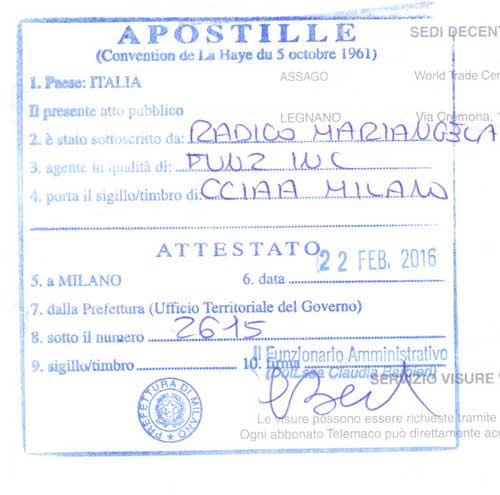
Sending a document to the wrong office is the single most common cause of rejection in Italy. Competence depends strictly on the issuing body and its geographic province:
| Category of Italian Document | Competent Apostille Authority in Italy |
|---|---|
| Municipal & Administrative Records (Birth, marriage, death, residency, and family status certificates from Comuni, official Chamber of Commerce certificates, health and tax agency certificates) |
The local Prefecture (Prefettura – UTG) of the issuing province. Autonomous exceptions: In Trento and Bolzano/South Tyrol, the Government Commissariat (Commissariato del Governo); in the Aosta Valley, the President of the Autonomous Region of Valle d'Aosta. |
| School Certificates & University Degrees (Diploma di maturità, Diploma / Certificato di laurea, Transcripts of Records) |
The provincial Prefecture (for primary/secondary school diplomas, typically after signature verification by the Regional/Provincial School Office — Ufficio Scolastico Regionale / Territoriale). |
| Judicial, Criminal Record & Notarial Acts (Court judgments, probate filings, Casellario giudiziale, Carichi pendenti, all deeds by Italian Notaries, and court-sworn translations) |
The Public Prosecutor's Office (Procura della Repubblica presso il Tribunale) of the judicial district where the court, Notary, or Notarial Archive (Archivio Notarile) is located. |
Italian embassies and consulates abroad (e.g., in Washington, New York, Chicago, Los Angeles, London, Toronto, or Sydney) cannot issue Apostilles on Italian documents.
Which Italian Documents Can Be Apostilled — and Which Are Rejected?
| Eligible for Apostille | Rejected in Current Form / Excluded |
|---|---|
|
|
Practical Guide to High-Demand Italian Documents
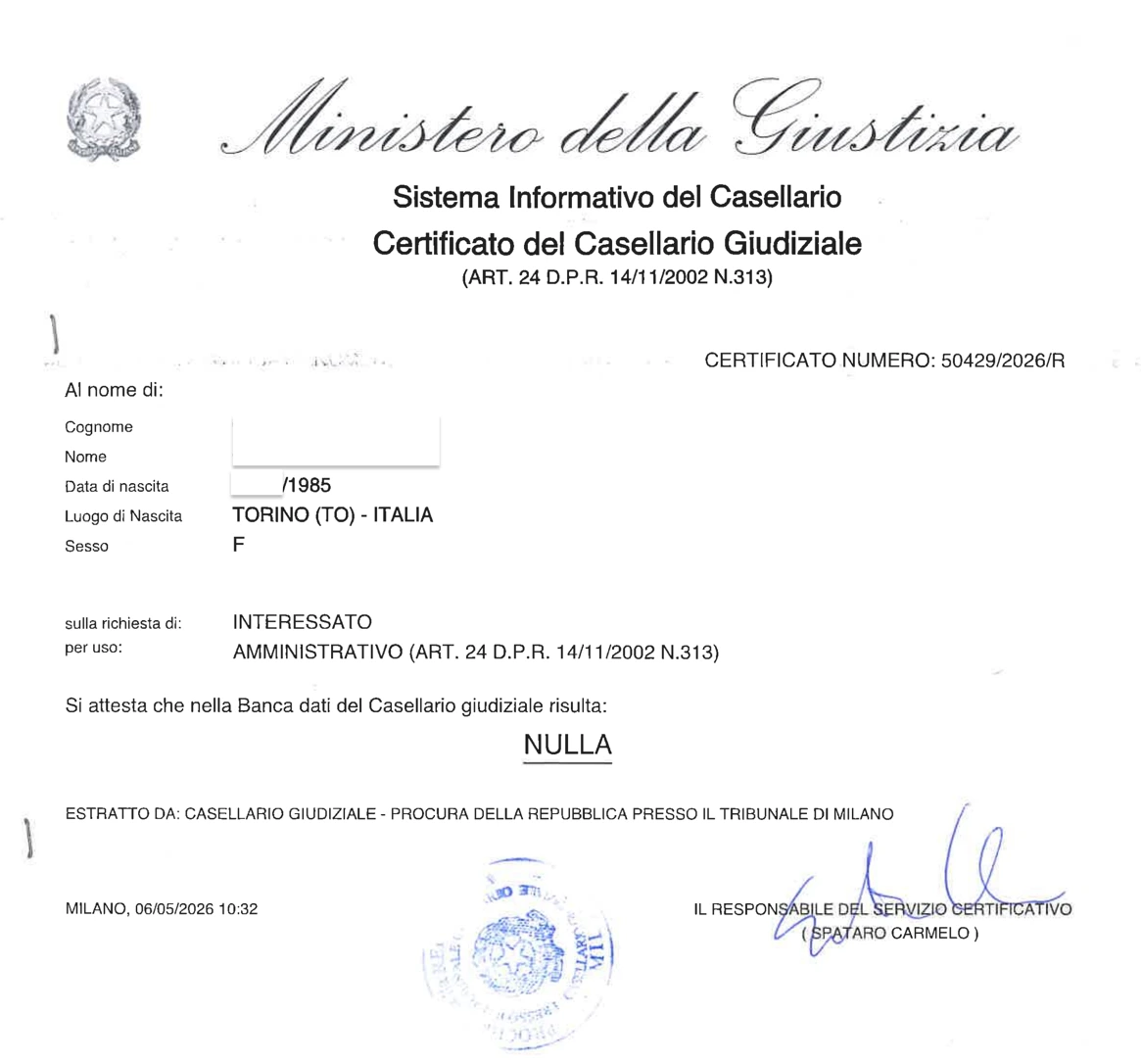
1. Police Clearances: “Casellario Giudiziale” vs. “Carichi Pendenti”
Expats, former study-abroad students, and professionals who lived in Italy are frequently asked by USCIS, the UK Home Office, IRCC Canada, Australian Home Affairs, or foreign licensing boards to provide Italian background checks. Italy issues two distinct judicial certificates through the Public Prosecutor's Office (Procura della Repubblica), which also affixes the Apostille: the Certificato del casellario giudiziale (final criminal convictions nationwide) and the Certificato dei carichi pendenti (pending criminal charges). Note that non-exempt certificates require €16.00 Italian revenue stamps (marche da bollo) plus administrative stamp fees, and are legally valid for 6 months (many immigration agencies require issuance within the last 3 months).
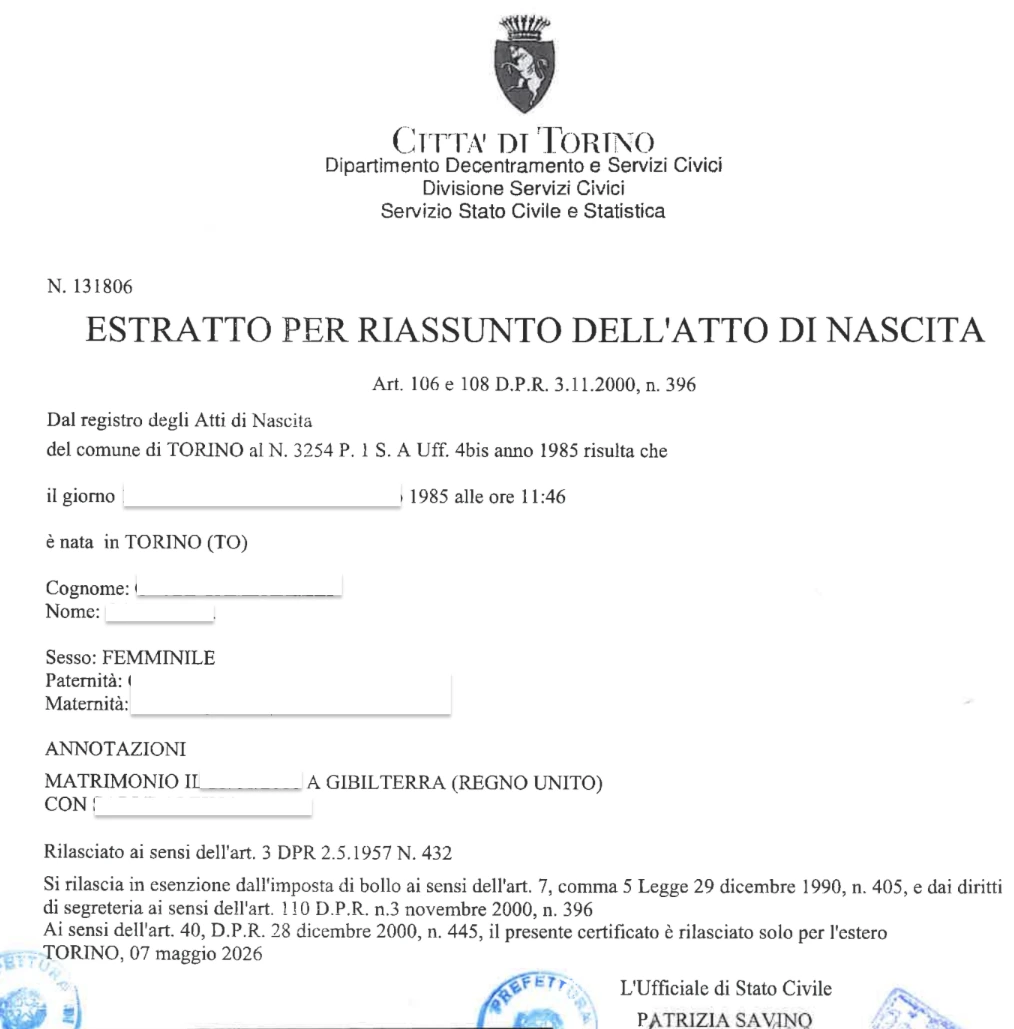
2. Birth, Marriage & Death Records (Dual Citizenship, Probate & Art. 40 Rule!)
Italian municipalities (Comuni) issue three distinct civil status formats — choosing the wrong one can derail court probate, dual citizenship (Jure Sanguinis / judicial citizenship petitions), or immigration filings: the basic Certificato, the Estratto per riassunto (summary extract showing parents' names and marginal annotations such as marriage or divorce), and the Copia integrale (certified literal copy of the original handwritten/bound registry page).
Crucial Italian Bureaucracy Trap: Under Article 40 of Presidential Decree 445/2000, domestic Italian municipal certificates carry a stamp stating they are invalid for public administration. To be eligible for a Prefecture Apostille, the certificate must be explicitly requested for foreign use with an ink signature of a registered Civil Registrar and bear the statutory wording: “Ai sensi dell'art. 40, D.P.R. 28 dicembre 2000, n. 445, il presente certificato è rilasciato solo per l'estero.”
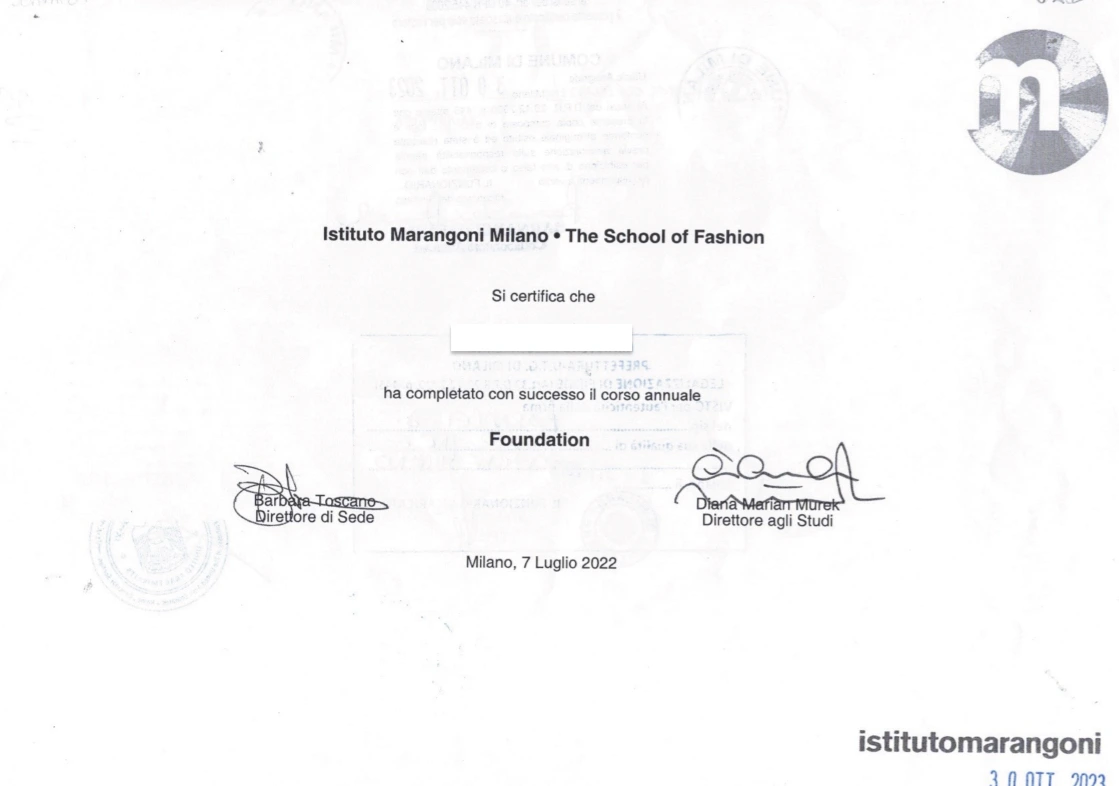
3. Italian University Degrees (Laurea) & High School Diplomas (Maturità)
Graduates of Italian universities (such as Bocconi, Politecnico di Milano, Sapienza Rome, University of Bologna, or Padua — including English-taught medical and master's programs) obtain their Apostille from the Prefecture of the university's province for credential evaluation (e.g., WES, ECFMG, GMC UK) or overseas employment. Watch out for two hurdles: High school diplomas (Diploma di maturità) usually require prior signature authentication by the Provincial/Regional School Office (Ufficio Scolastico). Meanwhile, decorative parchment university diplomas (Pergamena di laurea) often bear an older Rector's signature not on file at the Prefecture — in such cases, we retrieve an official, wet-signed Certificato di laurea (with €16.00 marca da bollo) signed by an authorized university officer whose signature is registered with the Prefecture.
4. Corporate Records: “Visura Camerale” vs. “Certificato Camerale”
In day-to-day Italian business, companies rely on a Visura camerale downloaded from the Chamber of Commerce Companies Register (Registro delle Imprese). However, a standard Visura is merely an uncertified informational printout — Italian Prefectures refuse to apostille it! When foreign banks (in London, New York, Zurich, or Singapore), M&A counsel, or overseas corporate registries require proof of good standing and signatory authority for an Italian S.r.l. or S.p.A., we obtain an official Certificato camerale (available in Italian or directly in English from the Camera di Commercio with an official's wet-ink signature and revenue stamp) and have it apostilled at the competent Prefecture.
5. Notarial Powers of Attorney (Procure), Property Deeds & Retired Notaries
Deeds executed before an Italian Notary (Notaio) — such as Powers of Attorney, real estate closings (Rogito), or wills — are apostilled exclusively by the Procura della Repubblica in the Notary's judicial district. If the Notary has retired, relocated, or passed away, the deed and signature verification must first be routed through the District Notarial Archive (Archivio Notarile Distrettuale) before the Prosecutor's Office affixes the Apostille.
Consular Legalization in Italy (UAE, Qatar, Kuwait, Egypt & Non-Hague Countries)
When an Italian document is destined for a country outside the 1961 Hague Apostille Convention — such as the United Arab Emirates (UAE), Qatar, Kuwait, Egypt, Vietnam, or Taiwan — an Apostille is not valid. Instead, the document undergoes consular legalization (Legalizzazione consolare): first, domestic signature legalization by the competent provincial Prefecture (for administrative/commercial records) or Public Prosecutor's Office (for judicial/notarial acts), followed directly by final embassy or consular legalization at the destination country's diplomatic mission in Rome or Milan.
Comparison: Italian Hague Apostille vs. Consular Legalization
| Criterion | Hague Apostille (Postilla) | Consular Legalization |
|---|---|---|
| Where Accepted | Across ~130 Hague Convention countries (including US, UK, Canada, Australia, Latin America & EU*). | Non-Hague countries (e.g., UAE, Qatar, Kuwait, Egypt, Vietnam). |
| Competent Authorities | Single-tier: Provincial Prefettura or District Procura della Repubblica. | Multi-tier: Prefettura / Procura + Foreign Embassy or Consulate in Rome/Milan. |
| Translation Workflow | For US/UK/CA/AU, fastest & cleanest to translate into English after the Italian Apostille is affixed. | Often requires a court-sworn translation (Traduzione asseverata) in Italy prior to embassy stamping. |
*Within the EU and CIEC member states, many civil status records are exempt from Apostille altogether.
6 Common Pitfalls When Requesting an Apostille in Italy
-
1
Filing at the Prefettura Instead of the Procura (or Vice Versa)
Sending a notarial Power of Attorney or police clearance to the Prefecture — or a birth certificate to the Prosecutor's Office — results in an immediate rejection and weeks of lost mail transit.
-
2
Submitting Digital ANPR Printouts or Standard “Visura Camerale” PDFs
Online certificates bearing a QR code or digital seal from ANPR or InfoCamere lack a handwritten official signature on file with the Prefecture and cannot receive a paper Apostille.
-
3
Missing the Art. 40 Foreign-Use Clause or €16.00 “Marca da Bollo” Revenue Stamps
Municipal certificates without the statutory “rilasciato solo per l'estero” clause are rejected. Furthermore, many Italian certificates and court requests require physical €16.00 Italian tax stamps (marche da bollo), which cannot simply be paid with a foreign check or credit card from overseas.
-
4
Unregistered University or School Signatures
Submitting a high school diploma without prior Ufficio Scolastico sign-off, or an older university parchment whose Rector's signature is missing from the Prefecture's specimen ledger, stalls the application until verified by the institution.
-
5
Expired 6-Month Statutory Validity (Art. 41 D.P.R. 445/2000)
Italian criminal record checks, residency certificates, and marital status certificates expire strictly six months after issuance and will not be apostilled once expired.
-
6
Overpaying for Court-Sworn “Traduzione Asseverata” in Italy Unnecessarily
In Italy, swearing a translation in court (Traduzione asseverata) requires a €16.00 revenue stamp every four pages plus a separate Prosecutor's Apostille on the court clerk's signature! Unless a foreign consulate in Italy specifically requires it, clients in the US, UK, Canada, and Australia save substantial time and money by having us apostille the Italian original first and then produce a certified English translation tailored to USCIS, UK Home Office / HMPO, or IRCC rules.
Remote Document Retrieval Across All 107 Italian Provinces & Islands
From Milan, Turin, Venice, Bologna, Florence, and Rome to Naples, Bari, Calabria, Sicily, and Sardinia — including tiny ancestral mountain Comuni: Schmidt & Schmidt retrieves fresh birth, marriage, and death extracts (Estratto or Copia integrale), criminal record checks, official Chamber of Commerce certificates (Certificato camerale), and land/cadastral records locally, supplies all required Italian marche da bollo tax stamps, secures the Apostille at the exact provincial Prefecture or Prosecutor's Office, prepares certified English translations, and couriers the physical originals worldwide.
Quick Reference Cheat Sheet: Document Routing in Italy
| Italian Document | Competent Apostille Office | Key Requirement |
|---|---|---|
| Birth, Marriage & Death Certificates | Provincial Prefettura (or Gov. Commissariat in Trento/Bolzano) | Wet-signed paper copy from the Comune bearing the Art. 40 foreign-use clause (no ANPR printout!). |
| Criminal Record & Carichi Pendenti | District Procura della Repubblica | Official certificate with revenue stamps; valid max. 6 months from issue. |
| High School Diploma (Maturità) | Provincial Prefettura | Usually requires prior signature verification at the Ufficio Scolastico. |
| University Degree / Certificato di Laurea | Provincial Prefettura of the university | Paper certificate bearing a registered university official's ink signature + €16 marca da bollo. |
| Company Certificate (Certificato Camerale) | Provincial Prefettura of the Chamber | Must be an official signed Certificato camerale (not a plain Visura printout!). |
| Notarial Powers of Attorney & Deeds | District Procura della Repubblica | Original or certified copy from an active Notary (or via Archivio Notarile if retired). |
| Court Judgments & Divorce Decrees | District Procura della Repubblica | Court-certified copy signed by an authorized court clerk (with finality clause if required). |
Official Sources & Italian Government Portals
- Italian Ministry of the Interior (interno.gov.it): Nationwide Directory of All Provincial Prefectures (Prefetture – UTG)
- Italian Ministry of Justice (giustizia.it): Directory of Public Prosecutor's Offices (Procure della Repubblica) & Criminal Record Offices
- Italian Ministry of Foreign Affairs – MAECI (esteri.it): Official Guidelines on Legalization & Apostilles
- Registro delle Imprese (registroimprese.it): Official Italian Business Register of the Chambers of Commerce
- HCCH: Up-to-Date Status Table & Designated Italian Authorities under the 1961 Apostille Convention
Information verified in November 2026. Final acceptance rules and document recency limits remain subject to the requirements of the receiving institution in the destination country.
Frequently Asked Questions (FAQ) About Apostilles in Italy
Competence in Italy is divided by document type: the provincial Prefecture (Prefettura – UTG) issues Apostilles on administrative, municipal civil status (birth, marriage, death), Chamber of Commerce, and academic documents (in Trento and Bolzano, the Government Commissariat; in Aosta Valley, the Regional President). The Public Prosecutor's Office (Procura della Repubblica) at the competent District Court issues Apostilles on court rulings, criminal record checks, notarial deeds, and court-sworn translations.
Yes. Because the United States, the United Kingdom (post-Brexit), Canada, and Australia are not EU member states, EU Regulation 2016/1191 does not apply. All Italian public documents — including birth and marriage certificates, police clearances, powers of attorney, corporate certificates, and university diplomas — must carry an Italian Hague Apostille (accompanied by a certified English translation) to be legally accepted there.
No. Italy does not operate a nationwide electronic Apostille (e-Apostille) system for self-printed online certificates. Both digital ANPR citizen printouts and ordinary Visura camerale company downloads are rejected by Prefectures. You must obtain a physical paper document bearing the handwritten ink signature (firma autografa) of a registered official — such as a municipal certificate carrying the Art. 40 foreign-use clause or an official signed Certificato camerale from the Chamber of Commerce.
While the Apostille stamp itself does not expire, Italian administrative and judicial certificates (such as criminal record checks, residency, and marital status certificates) are valid under Art. 41 D.P.R. 445/2000 for exactly 6 months from their date of issue; expired certificates cannot be apostilled. Certificates attesting to permanent facts (birth or death) have unlimited domestic validity in Italy, though foreign authorities frequently request extracts issued within the last 3 to 6 months.
For submissions in the United States, United Kingdom, Canada, or Australia, translating after the Italian original is apostilled is almost always faster and far more cost-effective: an Italian Traduzione asseverata requires €16.00 court tax stamps every four pages plus a second Apostille from the Prosecutor's Office. Our certified translators prepare English translations with a signed Certificate of Accuracy tailored directly to USCIS, UK Home Office / HMPO, IRCC, or university credential evaluators.
Yes — across all 107 Italian provinces, from major cities like Milan, Rome, and Naples to small rural villages in Sicily, Calabria, Abruzzo, Veneto, or Sardinia. We handle local municipal requests, supply physical Italian revenue stamps (marche da bollo), attend appointments at the provincial Prefecture or Prosecutor's Office, and deliver the apostilled originals worldwide by tracked courier.