Schmidt & Schmidt provides comprehensive legalization and apostille services for documents issued in China. We assist private individuals and companies with the preparation of Chinese documents for use abroad, including notarial certification, translation, apostille, consular legalization where required, and international courier delivery.
Chinese documents such as birth certificates, marriage certificates, diplomas, academic transcripts, police clearance certificates, business licenses, company documents and powers of attorney often need to be formally certified before they can be submitted to foreign authorities, universities, courts, banks, immigration offices or business partners.
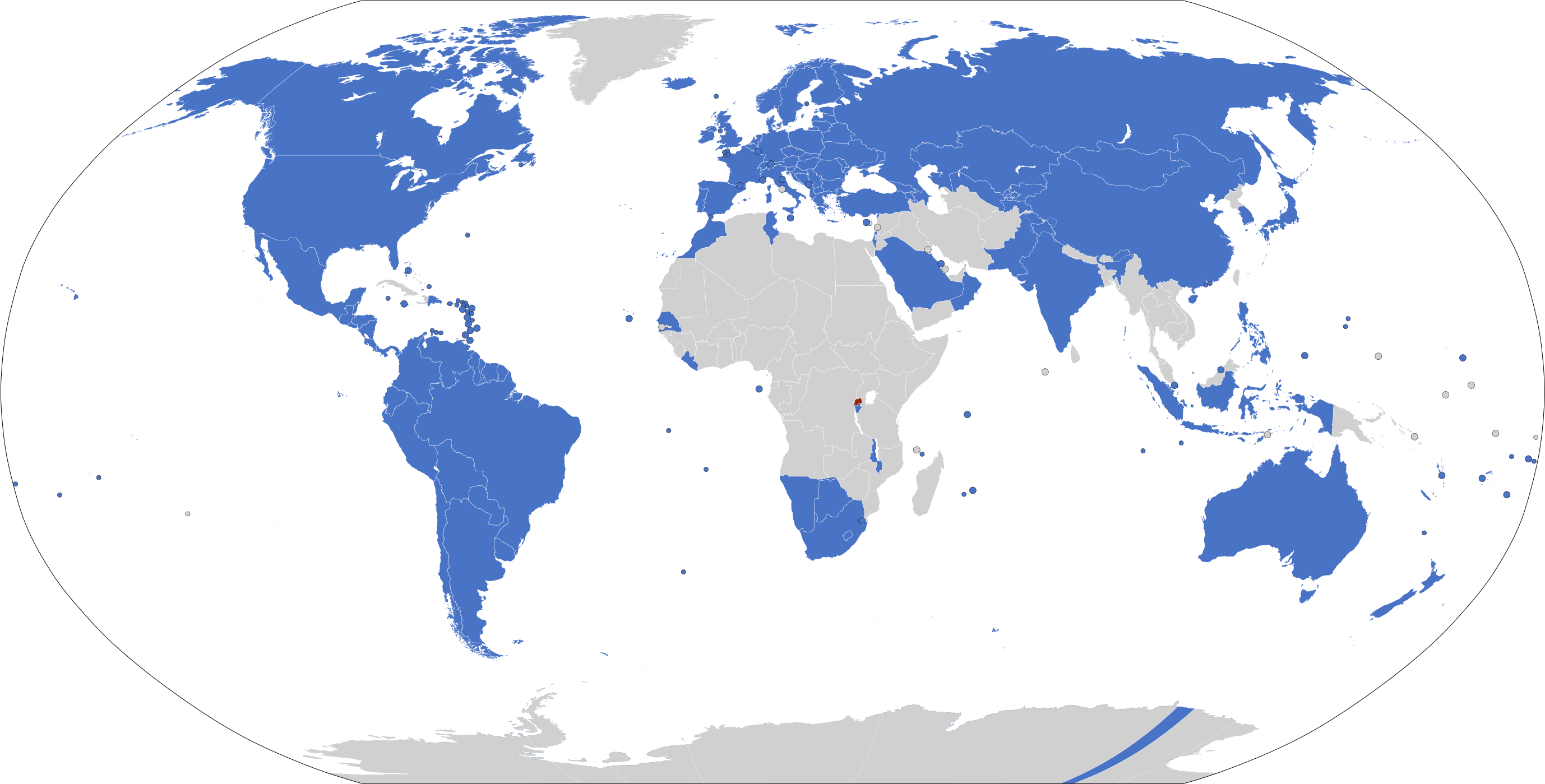
China acceded to the Convention Abolishing the Requirement of Legalisation for Foreign Public Documents on 8 March 2023, and the Convention entered into force for China on 7 November 2023. Since then, Chinese public documents covered by the Convention generally require an apostille instead of consular legalization when the Convention applies between China and the destination country. Exemptions may remove the need for authentication altogether. See the official HCCH status table for entry-into-force dates and relevant objections.
An apostille is a certificate that confirms the authenticity of the signature, seal and authority of the official who signed or certified a public document. It does not certify the content of the document itself, but confirms its formal origin for international use.
In China, an apostille is issued as an additional certificate attached to the document package. It identifies the issuing authority and the signature or seal being authenticated and includes information for verification. The competent authority depends on the origin of the public document or notarial act being authenticated. A foreign original does not become a Chinese-issued document simply because its holder is in China.
In China, an apostille is usually not affixed directly to the original document. For many common documents, such as birth certificates, diplomas, police clearance certificates or company registration documents, a notarial certificate is first prepared on the basis of the original document or its scan. The apostille is then attached to this notarial document, often together with a translation bound into the same package.
Consular legalization may still be required where the Convention does not apply between China and the destination country, unless an exemption applies. The correct procedure therefore depends on the destination country, the type and language of the document, the presence of signatures and seals, and the requirements of the receiving authority abroad.
On this page
Find the document preparation route, translation requirements, submission procedure and practical information for arranging your Chinese documents.
What does a Chinese apostille look like?
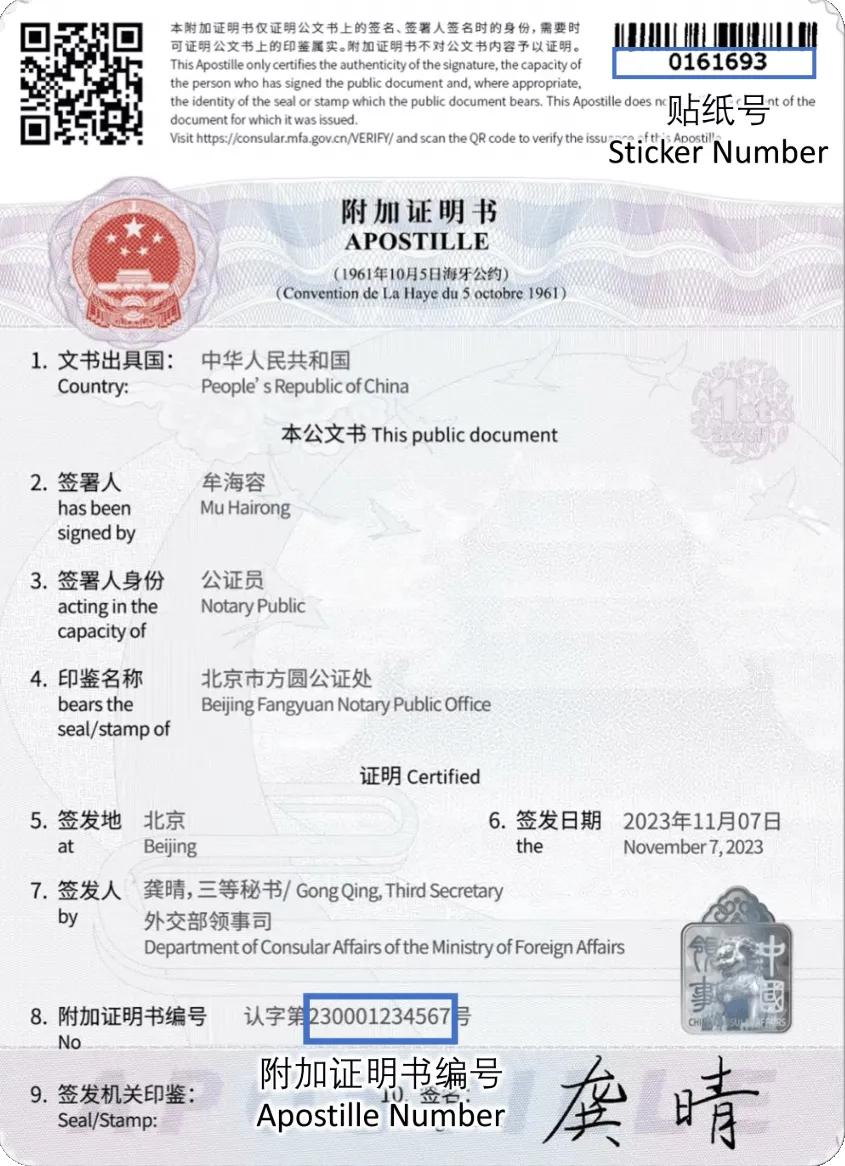
A Chinese apostille is issued as an additional certificate attached to the notarial or official document package. It confirms the authenticity of the signature, seal and authority of the official who signed or certified the document. It does not certify the content of the document itself.
A Chinese apostille normally contains the following details:
- the title “Apostille” and reference to the 1961 Hague Convention;
- the country of issuance, namely the People’s Republic of China;
- the name and capacity of the person who signed the public document or notarial certificate;
- the name of the authority or organization whose seal or stamp appears on the document;
- the place and date of apostille issuance;
- the name of the competent authority issuing the apostille;
- the apostille number;
- the seal and signature of the authorized apostille officer.
In mainland China, apostilles are issued by the Ministry of Foreign Affairs of the People’s Republic of China and by authorized local Foreign Affairs Offices within their respective administrative areas.
Which Chinese documents can be apostilled?
A wide range of Chinese documents can be prepared for apostille certification, provided that they can be converted into the proper notarial or official certificate format required for international use. The most common categories include civil status documents, educational documents, police clearance certificates, and corporate or commercial documents.
The key question is not only whether the document exists, but whether it is suitable for notarization or official certification in China. Private documents should normally bear valid signatures and seals, while documents issued by public authorities, schools, registration bodies or other institutions should have a formal official format. If a Chinese institution issued the document only in a foreign language, ask the notary whether a Chinese-language version or additional verification from the issuing institution is required.
Need to obtain the document before apostille?
In some cases, the document that needs to be apostilled has not yet been obtained. This may apply to police clearance certificates, trade register extracts, company registration documents, certificates of marital capacity, duplicate civil status documents and other records issued by Chinese authorities or institutions.
Schmidt & Schmidt can assist not only with apostille certification, but also with the preliminary document retrieval stage where this is legally and practically possible. Depending on the document type, we may help obtain or arrange its issuance in China, prepare the necessary notarial certificate, arrange translation, apply for the apostille and organize international delivery.
For further information about specific document types, please see our guides on obtaining commercial register extracts and company documents from China and obtaining and legalizing a Certificate of Marital Capacity in China.
Not every Chinese document can be obtained by a representative. Some documents may require the applicant’s personal presence, an original power of attorney, identity documents or additional confirmation from the issuing authority. We recommend sending us the available information first so that we can check whether document retrieval is possible in your case.
Procedure for apostilling documents in China
Step 1: Prepare the notarial or commercial certificate
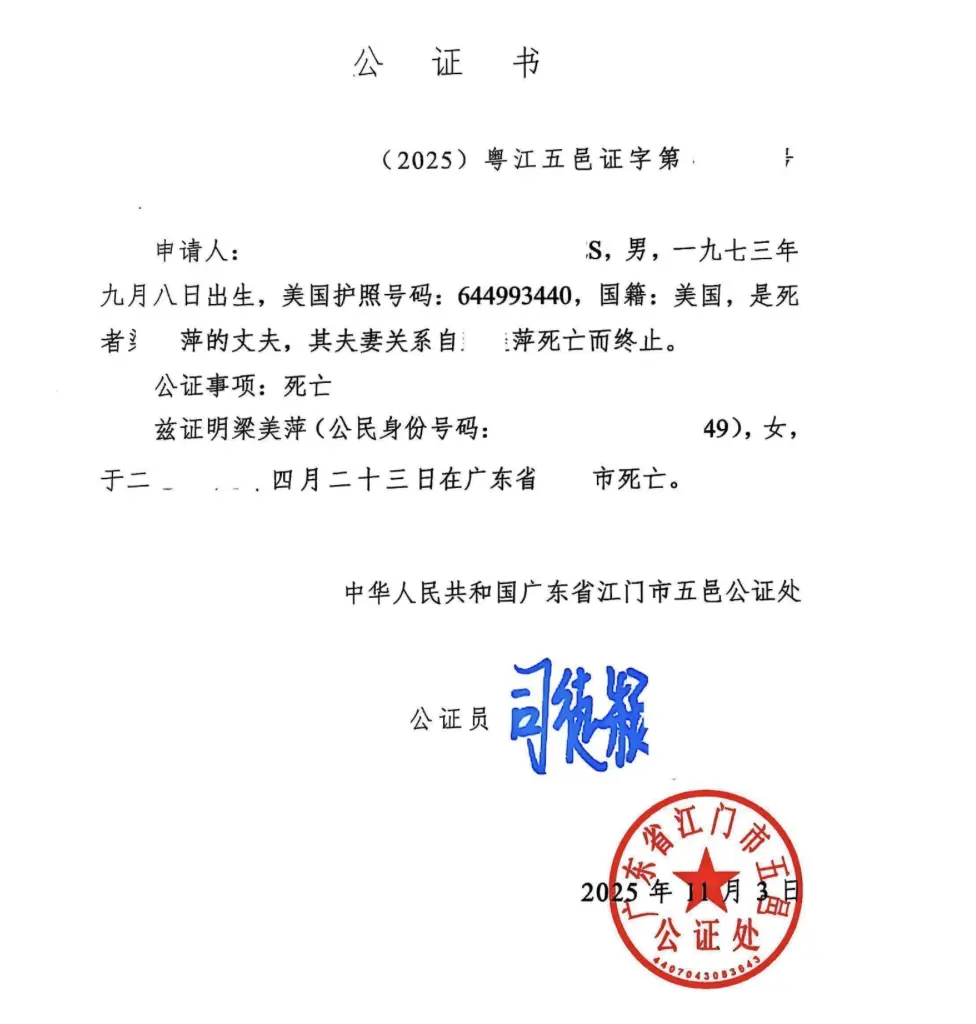
For common personal documents such as diplomas, birth certificates and police clearance certificates, the usual route is to prepare a Chinese notarial certificate (公证书) first. The apostille is then attached to that certificate, rather than directly to the original personal document. A notarial certificate may certify a fact, a signature or a copy; these are not interchangeable, so the correct form must be agreed in advance.
Tell the notary the destination country, purpose and receiving institution's requirements. Depending on the required format, an additional notarial certificate confirming that the translation corresponds to the Chinese text may be needed. In practice, this is often described as single-number or double-number notarization.
For an in-person application, prepare the original document, passport and supporting materials requested by the notary. If the source document is not in Chinese, obtain confirmation of the acceptable route before ordering a translation or requesting a replacement.
A translation is normally prepared as part of the notarial package for overseas use. However, it may not replace a certified or sworn translation required by the receiving institution abroad. Confirm both requirements before the certificate is issued.
In our practice, many cases can be handled using scans and a power of attorney in simple written form. The notary may nevertheless request additional materials, originals or a notarized power of attorney during examination. We confirm the initial requirements after reviewing your documents and explain any subsequent requests.
Corporate and commercial documents
Depending on the document and its intended use, corporate documents may require notarization or a commercial certificate issued through the China Council for the Promotion of International Trade (CCPIT). CCPIT is a separate certification route; it does not issue a notarial certificate.
The required materials may include the business license, evidence of the representative's authority, identification and the signed or sealed source document. The certification body must confirm the exact checklist and its jurisdiction. A company founder and its legal representative are not necessarily the same person.
Step 2: Submit the prepared certificate for apostille
Apostilles on mainland Chinese public documents are issued by the Ministry of Foreign Affairs of the PRC or authorized local Foreign Affairs Offices. The local route depends on the institution that issued the notarial or other qualifying certificate. Not every Foreign Affairs Office is authorized to issue apostilles.
Confirm the submission method, appointment requirements, supporting documents and packaging rules with the receiving office. There is no single walk-in procedure that can safely be assumed for every region.
As a regional example, the Shanghai Foreign Affairs Service Centre announced that, from 22 June 2026, ordinary processing takes 3 working days, excluding the acceptance day. Its service information lists expedited processing of 2 working days. These periods concern the apostille stage after acceptance, not document retrieval, notarization, translation or delivery.
Notarial preparation has a separate timeframe. Article 30 of the PRC Notarization Law provides for issuance within 15 working days after acceptance when the statutory conditions are met; time needed for supplementary evidence, verification or force majeure is excluded. We estimate the complete service timeframe after reviewing the case.
Step 3: Check the completed package
Check names, dates, document numbers and the translation before the originals are dispatched. Errors in translations occur in our practice, and an apostille does not certify translation accuracy.
We check the completed package and send scans to the client for an additional review before dispatch.
This helps identify discrepancies while the documents are still in China. The apostille itself can be checked through the official MFA verification service using the QR code or the required certificate numbers.
China's electronic apostille
On 18 June 2025, the MFA launched a pilot for electronic apostilles on certificates of origin issued by CCPIT. The official announcement states that electronic and paper apostilles have equal legal effect and that the service will be expanded gradually. This pilot should not be assumed to cover personal notarial certificates. Eligibility must be checked for the specific document; the announcement does not establish a general Chinese-ID-card-only restriction.
Legalization of Chinese educational documents for use abroad
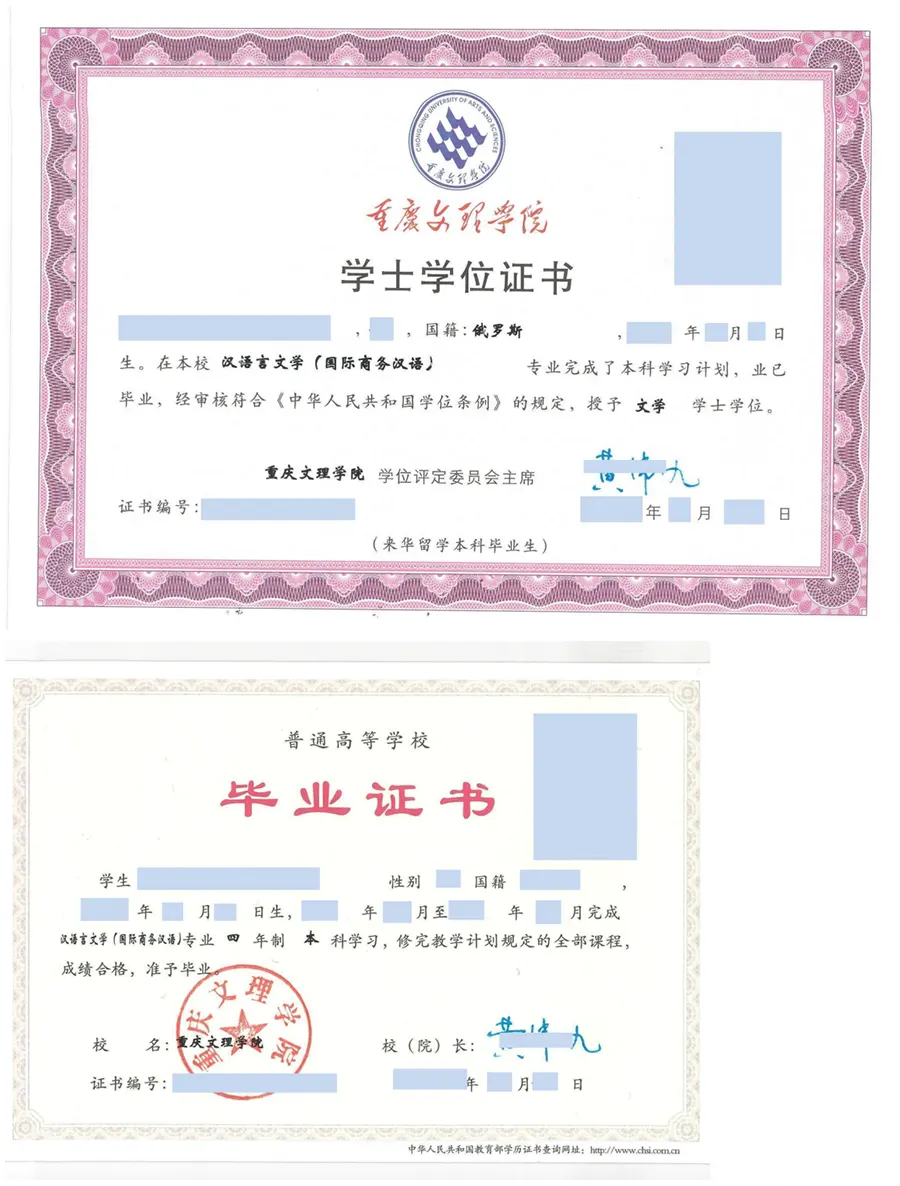
Chinese educational documents may be required abroad for university admission, employment, immigration, professional licensing, academic credential evaluation and recognition of qualifications. These documents may include diplomas, degree certificates, graduation certificates, academic transcripts, school reports, certificates of study and enrollment records.
In China, an apostille is usually not affixed directly to the original diploma or transcript. In most cases, a Chinese notarial certificate is prepared, with verification by the issuing institution or through an education verification service where required by the notary. The apostille is then affixed to this notarial certificate.
The notarial certificate normally includes a translation required for the apostille procedure in China. However, this translation may not always be accepted by the receiving authority abroad. Some universities, employers, immigration authorities or licensing bodies may require an additional certified, sworn or locally approved translation.
Requirements may differ depending on the destination country and the institution receiving the documents. For more information about verification, notarization, apostille certification, consular legalization, translation requirements and recognition abroad, please see our guide to apostille and legalization of educational documents and diplomas from China.
Legalization of a Chinese Police Clearance Certificate for use abroad
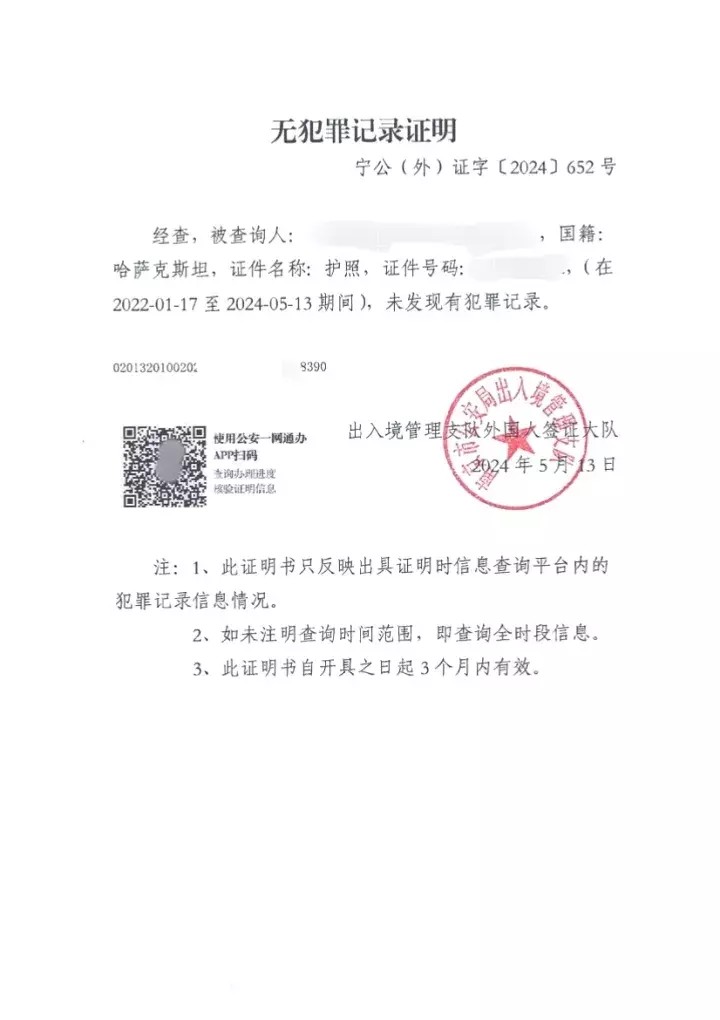
A Chinese Police Clearance Certificate, also known as a Certificate of No Criminal Record, may be required abroad for immigration, employment, residence permits, citizenship applications, study, marriage registration, professional licensing and other official procedures.
Before it can be used abroad, the certificate normally has to be prepared as a Chinese notarial certificate and then authenticated by apostille or consular legalization, depending on the destination country.
The general procedure includes:
-
Notarization:
the certificate is notarized by a Chinese notary office and normally combined with a translation in the notarial certificate package. The destination country should be specified at this stage, as the requirements may vary. -
Apostille:
if the Convention applies between China and the destination country, the notarial certificate is submitted to the Ministry of Foreign Affairs of China or an authorized local Foreign Affairs Office for apostille certification. -
Consular legalization:
if the Convention does not apply and no exemption is available, the document must normally be authenticated by the competent Chinese authority and then legalized by the consulate of the destination country in China.
The total timeframe depends on whether the police certificate has already been obtained, the city, the applicant’s residence history, notarial checks and the destination country. We confirm an estimate after reviewing the available materials.
Note:
Some foreign authorities may require an additional certified, sworn or locally approved translation. Since police clearance certificates are generally time-sensitive, careful advance planning is essential.
What can go wrong when applying for an apostille in China on your own?
At first glance, the apostille procedure in China may seem straightforward: prepare the document, submit it to the competent authority and wait for the result. In practice, however, many problems arise before the apostille is even issued — during document preparation, notarization, translation or submission.
-
1
Wrong type of notarization
The notary or certification body must know that the document is intended for use abroad and in which country it will be submitted. If the wrong type of notarial certificate is prepared, the document may not be accepted for apostille or by the receiving authority abroad.
-
2
Document not suitable for certification
Some documents cannot be used as a basis for a Chinese notarial certificate or commercial certificate. Problems may arise if the document is not in Chinese, lacks a proper signature or seal, or was not issued in an official format.
-
3
Translation may not be accepted abroad
A translation is often included in the Chinese notarial certificate package. However, this translation may not always replace a certified or sworn translation required by the receiving authority in the destination country.
-
4
Wrong place of submission
The apostille route usually depends on where the notarial certificate or commercial certificate was issued. Submitting the document through the wrong regional procedure may lead to delays or rejection.
-
5
Validity period problems
Some Chinese documents, such as police clearance certificates or certain official certificates, may be accepted only within a limited period. If the procedure is started incorrectly or too late, the document may expire before it can be used abroad.
-
6
Requirements of the destination country are overlooked
Even if the apostille is issued correctly in China, the receiving authority abroad may have its own requirements regarding the language, document format, date of issue, notarization type or additional certified translation.
Each of these mistakes can result in rejected documents, wasted fees and weeks of delay. A specialist who knows the Chinese apostille process will identify the correct document type, notarization form and submission route before work starts, helping reduce avoidable delays and the risk of rejection. The receiving institution retains responsibility for deciding whether a document meets its requirements.
Former Chinese citizens who have changed their citizenship
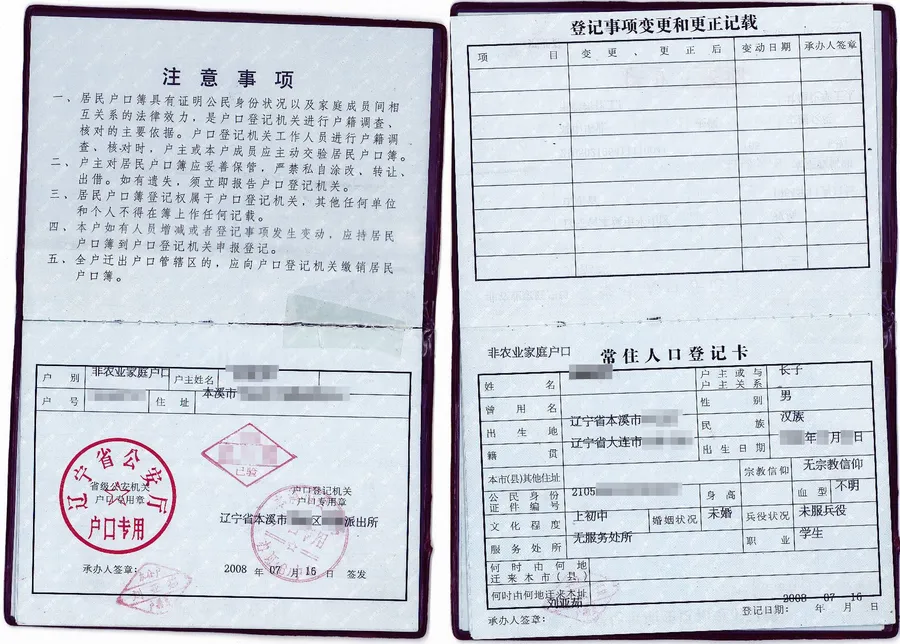
If a Chinese record identifies the holder by a former Chinese name or ID number, the notary may require evidence linking that record to the current foreign passport. Please provide any available former identity documents, name-change records and proof of the change of nationality for an initial review.
A Certificate of Household Registration Cancellation (户籍注销证明) may be relevant in these cases. Whether it is required and how it can be obtained must be checked with the responsible public security authority and the notary. It should not be presented as a mandatory first step for every former Chinese citizen.
Which Foreign Affairs Office should you contact?
The competent local office normally depends on where the notarial or commercial certificate was issued. Local offices work within the scope authorized by the MFA. The MFA can process documents from across mainland China.
Use the official list of competent authorities for mainland China to identify the responsible authority, then check its own service notice for current submission addresses, opening hours and appointment rules.
For Shanghai, see the municipal service portal and the Shanghai Foreign Affairs Service Centre. When published information differs, confirm the arrangements with the receiving office before travelling or sending documents.
Consular legalization of Chinese documents for use abroad
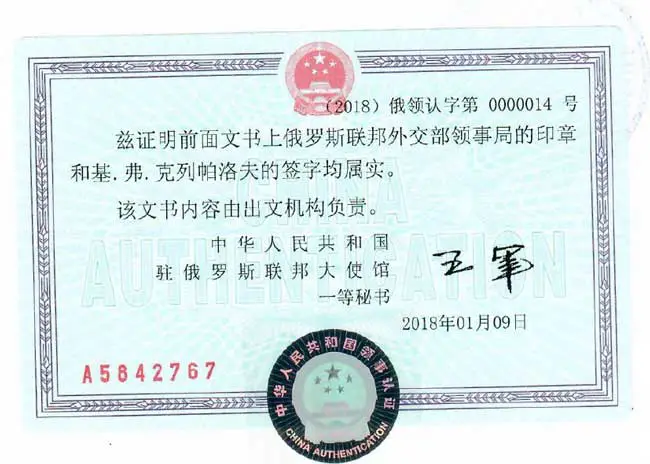
If the Convention does not apply between China and the destination country, consular legalization may be required unless an exemption applies. Check the HCCH status table and relevant notifications before choosing the procedure.
The usual route is:
- Prepare the appropriate Chinese notarial or other qualifying certificate and any required translation.
- Obtain authentication by the MFA or the authorized Chinese authority.
- Obtain legalization by the destination country's embassy or consulate in China.
The destination country's mission sets its own requirements for document form, translation and submission. Legalization authenticates the relevant signature or seal; it does not guarantee recognition of the document's contents or suitability for every purpose.
The receiving institution may also impose a maximum age for the underlying document. Confirm this before starting the process.
The main differences between an apostille and consular legalization of documents
The common feature between apostille and consular legalization is that they authenticate an official document for presentation to institutions in another country. However, they have many differences.
| Apostille | Consular legalization | |
|---|---|---|
| Legal effect | Replaces consular legalization for documents covered by the Convention where it applies between the issuing and destination states. Recipient requirements still apply. | May be required where the Convention does not apply between the states concerned, subject to applicable exemptions. |
| Difficulty | Moderate. To obtain an apostille, contact the competent apostille authority of the state of origin of the document. | High. For consular legalization, various inland authorities and a diplomatic mission of the state of destination must be involved. |
| Pre-certification | For common personal documents from China, a notarial certificate is usually prepared first. | The required notarial or official preparation depends on the document and destination. |
| Attestation at the state of destination embassy in the state of origin of the document | No need to contact the Consulate of the country of destination. | Is the final step of legalization. |
Procurement of documents from China
If the important documents are lost or damaged, or current copies of the documents are needed, the re-issue of the documents is required. It is not unusual for people outside China to encounter difficulties with obtaining new documents when abroad. Our consultants will help you procure new documents from China remotely, and we can arrange for your documents to be sent by courier anywhere in the world.
Certified translation of documents from China
The translation included in a Chinese notarial certificate and the translation required by the receiving institution serve different procedural purposes. A recipient may accept the Chinese notarial translation or request a separate certified or sworn translation by a translator it recognizes.
Does the translation need a separate apostille?
There is no universal rule that every translation needs an apostille. The answer depends on who prepared and certified it, the form of the notarial package and the recipient's requirements. Confirm whether the final translation must include the apostille and other certification pages before ordering it.
How to arrange your Chinese documents through Schmidt & Schmidt
Send scans of the document and passport, the destination country and the purpose of use.
Include any written requirements from the receiving institution and tell us where the finished documents should be delivered.
We review the materials, confirm a feasible route and provide the required document checklist, estimated timeframe and quotation before work starts. After completion, we check the package and send scans for your review before arranging international courier delivery.
Send your documents using the contact form on this page for an initial review.
Official sources
- HCCH: full text of the 1961 Apostille Convention
- HCCH: status table and relevant notifications
- HCCH: competent authorities for mainland China
- PRC Government / MFA: Legalisation of Documents/Apostille
- PRC Notarization Law, including Article 30 on timeframes
- Shanghai Foreign Affairs Office: apostille guidance
- Shanghai Foreign Affairs Service Centre: processing-time reduction from 22 June 2026
- Shanghai Foreign Affairs Service Centre: ordinary and expedited service
- MFA: electronic apostille pilot announcement, 17 June 2025
Information reviewed on 16 October 2026. Confirm current requirements and processing times for the specific document before applying.