Summary: TR EAEU 048/2019 On Energy Efficiency Requirements for Energy-Consuming Devices
- Eurasian Counterpart to EU Ecodesign & Energy Labelling: Technical Regulation TR EAEU 048/2019 establishes binding minimum energy efficiency thresholds, standby power consumption limits, and energy label specifications across the Eurasian Economic Union (EAEU).
- 18 Regulated Product Categories: Covers household appliances as well as key industrial components including three-phase induction motors (0.75–375 kW), circulator and water pumps, electric fans, external power supplies, lighting equipment, and computers and servers.
- Two-Tier Conformity Assessment (Decision No. 23): Lighting equipment as well as computers and servers require stricter EAC Certification (Schemes 1C, 3C, 4C); all other listed product groups require an EAC Declaration (Schemes 1d, 2d, 3d, 4d, 6d).
- Legal Status & Transition Periods: Adopted on August 8, 2019, the mandatory entry-into-force date has been postponed several times while harmonized testing standards and efficiency tiers are finalized. Once effective, a 24-month transition period applies for previously unregulated devices.
- Mandatory Documentation & Sanctions-Compliant Execution: Requires laboratory test reports, a Russian Operation Manual, a technical product fiche with ecodesign parameters, and the EAEU energy label—handled securely in Euros via Passau and Kazakhstan.
What Is TR EAEU 048/2019 and What Is Its Current Legal Status?
Technical Regulation TR EAEU 048/2019 "On Energy Efficiency Requirements for Energy-Consuming Devices" was adopted to ensure energy conservation, resource efficiency, and transparent consumer information throughout the Eurasian Economic Union (Russia, Belarus, Kazakhstan, Armenia, and Kyrgyzstan).
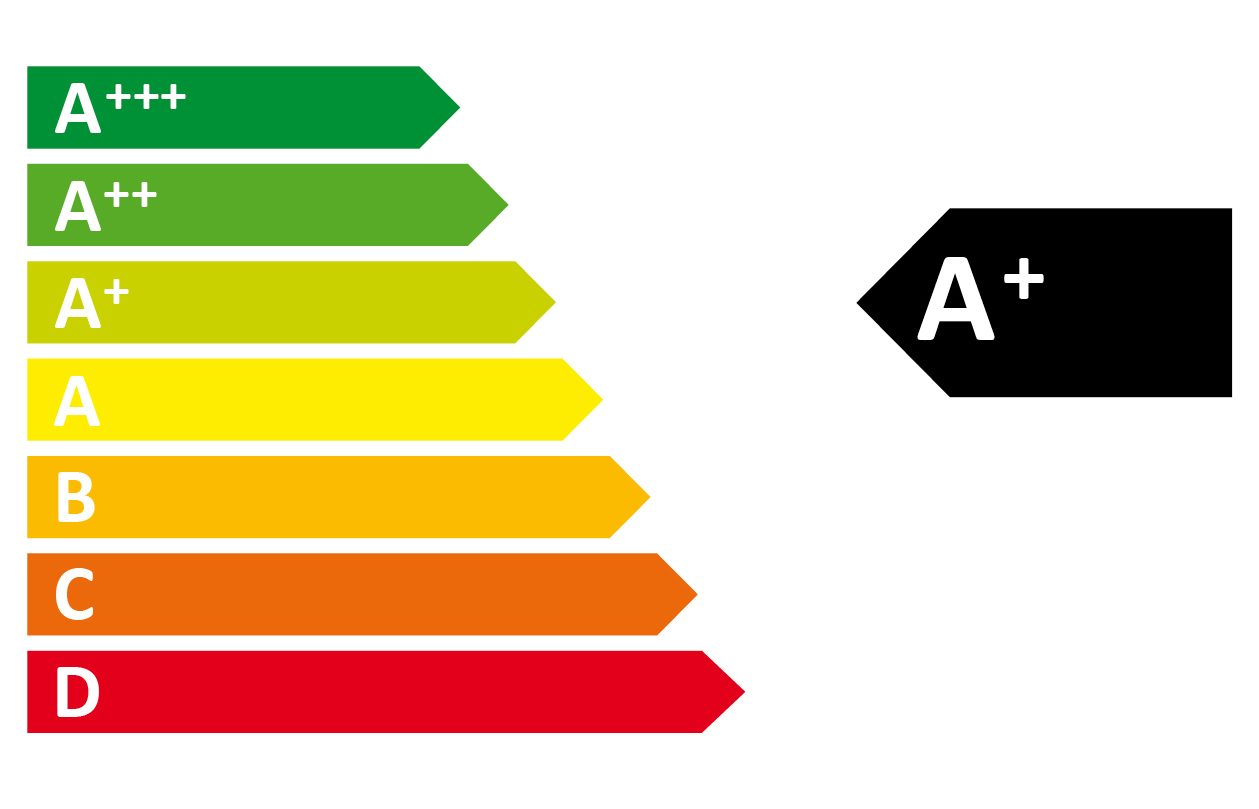
Substantively, TR EAEU 048/2019 serves as the Eurasian equivalent of the European Ecodesign Directive (2009/125/EC) and the EU Energy Labelling Regulation ((EU) 2017/1369, formerly Directive 2010/30/EU). It sets binding limits for active-mode energy consumption, standby mode, and off-mode power draw, and defines energy efficiency class classifications (Annexes 2 through 19).
- Adopted on: August 8, 2019 (Eurasian Economic Commission Council Decision No. 114)
- Product List with HS Codes (TN VED): Approved by EEC Board Decision No. 23 of February 8, 2022
- Entry into Force & Transition Period: The mandatory date of entry into force has been deferred multiple times by EEC Council decisions while unified lists of harmonized measurement standards and updated efficiency classes are finalized. Following entry into force, the regulation grants a two-year transition period (24 months) during which products not previously subject to mandatory energy efficiency evaluation may continue to be placed on the market under existing TR CU 004/2011 and TR CU 020/2011 approvals.
Scope of Application: The 18 Product Categories under TR EAEU 048/2019
Pursuant to Annex 1 of the regulation and the corresponding HS code schedule (EEC Board Decision No. 23), TR EAEU 048/2019 covers 18 categories of energy-consuming appliances and industrial drive components:
1. Industrial Components, IT & Lighting
- Induction electric motors: Single-speed three-phase squirrel-cage induction motors (2–6 poles, rated voltage up to 1,000 V, 50 Hz or 50/60 Hz, rated output 0.75 to 375 kW for continuous duty);
- Circulator pumps (glandless circulators for heating and air-conditioning systems) and water pumps;
- Electric fans and air conditioners / comfort fans;
- External power supplies (AC/DC and AC/AC power adapters);
- Computers and servers designed for direct connection to AC mains power;
- Lighting equipment: Non-directional household lamps, fluorescent lamps without integrated ballasts, high-intensity discharge (HID) lamps, ballasts, luminaires, as well as directional and LED lamps.
2. Household, Office & Consumer Electronics
- Refrigerating appliances: Household refrigerators and freezers (including models suitable for commercial use, AC up to 250 V, net storage volume up to 1,500 liters);
- Household washing machines (AC mains up to 250 V, battery-powered, or built-in units; excluding combined washer-dryers);
- Household dishwashers and tumble dryers;
- Vacuum cleaners;
- Televisions (AC mains up to 250 V for residential and office spaces) and set-top boxes;
- Electrical and electronic household/office equipment in standby/off mode: Equipment (including outdoor models) operated by non-professional users and connected directly to mains power up to 250 V.
Conformity Assessment: EAC Certification vs. EAC Declaration
Under Chapter VII of TR EAEU 048/2019 and EEC Board Decision No. 23, the required conformity assessment route depends on the specific product category. At the manufacturer's request, a required EAC Declaration may always be replaced by a stricter EAC Certificate.
| Conformity Route | Covered Product Groups | Permissible Schemes & Evidentiary Basis |
|---|---|---|
| EAC Certification |
|
Serial production: Scheme 1C (testing at an accredited EAEU laboratory + manufacturing audit, valid up to 5 years). Batch / single unit: Scheme 3C or 4C (testing at an accredited EAEU laboratory, valid for the contracted supply quantity). |
| EAC Declaration | All remaining product groups in Annex 1—including three-phase induction motors, pumps, fans, external power supplies, refrigerators, washing machines, dishwashers, vacuum cleaners, televisions, and standby-mode appliances. |
Serial production (up to 5 years): Scheme 1d (applicant's own evidence), Scheme 3d (accredited EAEU lab), or Scheme 6d (lab + ISO 9001). Batch / single unit: Scheme 2d (applicant's own evidence) or Scheme 4d (accredited EAEU lab). |
Interaction with Other EAEU Technical Regulations
Energy-consuming devices may only be placed on the EAEU market when they simultaneously satisfy all other applicable safety and environmental regulations:
- TR CU 004/2011 On safety of low-voltage equipment (electrical safety);
- TR CU 020/2011 On electromagnetic compatibility (EMC);
- TR CU 010/2011 On safety of machinery and equipment (particularly for pumps, fans, and motors integrated into machinery);
- TR EAEU 037/2016 On restriction of the use of certain hazardous substances in electrical and electronic equipment (EAC RoHS).
Mandatory Documentation, Energy Label & EAC Marking
For conformity assessment and distribution, all technical and operational records must be compiled in Russian (as well as the official language of the EAEU importing country where required):
- Operation Manual: Including mandatory disclosures on intended use, mains power ratings, energy-saving operating modes, maintenance, and date of manufacture;
- Technical Datasheet (Ecodesign Product Fiche): Detailed documentation of functional parameters, efficiency ratings, standby/off-mode power draw, and performance metrics per Annexes 2–19;
- Test Reports: Measurement reports verifying energy efficiency and no-load/standby power consumption;
- Energy Efficiency Class Label (Energy Label): Required for designated appliance groups in accordance with the layout rules in Annexes 2–19 of TR EAEU 048/2019;
- Contract & Details of the Authorized Representative: Proof of the EAEU-registered applicant.
EAC Marking & Validity Period

Products confirmed to comply with TR EAEU 048/2019 and all other applicable Technical Regulations must bear the official EAC conformity mark prior to market placement. Placing unmarked products on the market is subject to administrative fines and seizure by customs and market surveillance authorities.
Validity Period: EAC Certificates and EAC Declarations for serial production are valid for up to 5 years; approvals covering a contractually defined batch or single unit remain valid without expiration for the specified delivery quantity.
Your Added Value with Schmidt & Schmidt: Sanctions-Compliant Approval for Exporters
Whether exporting industrial electric motors, pumps, external power supplies, or lighting and IT hardware, Schmidt & Schmidt guides international manufacturers through integrated EAC conformity assessment in full compliance with export control and sanctions regulations (Regulation (EU) No 833/2014 and Swiss SECO rules).
- Holistic Multi-Regulation Assessment: We bundle conformity evaluation under TR EAEU 048/2019 seamlessly with TR CU 004/2011, TR CU 020/2011, and TR EAEU 037/2016—eliminating redundant testing.
- Russian Ecodesign Documentation Drafting: Our engineers and specialist translators (translations into Russian) compile Operation Manuals, product fiches, and energy efficiency labels to EAEU specifications.
- Legally Secure Execution in Euros via Kazakhstan: We act as your independent Authorized Representative, coordinate laboratory testing through accredited bodies in Kazakhstan (Sanctions Compliance), and deliver all original certificates on schedule.