Summary: EAC Certification of Motor Vehicles and Automotive Components (TR CU 018/2011)
- Legal framework: Technical Regulation TR CU 018/2011 "On the Safety of Wheeled Vehicles" sets binding safety requirements for complete vehicles (passenger cars, commercial vehicles, buses, trailers) as well as all safety-relevant automotive components throughout the EAEU.
- Compliance documents for vehicles: Serial production of new vehicles requires a Vehicle Type Approval (OTTS), incomplete chassis require a Chassis Type Approval (OTSch), and single imported units or used vehicles require a Single Vehicle Approval (OBTS / SBKTS).
- Compliance documents for automotive parts: Automotive components fall under either an EAC Certificate (e.g., brakes, steering systems, engines) or an EAC Declaration (e.g., spark plugs, starter batteries), as specified in Annex 10 of TR CU 018/2011.
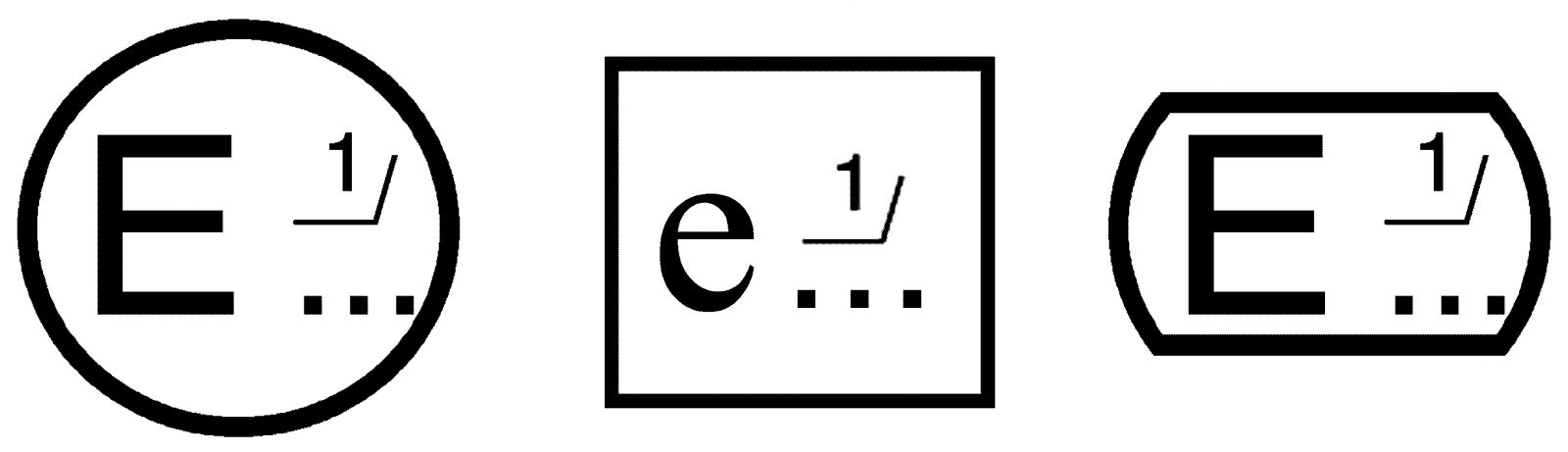
- Marking & UN/ECE recognition: Alongside the EAC mark, international UN/ECE approval marks (E-mark) are officially recognized as equivalent for certified components.
- Applicant eligibility: Foreign manufacturers without a registered legal entity in the EAEU must contractually designate an authorized representative domiciled within the Union.
- Sanctions compliance: Schmidt & Schmidt offers a legally compliant certification route via our branch offices in Kazakhstan, ensuring full alignment with EU and US export control regulations.
Safety Standards and Legal Framework under TR CU 018/2011
EAC certification and type approval for wheeled vehicles and automotive spare parts in Russia, Belarus, Kazakhstan, Armenia, and Kyrgyzstan are established to protect human life, public health, and the environment. The governing regulatory benchmark is Technical Regulation TR CU 018/2011 "On the Safety of Wheeled Vehicles" (enacted by Customs Union Commission Decision No. 877 on December 9, 2011).
Effective July 1, 2016, TR CU 018/2011 fully superseded all previous national frameworks, such as Russian GOST-R and national TR certification for automotive products. A valid certificate of conformity or type approval is mandatory for customs clearance, issuance of the electronic vehicle passport (ePTS), and official vehicle registration with state traffic authorities across EAEU member states.
Conformity assessment procedures and statutory registration in unified state registers (coordinated in the Russian Federation by Rosstandart) may only be executed by accredited EAEU certification bodies and testing laboratories.

1. Conformity Assessment for Complete Vehicles (OTTS, OTSch, OBTS)
TR CU 018/2011 establishes three primary approval formats depending on whether vehicles are manufactured in series, supplied as incomplete chassis, or imported as single vehicles:
| Document Type | Designation (Russian / English) | Scope of Application | Validity Period |
|---|---|---|---|
| OTTS | Vehicle Type Approval (Odobrenie Tipa Transportnogo Sredstva) |
Mass-produced new vehicles across all categories (passenger cars, commercial trucks, buses, trailers, motorcycles) prior to commercial distribution in the EAEU. | Up to 3 years (requires certified QMS / ISO 9001 / IATF 16949) |
| OTSch | Chassis Type Approval (Odobrenie Tipa Shassi) |
Mass-produced incomplete cab-chassis or bare chassis designed for subsequent body building or special equipment mounting. | Up to 3 years |
| OBTS / SBKTS | Single Vehicle Approval (Svidetelstvo o Bezopasnosti Konstruktsii) |
Individually imported new vehicles, modified/retrofitted vehicles, and imported pre-owned vehicles (older than 3 years) for commercial or private use. | Unlimited (tied permanently to the specific Chassis/VIN number) |
Regulated Vehicle Categories
- Category M: Passenger cars (M1), minibuses (M2), and heavy motor coaches/buses (M3)
- Category N: Light commercial vehicles (N1), medium and heavy cargo trucks (N2, N3)
- Category O: Trailers and semi-trailers
- Category L: Motorcycles, mopeds, motor tricycles, and quadricycles
- Special-purpose and municipal vehicles (e.g., mobile cranes, emergency and fire apparatus)
2. EAC Conformity Assessment for Automotive Parts and Components
To mitigate road safety risks, aftermarket spare parts and OEM components exported to the EAEU undergo rigorous mandatory certification. Annex 10 of TR CU 018/2011 sets out the definitive list classifying which components require an EAC Certificate and which require an EAC Declaration.
Regardless of the approval type, safety-critical components must be tested in an accredited EAEU testing laboratory. For multi-year serial certification, an on-site manufacturing audit at the production facility is strictly mandatory.

EAC Certificate for Safety-Critical Components
Requires testing in an accredited laboratory and factory audit. Applies to:
- Internal combustion engines and fuel injection systems
- Hydraulic braking systems, brake pads, and brake cylinders
- Steering mechanisms and steering linkages (UN Regulation No. 79)
- Pneumatic tires, wheels, and suspension systems
- Seatbelts, airbag modules, and seating systems
- Automotive safety glazing and rear-view mirrors
- Catalytic converters and exhaust silencers
EAC Declaration for Standard Replacement Parts
Based on manufacturer test records or accredited laboratory reports. Applies to:
- Starter batteries and automotive accumulators
- Spark plugs and glow plugs
- Windshield wiper blades and wiper assemblies
- Cooling system hoses, couplings, and gaskets
- Filter elements (engine oil, fuel, and cabin air filters)
- Standard automotive lighting bulbs
Marking Requirements: UN/ECE Approval Marks vs. EAC Mark
Every vehicle and component certified under TR CU 018/2011 must display an approved conformity mark before commercial release on the EAEU market.
Automotive Regulatory Recognition: TR CU 018/2011 explicitly recognizes international UN/ECE approval marks (the circular "E" mark with country code and approval number). Under EAEU law, a valid UN/ECE mark is legally equivalent to the EAC mark. Consequently, components that already bear a valid European E-mark homologation do not require additional EAC logo marking.
Components certified exclusively against EAEU intergovernmental standards without prior UNECE homologation must bear the official EAC mark in a clear, indelible manner.
Required Documentation for Conformity Assessment
Pursuant to Annex 12 of TR CU 018/2011, applicants for vehicle type approvals (OTTS) or component certificates must submit the following dossier:
- Comprehensive technical description, general blueprints, and assembly schematics
- Itemized list of safety-relevant components and subsystem specifications
- Existing UNECE test reports and international E-mark homologation certificates
- Quality management system certificate (ISO 9001 or IATF 16949)
- Owner's manual and operating instructions in Russian
- Technical Passport and product specification sheets
- Official test reports from accredited EAEU laboratories
- Customs tariff classification (HS Code / TN VED) and exact product nomenclature
Authorized Representative in the EAEU

Foreign manufacturers of vehicles or automotive components that do not maintain an incorporated legal entity in an EAEU member state are not legally permitted to apply directly for conformity assessment under TR CU 018/2011. Appointing a registered authorized representative domiciled in the EAEU is a mandatory statutory requirement.
The authorized representative acts on behalf of the foreign manufacturer before accredited certification bodies, testing facilities, and national market surveillance agencies, assuming formal legal accountability for product safety across the territory of the EAEU.
EU and US Export Controls in the Automotive and Spare Parts Sector
When exporting passenger cars, commercial vehicles, and auto components, European and international manufacturers must comply with comprehensive sanctions regimes enforced by the European Union and the United States. Numerous industrial vehicles, specialized transport units, powerplants, and electronic assemblies fall under restrictive embargo measures or dual-use designations.
Even an officially issued OTTS vehicle type approval or EAC certificate does not provide safe-harbor protection from Western export control regulations. If local partners, end-users, or test facilities appear on restricted party lists (SDN/asset freeze), commercial engagement is strictly prohibited for Western operators.
Compliant certification via Kazakhstan: Schmidt & Schmidt offers manufacturers a legally robust solution via Kazakhstan. As a founding member of the EAEU, Kazakhstan possesses full regulatory authority to issue union-wide valid OTTS type approvals and EAC certificates. Through our local offices, we coordinate all certification workflows in strict compliance with EU and US export control regulations.
For an in-depth analysis, read our specialized report: EAC Certification Amid EU and US Sanctions.

Processing Time, Validity, and Certification Costs
Turnaround timelines and costs for automotive conformity assessment depend on the selected certification scheme, the number of model variants, and the testing volume required:
- Automotive components (EAC Certificate / Declaration): Processing time approximately 2 to 4 weeks; validity up to 4 years for serial production or contract-bound for specific batches.
- Vehicle Type Approval (OTTS): Processing time approximately 6 to 12 weeks (depending on existing UN/ECE test reports); validity up to 3 years.
- Single Vehicle Approval (OBTS / SBKTS): Processing time approximately 1 to 2 weeks; issued on a per-chassis basis with permanent validity.
Automotive Conformity Assessment with Schmidt & Schmidt
We provide full-service regulatory support for automotive manufacturers and component suppliers from preliminary classification to official registration: