Summary: The Operation Manual under EAC and GOST Regulations
- Indispensable Mandatory Document: The Operation Manual (Russian: Rukovodstvo po ekspluatatsii – RE) is one of the most important pieces of technical documentation required for virtually every EAC conformity assessment procedure and customs clearance in the Eurasian Economic Union (EAEU).
- Binding Normative Basis: Drafting follows the standards of the Unified System for Design Documentation (ESKD), specifically GOST 2.601-2019, GOST 2.610-2019, and GOST R 54121-2010, as well as the specific requirements of Technical Regulations TR CU 010/2011, TR CU 004/2011, TR CU 020/2011, TR CU 012/2011, TR CU 032/2013, and TR CU 016/2011.
- Key Difference from Western Practice (EU CE vs. EAEU GOST): A simple translation of a Western operating manual is not sufficient. While EU Machinery Regulation (EU) 2023/1230 permits digital manuals under certain conditions, Eurasian law strictly mandates a printed paper copy in Russian along with specific statutory disclosures (such as calculated service life and the EAEU Authorized Representative's address).
- Mandatory Details on Manufacturer, Representative, Residual Risks & Nameplate: Alongside installation, operating, and maintenance instructions, the manual must include complete contact details of the manufacturer and Authorized Representative, storage periods, warnings on residual risks, and specifications for the permanent EAC nameplate.
- Sanctions-Compliant Compilation & Technical Translation in Euros: Schmidt & Schmidt adapts your existing Western manuals to GOST standards—seamlessly aligned with the Technical Passport and Safety Justification via Passau and Kazakhstan.
Significance and Legal Role of the Operation Manual in the EAC Procedure
The Operation Manual (Russian: Rukovodstvo po ekspluatatsii) is a core component of the technical dossier required when applying for an EAC Certificate or an EAC Declaration. It ensures that operators and maintenance personnel can safely install, operate, service, and dispose of the machine, industrial plant, or appliance.
Amid heightened registry verification and market surveillance across EAEU member states (Russia, Belarus, Kazakhstan, Armenia, and Kyrgyzstan), accredited certification bodies and customs authorities carefully verify that the model designations, technical performance ratings, and manufacturer details stated in the Operation Manual match the certificate or declaration word for word.
Distinction from the Technical Passport: Whereas the Technical Passport serves as the individual lifecycle and factory acceptance record for a specific serial number, the Operation Manual describes the technical operating principles, handling, and safety procedures for the entire machine type or product line. An Operation Manual can therefore be compiled for a single model as well as for multiple structurally identical types, models, or a complete product series.
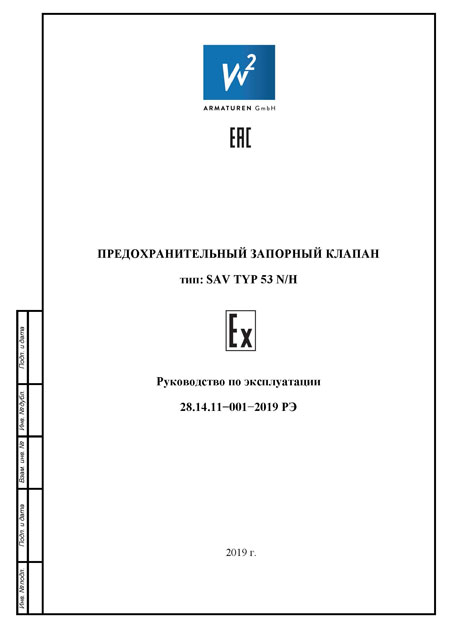
Key Differences for International Manufacturers: Western CE Manual vs. GOST Operation Manual
For machinery, plant, and equipment manufacturers from Europe, North America, and other international markets, one critical rule applies: a literal word-for-word translation of an English or German CE operating manual (compiled under Machinery Directive 2006/42/EC, Regulation (EU) 2023/1230, or EN ISO 20607) fails to meet Eurasian standards. EAEU Technical Regulations and ESKD standards mandate specific disclosures frequently absent from Western manuals:
| Criterion | Western Practice (CE / Machinery Regulation 2023/1230) | EAEU Practice (Operation Manual under GOST & TR CU) |
|---|---|---|
| Language & Format | Official language of the respective EU member state; purely digital provision permitted under defined conditions. | Mandatory in Russian (plus the state language of the importing EAEU country where required, e.g., Kazakh); printed paper copy legally required upon delivery. |
| Service & Storage Life | General guidance on maintenance cycles and wear parts. | Mandatory declaration of calculated operational service life (Srok sluzhby) and maximum storage period (Srok khraneniya) prior to commissioning. |
| Economic Operators | Name and address of the manufacturer and/or EU importer. | Full legal name and address of the manufacturer as well as the EAEU-based Authorized Representative and importer. |
| Structural Standards | Flexible layout within EN ISO 20607 and IEC/IEEE 82079-1 frameworks. | Binding section layout and presentation governed by GOST 2.601-2019, GOST 2.610-2019, and GOST R 54121-2010. |
| Alignment with Approvals | References the EU Declaration of Conformity and harmonized EN standards. | Exact alignment with the Technical Passport, Safety Justification (OB), and the EAC Certificate or EAC Declaration. |
Normative Requirements and Mandatory Content of the Operation Manual
Compilation follows standards GOST R 54121-2010, GOST 2.601-2019, and GOST 2.610-2019, alongside the specific provisions of applicable Technical Regulations—notably TR CU 010/2011 (Machinery and Equipment), TR CU 004/2011 (Low-Voltage Equipment), TR CU 020/2011 (EMC), TR CU 012/2011 (Ex Equipment), TR CU 032/2013 (Pressure Equipment), and Annex 2 of TR CU 016/2011 (Gas-Fired Appliances).
1. Technical Specifications, Installation & Operation
- Design description, operating principles, main assemblies, and rated technical parameters of the machine or plant;
- Instructions for site placement, assembly, utility connections, initial commissioning, and adjustment;
- Rules for intended operation, operator qualification requirements, servicing, and periodic maintenance;
- Mandatory declarations of calculated operational service life (Srok sluzhby) as well as storage conditions and shelf-life limits;
- Complete contact details of the manufacturer, Authorized Representative, and importer, plus manufacturing date information.
2. Safety, Emergency Measures & Disposal
- Detailed safety precautions for operating, cleaning, and maintenance personnel (including required PPE);
- Explicit warnings against prohibited uses and reasonably foreseeable misuse;
- Transparent disclosure of unavoidable residual risks (aligned with the Risk Assessment);
- Emergency procedures in the event of malfunctions, accidents, or fire, including rescue and first aid;
- Safety rules for transport, packaging, and environmentally sound decommissioning, dismantling, and disposal.
Safety Warnings, Warning Labels, and Nameplate Obligation
Safety warnings must be visually highlighted within the Operation Manual and positioned so they are unmistakably noticeable to the user. In hazardous zones of the equipment, self-explanatory safety labels (standardized pictograms or concise Russian-language warning texts) must also be permanently affixed.
Pursuant to TR CU 010/2011 and related Technical Regulations, every machine must bear a clearly legible, indelible nameplate containing the following mandatory information: name and address of the manufacturer, trademark, model and type designation, unique serial number, date of manufacture (month/year), key technical ratings, and the EAC conformity mark.
Your Added Value with Schmidt & Schmidt: Sanctions-Compliant Compilation & Technical Translation
Adapting Western operating manuals to Eurasian GOST and TR CU requirements demands both solid engineering expertise and exact mastery of current regulatory standards—while strictly complying with international export control and sanctions regimes (Regulation (EU) No 833/2014 and Swiss SECO rules).
Why Leading International Machinery and Equipment Manufacturers Rely on Schmidt & Schmidt:
- Standard-Compliant Adaptation Rather Than Raw Translation: Our specialist engineers and technical translators (translations into Russian) review your existing English or German manual, add missing GOST disclosures (service life, storage periods, EAEU representative), and render the text into accurate Russian engineering terminology.
- 100% Document Consistency Across Your Approval Dossier: Upon request, we compile the Operation Manual together with the Technical Passport, Safety Justification (OB), and Pressure Vessel Passport—eliminating any contradictions in model names, parameters, or safety notices.
- Legally Secure Contracting & Payment in Euros: All engagements are processed with full sanctions compliance in Euros via our German headquarters in Passau, working alongside our accredited engineering teams in Kazakhstan (Sanctions Compliance), with timely delivery of all deliverables.
6 Steps to a GOST-Compliant Operation Manual
We support your technical documentation and engineering departments from initial review to the print-ready final file: