


International postal services are suspending or restricting deliveries to countries in the Middle East, while legal professionals report difficulties with document legalization. These factors should be taken into account when planning urgent matters.
What is happening with postal deliveries in the Middle East
(United States Postal Service) announced in March 2026 a suspension of mail acceptance for certain destinations due to “limited transportation capacity or disruptions in local operations.” USPS has advised customers to refrain from sending letters and parcels to the following countries:
- Bahrain;
- Eritrea;
- Iran;
- Iraq;
- Israel;
- Kuwait;
- Lebanon;
- Pakistan;
- Qatar;
- Saudi Arabia;
- Seychelles;
- Syria;
- United Arab Emirates.
Previously imposed restrictions also remain in effect for Afghanistan, Belarus, Bhutan, Brazil, Cuba, Haiti, Niue, Russia, Sudan, South Sudan, Turkmenistan, Ukraine, Venezuela, and Yemen.
CEP-Research reported that postal services in Poland, Lithuania, and Estonia have suspended parcel and letter shipments to Middle Eastern countries. Postal operators in Croatia and Slovenia have also informed customers about potential delivery delays on this route.
DHL stated that “the escalation of the crisis is affecting all types of logistics services,” as increased attacks on energy facilities, airports, and ports “are leading to greater instability in air, sea, and road operations.”
The capacity of airlines in the UAE is currently only 43% of pre-war levels. The Strait of Hormuz is closed, and the Port of Khor Fakkan is experiencing berthing delays of more than 10 days.
DHL’s outlook on the further development of the situation is negative:
It is expected that long queues, adverse weather conditions, fuel shortages, and a sharp increase in demand will further worsen congestion and lead to higher transportation costs across all modes of transport in the coming days.
At the same time, DHL emphasized that the company remains “fully committed” to meeting its customers’ logistics needs, while closely monitoring the situation and responding to any changes.
Given the complex military and political situation in the Middle East, it is important to take into account the possibility of delays or damage to shipments and mail.
Experts report risks for businesses in these countries arising from the ongoing Middle East crisis. According to expert assessments cited by the publication, commercial companies face potential breaches of contractual obligations and disruptions in supply chains. Liability exemptions, however, largely depend on the specific terms of each individual contract.
Lawyers currently recommend including a dedicated force majeure clause in contracts that specifically regulates legal relations in the context of the current situation.
Among the potential risks, experts highlight disruptions to maritime transit, changes in insurance conditions, payment processing issues, administrative delays, labor law violations, and investment disputes.
Analysts also draw business attention to the consular legalization procedure. One of the key partners for international companies in the Middle East is the United Arab Emirates.
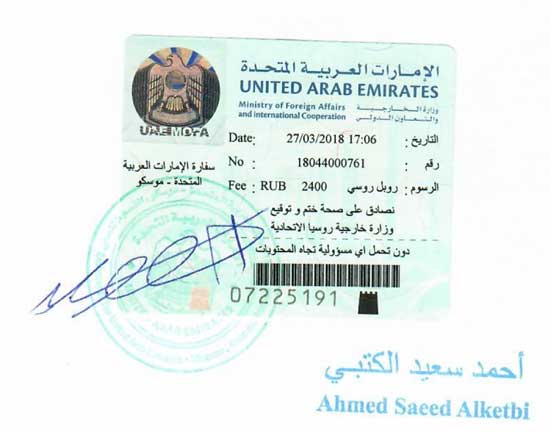
The UAE is not a member of the Apostille Convention. Therefore, in order to certify documents for use in its territory, it is necessary to undergo a complex and time-consuming multi-stage consular legalization procedure.
When completing this procedure in the UAE, the following steps are required:
- Verify that the document contains the seal of the relevant authority and the signature of an authorized official;
- Have the document certified by the competent department of the UAE Ministry of Foreign Affairs (documents can be submitted directly to the Ministry or through legalization centers at Chambers of Commerce and other authorized bodies);
- Prepare an official translation of the document into the language of the destination country (for use in that country);
- Have the document legalized at the consulate of the destination country in the UAE.
At present, experts note difficulties in the legalization process already at the stage of certification by the Ministry of Foreign Affairs. This should be taken into account when planning transactions, notarization procedures, and processes related to changes in civil status.
What is consular legalization?
In our video we are explaining what consular legalization is and where to apply for it.
Schmidt & Schmidt will assist you in all issues concerning the legalization.
Schmidt & Schmidt offers legalization in more than 80 countries all over the world.
How can we help you?
If you are currently in another country or do not have the time to complete all the steps of the consular legalization process on your own, we will be happy to assist you. You can always contact Schmidt & Schmidt. We have extensive experience in the legalization of various types of documents and provide all necessary services in this field, including obtaining notarized copies, translation, preparation of required powers of attorney, retrieval of police clearance certificates, legalization of documents in Russian government authorities and foreign consulates, as well as delivery of completed documents to most countries worldwide.
You can read more about the legalization and apostille procedure on our website .


