

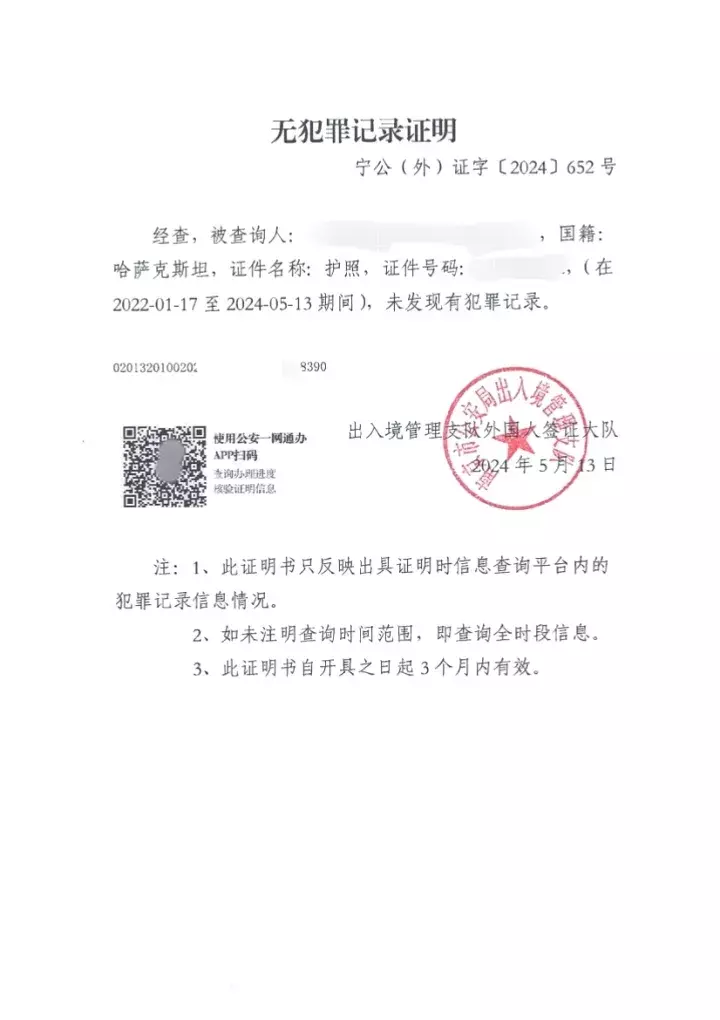
A Police Clearance Certificate from China, also known as a Certificate of No Criminal Record or 无犯罪记录证明, is an official document confirming that no criminal record has been found in China for a specified period of residence.
This certificate may be required for immigration, permanent residence, citizenship, employment, work visa applications, professional licensing, study abroad, adoption procedures, or other administrative matters outside China.
Using a Chinese police certificate abroad? In most cases, the certificate issued by the Public Security Bureau is the first step in the process. For international use, it usually has to be submitted to a Chinese notary office, which issues a notarial certificate of no criminal record based on the police certificate and supporting documents.
After the notarial certificate has been issued, it may need to be certified by apostille or consular legalization depending not only on the destination country, but also on the requirements of the specific receiving authority. Some authorities may accept a Chinese notarial certificate with its notarized translation, while others may require apostille, consular legalization, or an additional certified translation prepared locally.
Important practical point: Foreign authorities usually request the Chinese notarial certificate rather than the internal police certificate alone. The police certificate remains an essential source document, but the notarial certificate is normally the document prepared for use abroad.
Before starting the procedure, see our guide on apostille in China to learn what can go wrong when Chinese documents are notarized, translated and apostilled for use abroad — including incorrect notarial format, the wrong legalization route, translation issues, or documents that become too old before submission.
In this guide
What Is a Chinese Police Clearance Certificate?
A Chinese Police Clearance Certificate, officially called 无犯罪记录证明, is issued after a criminal record inquiry conducted by the Public Security Bureau. For foreign applicants, the application is usually handled by the Exit-Entry Administration Department in the city connected with the applicant’s residence, visa or residence permit.
The certificate normally covers the applicant’s stay in China from the first entry into the country to the final departure. These dates are checked against the passport, Chinese visas, residence permits, entry and exit stamps, temporary residence registration records and other supporting documents.
Foreign nationals may usually apply if they have lived in China for more than six months. If the stay was shorter, or if the residence period cannot be confirmed, obtaining the certificate may be difficult or impossible.
The certificate is issued in a standardized format. It usually includes the applicant’s name, nationality, passport details, covered residence period, confirmation that no criminal record was found, date of issue, QR code for verification, and the seal of the issuing Public Security Bureau. In practice, certificates issued in different cities mainly differ by the stamp and name of the issuing authority.
For use abroad, this certificate is usually the source document for obtaining a Chinese notarial certificate of no criminal record.
How to Prepare a Chinese Police Clearance Certificate for Use Abroad
Obtaining the police certificate from the Public Security Bureau is usually only the first step. To use the document abroad, it normally has to be converted into a foreign-use notarial certificate and then certified according to the requirements of the receiving authority.
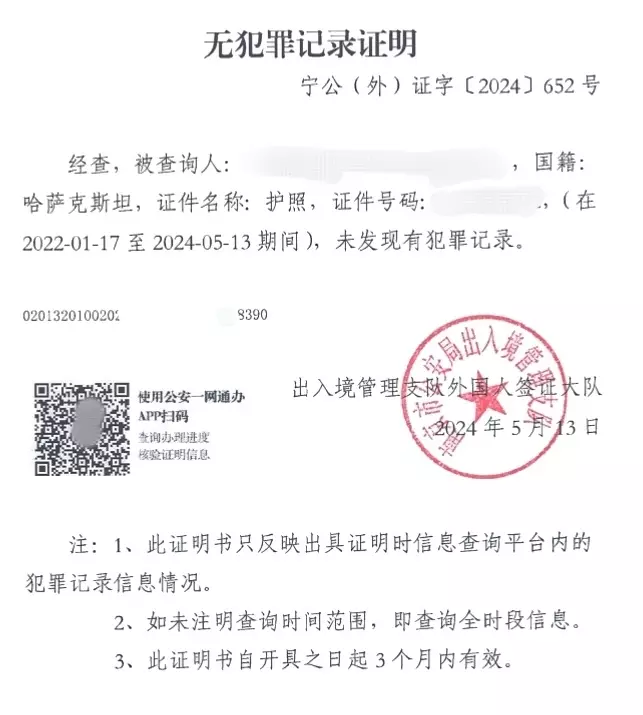
Step 1 — Police Certificate
The Public Security Bureau issues the Certificate of No Criminal Record for the confirmed period of residence in China.
This certificate is the starting point of the international document chain: without it, the notary office will usually be unable to prepare the notarial certificate required by foreign authorities.
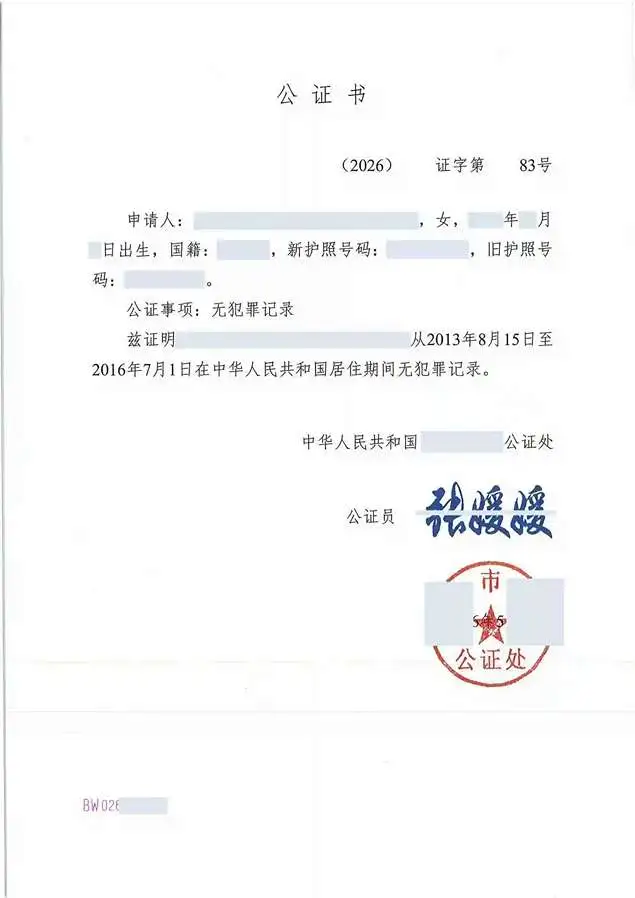
Step 2 — Notarial Certificate
A Chinese notary office issues a notarial certificate of no criminal record based on the police certificate and supporting documents, including a copy of the passport.
The destination country should be confirmed before notarization, because the required format may differ. The notarial certificate usually includes a translation of the police certificate into English or into the language required by the receiving authority.
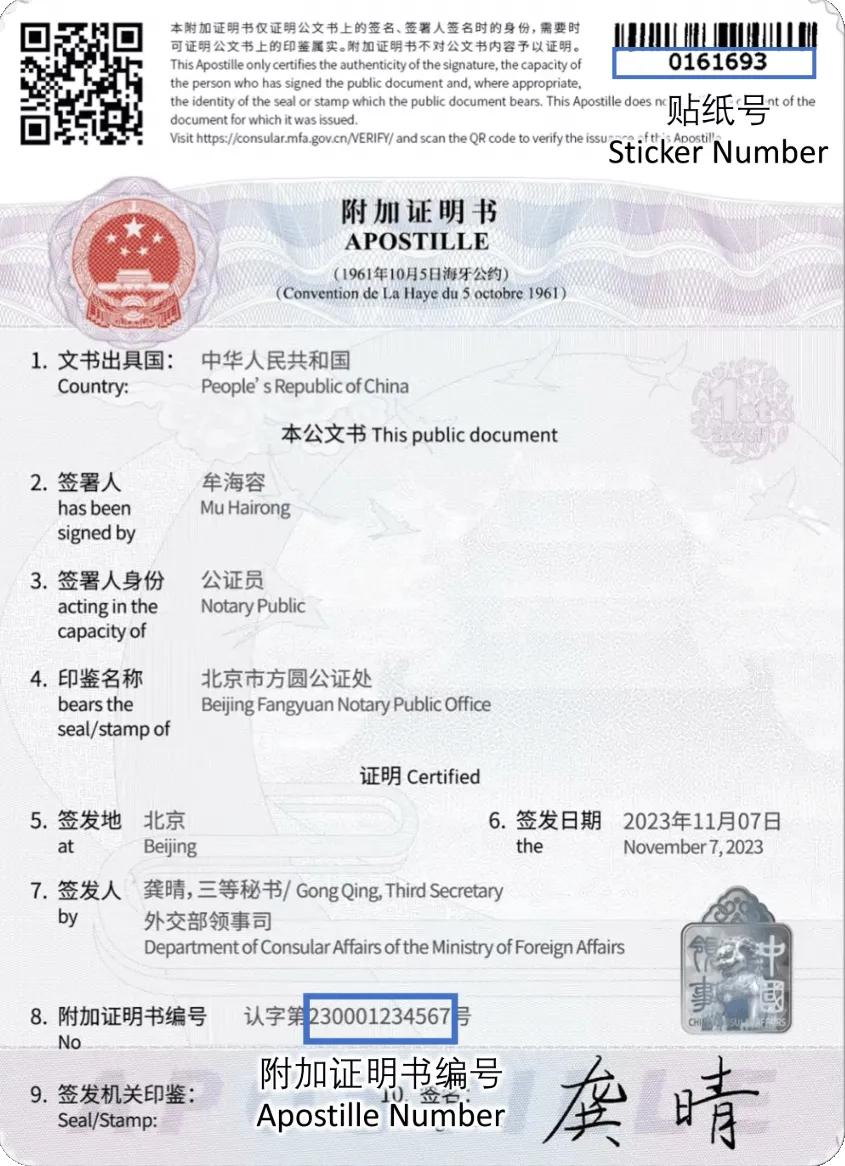
Step 3 — Apostille or Consular Legalization
The notarial certificate may then need apostille or consular legalization depending on the destination country and the requirements of the receiving authority.
The exact route should be checked before submission, because some authorities require apostille, while others may request consular legalization or additional translation in the destination country.
Who Can Apply?
Foreign nationals may usually apply for a Chinese Police Clearance Certificate if they have lived in China for more than six months. The residence period must be confirmed by the applicant’s passport records, including Chinese visas, residence permits, entry and exit stamps, temporary residence registration forms and other supporting documents.
In practice, the authority checks whether the applicant’s stay in China can be clearly traced from the first entry to the final departure. If the applicant changed passports, lived in several cities, studied on a university campus or changed address during the stay, additional supporting documents may be required.
When May This Certificate Be Required?
A Chinese Police Clearance Certificate may be required for many legal, immigration, employment and administrative procedures abroad.
- Immigration procedures
- Permanent residence applications
- Citizenship applications
- Work visa applications
- Employment abroad
- Professional licensing
- University admission
- Study abroad procedures
- Adoption procedures
- Court proceedings
- Government filings
- Administrative procedures abroad
Required Documents
The exact list of documents depends on the city, the applicant’s residence history in China, and whether the application is submitted in person or through a representative. In general, the authority must be able to confirm the applicant’s identity, legal stay in China, registered address and the full period for which the certificate is requested.
| Document | Why it is needed |
|---|---|
| Basic documents | |
| Current passport | Used to identify the applicant and confirm current personal details. |
| Chinese visas and residence permits | Confirm the applicant’s legal stay in China and help determine the competent authority. |
| Entry and exit stamps | Used to trace the residence period from the first entry into China to the final departure. |
| Temporary Residence Registration Forms (住宿登记表) | Confirm the applicant’s registered address in China. If the applicant changed address, registration records for different addresses may be required. |
| Documents required in specific cases | |
| Previous passports | Required if the old passport contains Chinese visas, residence permits, entry or exit stamps. If the previous passport was lost, surrendered or cancelled, a scan or photo of the relevant pages may still help, but the authority may request additional evidence. |
| Employment documents | Work permit, employment contract, employer confirmation or other proof of employment in China, if the applicant worked in China. |
| Study documents | Enrollment letter, graduation certificate, diploma, university confirmation or campus residence confirmation, if the applicant studied in China. |
| Power of Attorney | May be required if the application is submitted by a representative. The required form must be confirmed separately for each case, as local requirements may differ. |
| Additional supporting documents | May be requested by the Public Security Bureau, notary office or receiving authority abroad if the residence period cannot be confirmed from the standard documents. |
University residence: If the applicant lived on a university campus, the temporary residence registration may not have been issued in the same way as for private housing. In such cases, a university confirmation letter or campus residence confirmation may be required.
Document quality: Scans should be clear, complete and readable. Cropped passport pages, missing stamps, blurred registration forms or incomplete visa pages may delay the procedure.
Procedure for Obtaining a Police Clearance Certificate from China
The practical procedure starts with checking whether the applicant’s residence history can be confirmed. Only after this review does it make sense to proceed with the application, notarization and legalization stages.
-
1
Preliminary review of residence documents
The applicant’s residence period in China is checked through passport stamps, Chinese visas, residence permits, temporary residence registration records and supporting documents from the employer or university. This is usually the most problematic part of the procedure: if the stay in China cannot be clearly traced from the available documents, the Public Security Bureau may refuse to issue the certificate or request additional evidence. -
2
Application to the Public Security Bureau
The application is submitted to the competent Public Security Bureau, usually through the Exit-Entry Administration Department in the city connected with the applicant’s residence, visa or residence permit. If the documents are accepted and no criminal record is found, the authority issues the Certificate of No Criminal Record. -
3
Notarial certificate for foreign use
For use abroad, the police certificate is usually submitted to a Chinese notary office. The notary prepares a notarial certificate of no criminal record based on the police certificate and supporting documents. The destination country should be confirmed before notarization, because the format, translation language and legalization route may differ. -
4
Apostille, consular legalization and delivery
After notarization, the document may need apostille certification or consular legalization depending on the destination country and the requirements of the receiving authority. Once the procedure is completed, the document can be sent abroad by international courier.
Apostille or Consular Legalization?
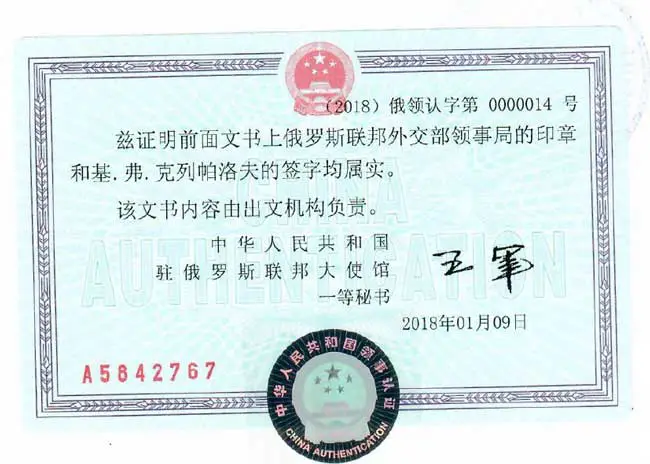
The legalization route depends on where the Chinese Police Clearance Certificate will be used. Since 7 November 2023, apostille certification has generally replaced consular legalization for Chinese public documents intended for use in other member states of the Hague Apostille Convention.
However, the route must always be checked for the specific receiving authority. Some institutions may accept a Chinese notarial certificate with its notarized translation, while others require apostille, consular legalization, or an additional certified translation prepared in the country where the document will be submitted.
Consular Legalization
For countries where apostille is not applicable, consular legalization is used instead. This procedure is also known as embassy attestation. It is more complex than apostille certification because the document must be checked by several authorities before it can be used abroad.
For a Chinese Police Clearance Certificate, the consular legalization route usually includes the following stages:
-
1
Notarial certificate in China
The police certificate is submitted to a Chinese notary office. The notary prepares a notarial certificate of no criminal record, usually with a translation into the language required for foreign use. -
2
Authentication by the Chinese authorities
The notarial certificate is authenticated by the competent Chinese authority, usually the Ministry of Foreign Affairs of China or an authorized local Foreign Affairs Office. -
3
Legalization by the destination country’s consulate
The document is then submitted to the embassy or consulate of the destination country in China for final legalization.
Only after these stages are completed can the document usually be used in the destination country. Unlike an apostille, consular legalization is normally valid only for the country whose embassy or consulate legalized the document.
Main Differences Between Apostille and Consular Legalization
| Apostille | Consular legalization | |
|---|---|---|
| Where it applies | Used between countries that accept apostilles from China under the Hague Apostille Convention. | Used when apostille is not applicable or when the receiving country requires consular legalization. |
| Document used | Usually the Chinese notarial certificate, not the original police certificate alone. | Usually the Chinese notarial certificate, followed by authentication and consular legalization. |
| Procedure | Simpler and usually faster. | More complex and usually more time-consuming. |
| Embassy or consulate | No legalization by the destination country’s embassy or consulate is normally required. | Legalization by the embassy or consulate of the destination country is normally the final step. |
| Use abroad | Generally accepted in countries where apostille certification is applicable. | Usually valid only for the country whose consulate legalized the document. |
Translation, Processing Time and Validity
When a Chinese Police Clearance Certificate is prepared for use abroad, translation, notarization and legalization should be planned together. The required format depends not only on the destination country, but also on the specific authority that will receive the document.
What Can Go Wrong When Applying for a Chinese Police Clearance Certificate?
In practice, most delays occur before the certificate is issued: the Public Security Bureau must be able to confirm the applicant’s stay in China from the available documents. Problems may also arise later if the document is prepared in the wrong format for use abroad.
-
Risk
Missing residence registration
Temporary Residence Registration Forms are one of the key documents used to confirm residence in China. If the forms are missing, incomplete, or cover only part of the stay, the authority may request additional evidence or refuse to issue the certificate. -
Risk
Old passport is unavailable
If the previous passport contained Chinese visas, residence permits, or entry and exit stamps, it may be needed to confirm the residence period. A scan or photo of the relevant pages may help, but acceptance is not guaranteed. -
Risk
Several cities of residence
If the applicant lived, studied, or worked in several Chinese cities, it may be necessary to determine which Public Security Bureau is competent and whether the certificate can cover the full period of stay. -
Risk
University campus residence
Students who lived on campus may not have standard temporary residence registration forms in the same format as private housing tenants. In such cases, a university confirmation letter or campus residence confirmation may be required. -
Risk
Stay shorter than six months
Foreign nationals may usually apply only if they lived in China for more than six months. If the stay was shorter, or if the residence period cannot be confirmed, obtaining the certificate may be difficult or impossible. -
Risk
Wrong format for use abroad
Even if the police certificate is issued correctly, the document may still be rejected abroad if the notarial certificate, translation, apostille, or consular legalization route does not meet the requirements of the receiving authority.
What If the Certificate Cannot Be Obtained?
In some cases, a Chinese Police Clearance Certificate cannot be issued. This may happen if the applicant stayed in China for less than six months, cannot provide sufficient proof of residence, has missing passport records, or if the relevant residence period cannot be confirmed through the available police, immigration or registration records.
If the applicant does not meet the requirements, or if the required information cannot be found or verified in the competent authority’s system, the certificate will usually not be issued. In practice, the Chinese authority does not normally provide a separate explanatory document for use abroad in such cases.
For this reason, it is important to check the applicant’s residence history, passport records, visas, entry and exit stamps, and temporary residence registration documents before starting the procedure.
How Schmidt & Schmidt Can Assist

If you are located outside China or need to prepare a Chinese Police Clearance Certificate for use abroad, Schmidt & Schmidt can assist with the full procedure — from preliminary document review to obtaining the certificate, notarization, apostille certification, consular legalization, translation coordination and international delivery.
Schmidt & Schmidt has its own office in mainland China — 上海史密德商务咨询有限公司, located in Shanghai. This allows us to coordinate the process directly in China, communicate with local authorities, notary offices and competent legalization bodies, and organize the preparation of Chinese documents for international use.
We can assist with:
- preliminary review of passports, visas, residence permits, entry and exit stamps and temporary residence registration records;
- checking whether the applicant appears eligible to apply for a Chinese Police Clearance Certificate;
- determining the competent Public Security Bureau where possible;
- preparation of supporting documents for submission;
- assistance with representative submission where permitted;
- obtaining the Certificate of No Criminal Record from the competent authority;
- preparation of the Chinese notarial certificate of no criminal record;
- apostille certification in China;
- consular legalization where apostille certification is not applicable;
- translation coordination where required;
- international courier delivery of the completed document;
- consultation on the correct document chain for a specific destination country or receiving authority.
With our own Shanghai office and international network, we provide support at every stage of the process and help reduce the risk of delays, missing residence records, incorrect notarization, unsuitable translation format, wrong legalization route, or rejection by the receiving authority abroad.
What is an apostille?
What is an apostille? Why do I need an apostille? How do I get an apostille? - Our video will explain everything you need to know about the apostille. If you have a document that needs to be certified with an apostille for use abroad, Schmidt and Schmidt will assist you! We provide apostille services in more than 100 countries worldwide.


