
Chinese educational documents — including diplomas, degree certificates, graduation certificates, academic transcripts, certificates of study, and enrollment records — may need to be prepared for official use abroad. They are often required for university admission, employment, immigration, professional licensing, and recognition of qualifications.
Since 7 November 2023, mainland China has been a party to the Hague Apostille Convention. This means that many Chinese public documents intended for use in Convention member states can be certified through the simplified apostille procedure. For a general overview of the process, see our guide to apostille in China.
In practice, an apostille is usually not affixed directly to the original Chinese diploma or transcript. First, a Chinese notarial certificate is prepared; then the apostille is issued for that notarial document. Depending on the destination country, the document may also require a certified translation or consular legalization.
If the original diploma, transcript, or related academic record is missing, outdated, or difficult to access, it may first be necessary to arrange document procurement in China.
In this guide
When and Why Is an Apostille Required?
An apostille may be required when Chinese educational documents are submitted to foreign universities, employers, immigration authorities, licensing bodies, courts, notaries, or other official institutions. It confirms the formal authenticity of the public document, the signature of the official who issued or certified it, and, where applicable, the seal or stamp.
For Chinese educational documents, apostille certification is commonly requested in the following situations:
- university admission abroad;
- recognition of a Chinese diploma, degree certificate, or academic transcript by a foreign educational institution;
- employment abroad;
- immigration, residence permit, or visa procedures;
- professional licensing or registration;
- submission of academic documents to government authorities, courts, notaries, or other official bodies.
Important distinction: apostille certification confirms the formal authenticity of a document, but it does not confirm the academic value of the qualification itself. It also does not automatically grant the right to work in regulated professions such as medicine, law, engineering, teaching, or architecture.
In such cases, the receiving country may require a separate procedure for qualification recognition, equivalency assessment, professional licensing, or registration with the competent authority.
Apostille in China
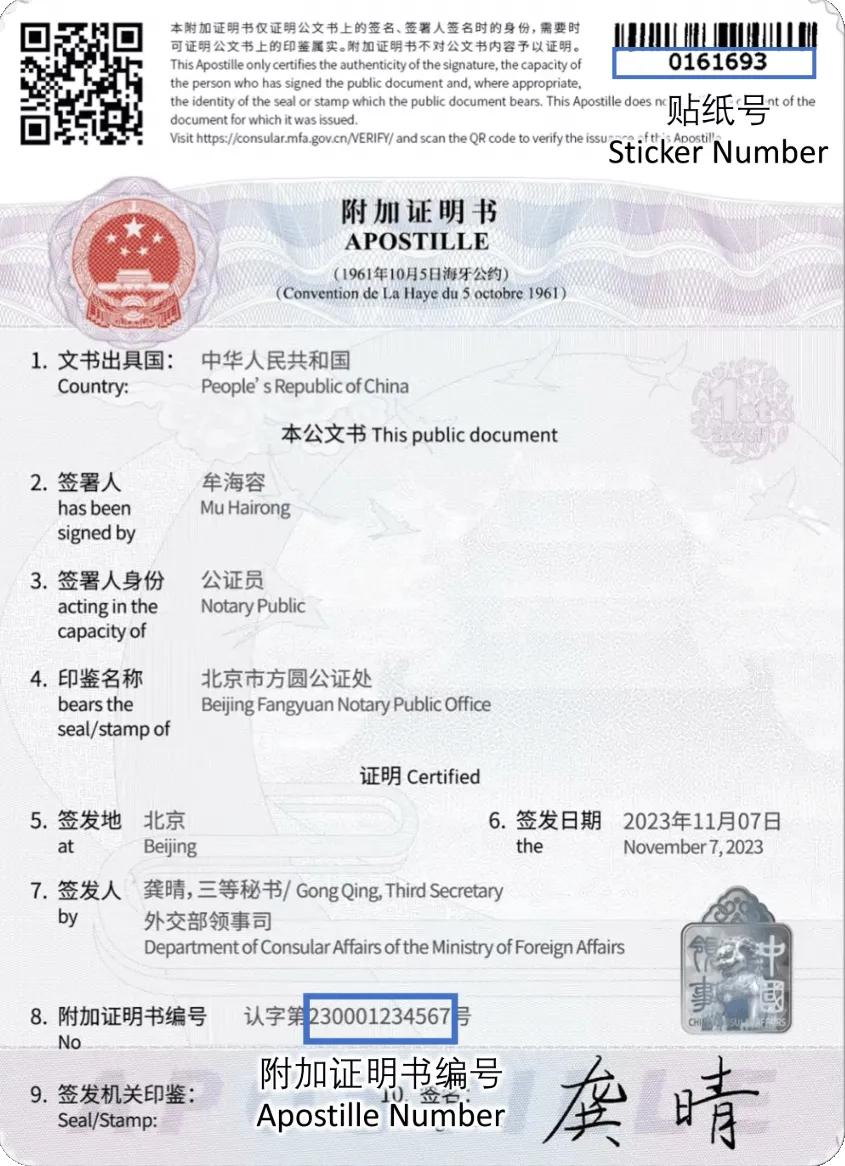
An apostille for a Chinese educational document can only be issued in China, because the apostille must be issued in the country where the public document originates. Diplomas, degree certificates, graduation certificates, academic transcripts, and other educational documents issued in mainland China therefore have to be apostilled by the competent Chinese authorities. Chinese embassies and consulates abroad do not issue apostilles for documents issued in mainland China.
In mainland China, apostilles are issued by the Ministry of Foreign Affairs of the People's Republic of China and by authorized local Foreign Affairs Offices within their respective administrative areas. The competent authority usually depends on where the notarial certificate was issued.
Key practical point: in China, an apostille is usually not affixed directly to the original diploma, degree certificate, graduation certificate, or academic transcript. For educational documents, a Chinese notarial certificate is first prepared by a notary office after verification through official education databases. The apostille is then issued for this notarial certificate.
Typical chain for using Chinese educational documents abroad
- Review of the original educational document.
- Verification of the document through the official Chinese education system.
- Preparation of a foreign-related notarial certificate by a Chinese notary office.
- Translation included in the Chinese notarial certificate, as required for apostille certification in China.
- Apostille certification by the Ministry of Foreign Affairs or an authorized Foreign Affairs Office.
- International delivery of the completed document.
When Is an Apostille Not Required?
An apostille is not required in every case. Some private employers, universities, or non-governmental institutions may accept the original document, a scan, a certified translation, or an online verification report without requiring apostille certification.
This may be especially relevant for non-regulated employment, internal university procedures, preliminary document review, or cases where the receiving institution has its own verification process. However, the final decision always depends on the authority or institution where the document will be submitted.
Practical advice: before preparing a Chinese educational document for use abroad, always confirm the exact requirements with the receiving university, employer, immigration authority, licensing body, court, notary, or government institution.
Educational Documents in China
Educational documents in China are issued by schools, vocational institutions, colleges, universities, and other educational institutions authorized under Chinese law. These documents may need to be notarized, translated, apostilled, or legalized before they can be used abroad.
Common Chinese educational documents include:
- primary and secondary school certificates;
- high school graduation certificates;
- vocational school diplomas;
- college and university graduation certificates;
- bachelor's, master's, and doctoral degree certificates;
- academic transcripts;
- certificates of study, enrollment, completion, or attendance;
- postgraduate training certificates;
- professional qualification or training certificates.
Examples of Chinese educational documents
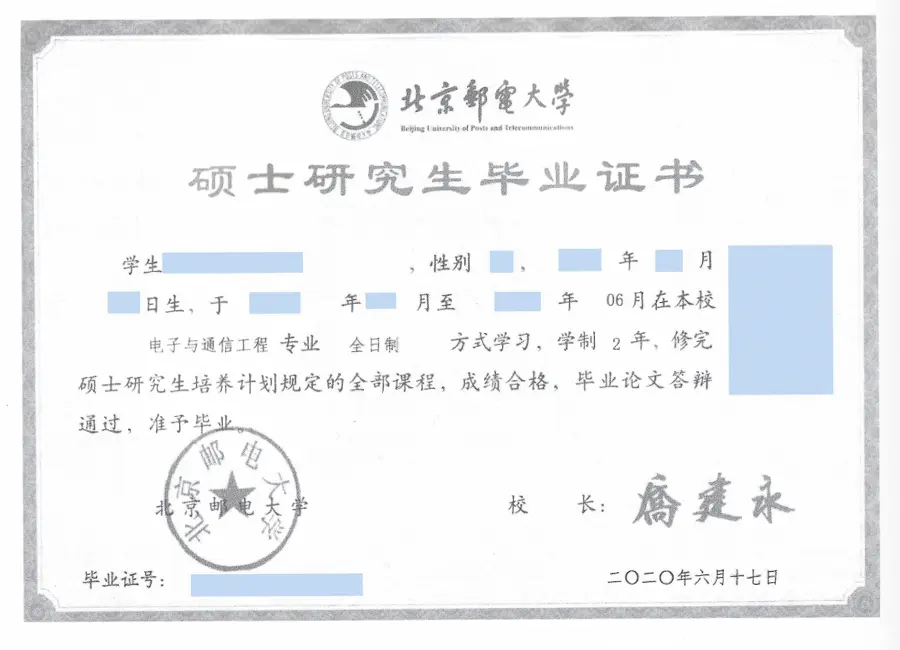
Graduation Certificate
毕业证
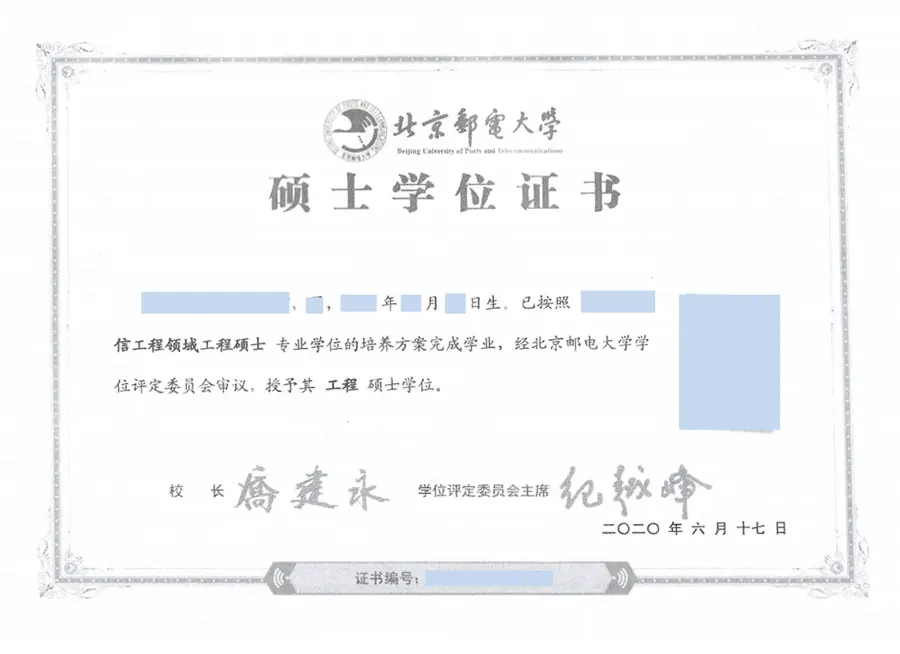
Degree Certificate
学位证
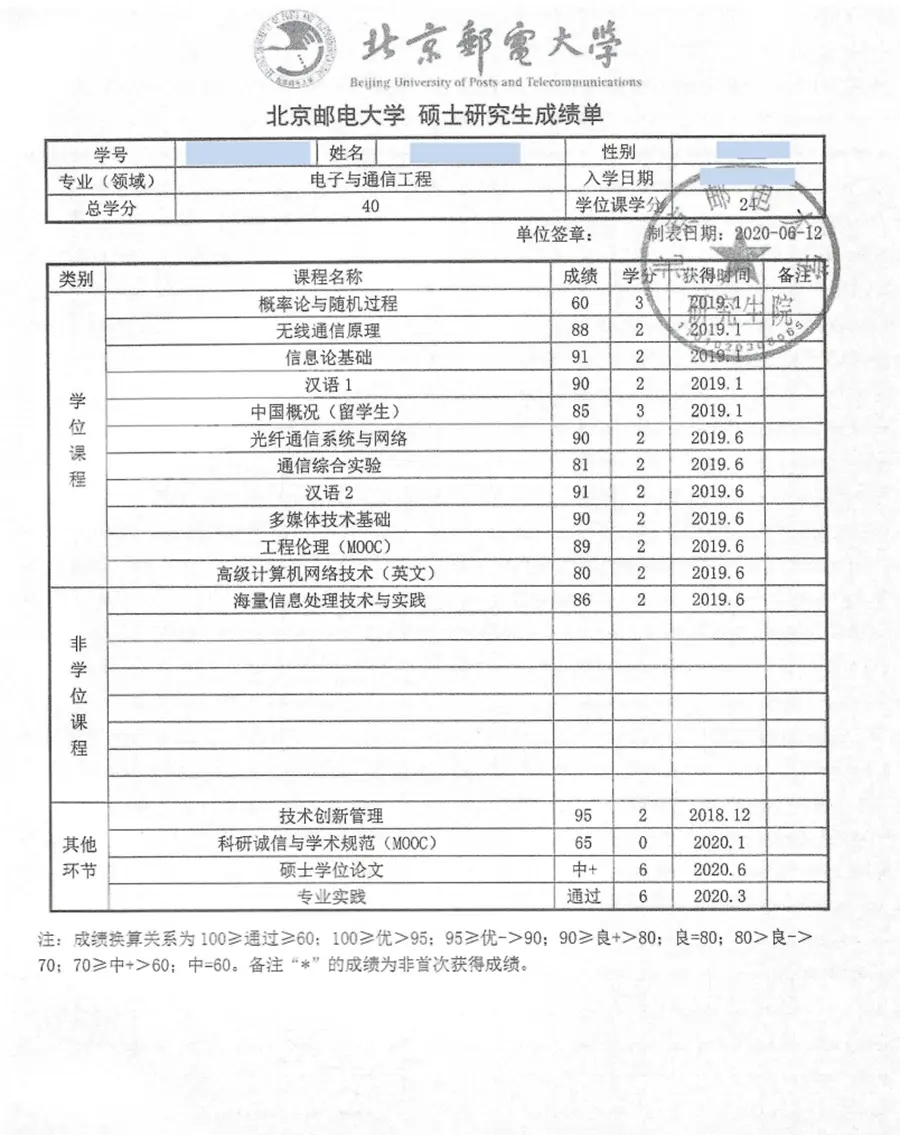
Academic Transcript
成绩单
Verification of Chinese Educational Documents
Before issuing a notarial certificate, the Chinese notary office must verify the educational document through official education verification channels. The relevant system depends on the type of educational document and the information that needs to be confirmed.
Procedure for Apostilling Diplomas and Certificates in China
The procedure for apostilling Chinese educational documents usually includes document review, verification through official education systems, preparation of a Chinese notarial certificate, translation, apostille certification and delivery.
-
1
Preliminary review of the document
The original diploma, degree certificate, transcript or other educational document is reviewed to determine whether it can be notarized and apostilled. At this stage, it is important to clarify the destination country, as different countries may have different requirements regarding the form of notarization, the language of translation and whether single or double certification is required.
-
2
Verification through the official education system
The notary checks the educational document through the relevant official database, such as CHSI / 学信网 or CDGDC. If the information is found and confirmed, the notary may proceed with issuing the notarial certificate. If the record cannot be verified, the notary will usually refuse to issue the certificate until the issue is resolved with the university or competent education authority. -
3
Issuance of the notarial certificate
After successful verification, the notary prepares a notarial certificate, or 公证书, confirming the authenticity of the educational document. The notarial certificate may include a notarized copy of the diploma, degree certificate, transcript or other educational document. The notary will also include a translation required for the apostille procedure in China. -
4
Apostille by the Ministry of Foreign Affairs or an authorized Foreign Affairs Office
After the notarial certificate has been issued, it is submitted for apostille certification. The apostille is affixed to the notarial certificate, not to the original educational document. Once the apostille has been issued, the document can generally be used in another member state of the 1961 Hague Apostille Convention without further consular legalization. -
5
International delivery
After apostille certification, the completed document is sent abroad by a reliable courier service. In many cases, it is possible to arrange delivery directly from China to the applicant, university, employer or legal representative abroad.
Consular Legalization of Diplomas and Certificates from China
If the destination country is not a party to the 1961 Hague Apostille Convention, Chinese educational documents may require consular legalization instead of apostille certification. This route is usually more complex, because the document must be authenticated by the competent Chinese authority and then legalized by the embassy or consulate of the destination country in China.
In practice, consular legalization of Chinese diplomas, degree certificates, graduation certificates, or academic transcripts usually includes:
- preparation of a Chinese foreign-related notarial certificate;
- translation included in the notarial certificate;
- authentication by the Ministry of Foreign Affairs of China or an authorized local Foreign Affairs Office;
- legalization by the embassy or consulate of the destination country in China;
- international delivery of the completed document.
Consular legalization generally takes more time than apostille certification. The exact requirements, processing time, embassy rules, translation format, and document form may vary depending on the destination country and the authority where the document will be submitted.
| Apostille | Consular legalization | |
|---|---|---|
| Legal effect | Can be used in all countries that are party to the Hague Convention on the Simplified Legalization of Documents. | Use between States one or both of which is not a member of the Hague Convention, or where one of the contracting States has protested the accession of the other. |
| Difficulty | Moderate. To obtain an apostille, contact the competent apostille authority of the state of origin of the document. | High. For consular legalization, various inland authorities and a diplomatic mission of the state of destination must be involved. |
| Pre-certification | Usually not required. | Is obligatory. |
| Attestation at the state of destination embassy in the state of origin of the document | No need to contact the Consulate of the country of destination. | Is the final step of legalization. |
Translation of Educational Documents
When using Chinese educational documents abroad, an official translation is often required. In practice, the translation may be included directly in the Chinese notarial certificate, certified by a licensed translation company, notarized, or prepared by a sworn or officially recognized translator in the receiving country. If a separate translation is required, Schmidt & Schmidt can also assist with certified translations for official and legal use. The required format depends on the rules of the destination country and the institution requesting the document.
Particular attention should be paid to names, academic titles, university names, majors, course names, and thesis titles. Translation errors in educational documents may cause difficulties during university admission, immigration procedures, professional recognition, or employment abroad.
Recognition of Chinese Diplomas Abroad
Apostille certification or consular legalization confirms the formal authenticity of a Chinese educational document, but it does not automatically mean that the diploma, degree certificate, or transcript will be recognized as equivalent to a local qualification in the destination country.
Recognition of education is usually handled separately by a university, competent authority, professional licensing body, credential evaluation agency, or another institution responsible for academic or professional assessment.
Depending on the country and the purpose of use, the applicant may need to submit additional documents, such as:
- the original diploma, graduation certificate, or degree certificate;
- academic transcript;
- official or certified translation;
- Chinese credential verification report;
- curriculum or course description;
- proof of study duration;
- documents confirming accreditation of the educational institution;
- additional forms required by the receiving authority.
For regulated professions, such as medicine, law, engineering, teaching, or architecture, additional examinations, licensing, professional registration, or equivalency assessment may also be required.
How Schmidt & Schmidt Can Assist

If you are located outside China or need to prepare Chinese educational documents for use abroad, Schmidt & Schmidt can assist with the full procedure — from preliminary document review to notarization, apostille certification, translation, legalization and international delivery.
Schmidt & Schmidt has its own office in mainland China — 上海史密德商务咨询有限公司, located in Shanghai. This allows us to coordinate the process directly in China, communicate with local notary offices and competent authorities, and organize the preparation of Chinese documents for international use.
We can assist with:
- preliminary assessment of Chinese diplomas, degree certificates, graduation certificates, academic transcripts and other educational documents;
- verification of documents through official Chinese education systems where required;
- preparation of notarized copies and foreign-related notarial certificates;
- translation of Chinese educational documents;
- apostille certification in China;
- consular legalization where apostille certification is not applicable;
- preparation of powers of attorney and authorization documents;
- international courier delivery of completed documents;
- consultation on the correct legalization route for a specific destination country.
With our own Shanghai office and international network, we provide support at every stage of the process and help reduce the risk of delays, incorrect notarization, unsuitable translation format, wrong authentication route, or rejection by the receiving authority abroad.
What is an apostille?
What is an apostille? Why do I need an apostille? How do I get an apostille? - Our video will explain everything you need to know about the apostille. If you have a document that needs to be certified with an apostille for use abroad, Schmidt and Schmidt will assist you! We provide apostille services in more than 100 countries worldwide.