In today's globalized world, having your personal official documents legally recognized outside your home country is no longer a luxury—it is a necessity. Whether you are getting married abroad, applying for a residence or work permit, seeking university admission, managing citizenship applications, or handling inheritance claims, preparing your personal documents according to international legal standards is mandatory.
At Schmidt & Schmidt, we provide comprehensive services for obtaining personal official documents (bireysel resmi belge temini), securing apostilles, handling consular legalization, and providing sworn translations in over 140 countries. Our goal is to ensure your documents achieve international legal validity quickly and securely, without you having to navigate complex bureaucratic mazes.
You can submit your document request via our web form. Our experts will provide a free preliminary consultation regarding the process, timeline, and costs.
Data security and privacy (KVKK & GDPR Compliance)
Personal documents (especially divorce decrees, criminal records, and proof of address) contain highly sensitive data. The physical and digital cross-border transfer of these documents poses a serious security risk. At Schmidt & Schmidt, all our processes strictly comply with the European Union's General Data Protection Regulation (GDPR) and Turkey's Personal Data Protection Law (KVKK). Your documents are transported via secure courier networks, digital copies are stored on end-to-end encrypted servers, and legal destruction protocols are strictly followed once the transaction is complete.
In this guide
This guide explains how apostille, consular legalization, and document retrieval processes work for the use of Turkish documents abroad and foreign documents in Turkey.
Why are E-Devlet barcoded documents often rejected abroad?
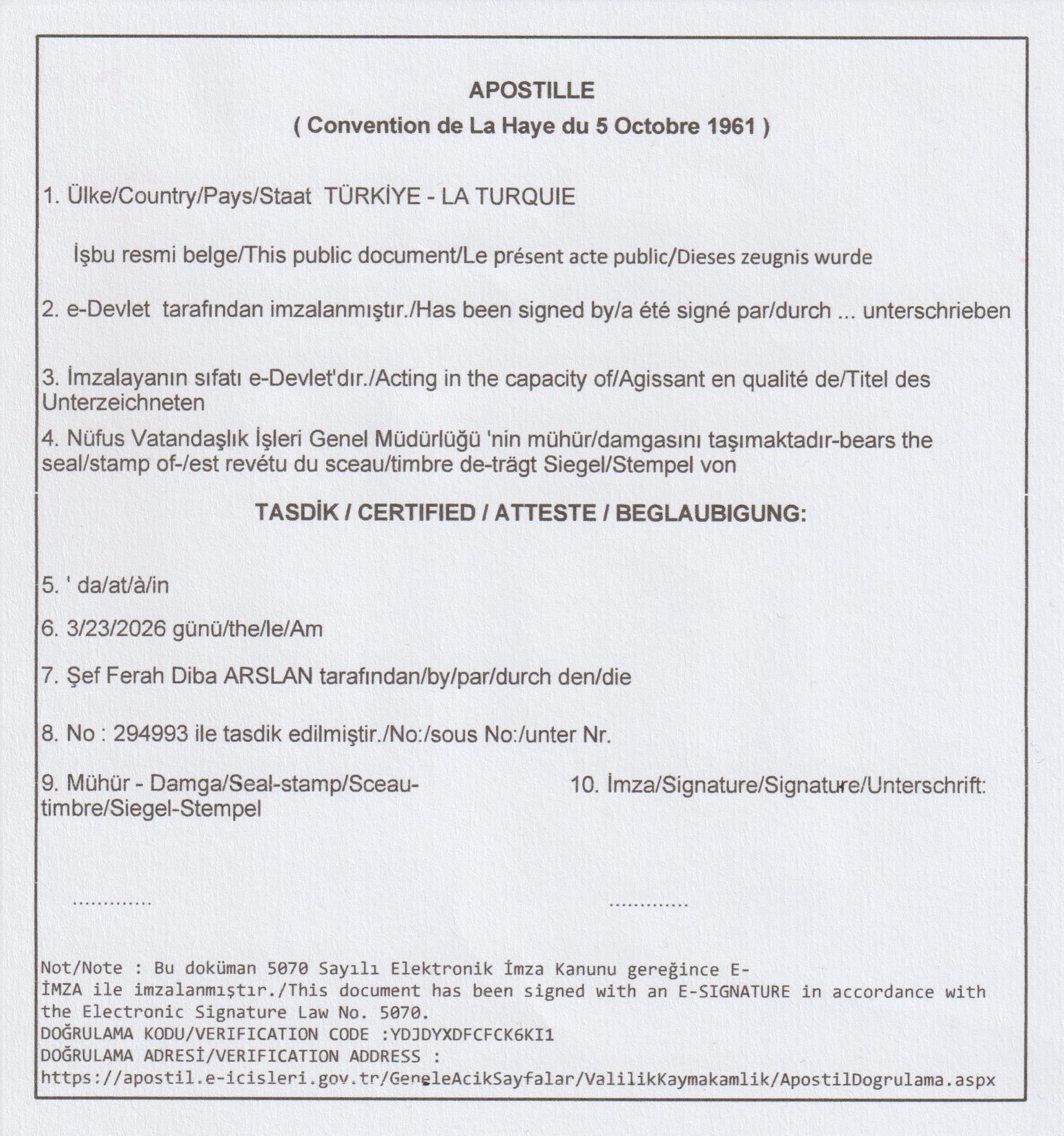
Many civil registry and judicial documents in Turkey can easily be generated digitally with a barcode via the E-Devlet (E-Government) portal. However, when it comes to international procedures, foreign authorities almost exclusively demand original, physical documents with a wet signature and ink seal. The primary security and infrastructure reasons why digital barcoded documents are rejected abroad are:
-
1
Barcode validity periods
The verification barcodes and links generated via E-Devlet have a specific expiration date. -
2
Intranets and firewalls
Many foreign government institutions (especially immigration offices and courts) block external internet access or restrict access to foreign government websites due to internal security protocols; making it technically impossible for their staff to scan and verify the barcode. -
3
Electronic signature verification
Electronic signatures track the document's validity at the exact moment of signing, rather than its ongoing status. This creates issues in legal cases requiring retrospective verification. -
4
Infrastructure and domain changes
Government web domains or verification systems may change over time. -
5
Lengthy legal procedures
International processes like citizenship or residency can take months or years. A digital verification link could easily expire at any point during this long wait.
Crucial details for power of attorney (Vekaletname)
If you cannot travel to Turkey in person, you must issue a Power of Attorney (Vekaletname) so your documents can be obtained on your behalf. However, official institutions (especially Civil Registries and Courthouses) outright reject powers of attorney with generic clauses. If Schmidt & Schmidt is handling your retrieval, specific authorization clauses must be explicitly written in the document. For example, exact phrases such as "to obtain criminal records and archived criminal records" ("Adli sicil kaydı ve adli sicil arşiv kaydı çıkarmaya"), "to receive original Formula A, B, and C documents from civil registry offices" ("Nüfus müdürlüklerinden Formül A, B ve C belgelerini aslı gibidir onayıyla teslim almaya"), and "to perform Apostille and legalization procedures at the District Governorate and Ministry of Foreign Affairs" ("Kaymakamlık ve Dışişleri Bakanlığı'nda Apostil ve legalizasyon işlemleri yapmaya") must be included word-for-word in the notarized power of attorney.
Recovering lost or damaged documents while abroad
If you are already living abroad and your passport, diploma, or previously apostilled birth certificate is lost or stolen, your entire international legal process can grind to a halt. Physically flying back to Turkey and waiting in line at government offices for weeks is a massive waste of time and money. Schmidt & Schmidt can retrieve fresh originals (or certified "true copies") of your lost documents from the authorized Turkish authorities on your behalf, complete all necessary legalizations, and deliver them to your current country of residence via international courier.
International agreements and bilateral exemptions
Not every official document needs to go through the apostille or consular legalization process. Thanks to various bilateral legal assistance agreements (ikili hukuki yardımlaşma anlaşmaları) and international conventions Turkey is a party to, certain documents can be accepted directly.
For example, multilingual documents like Formula A, B, and C issued among member countries of the CIEC (International Commission on Civil Status) are often legally valid directly, without even needing an apostille.
Documents from or to unrecognized states: The standard Hague Apostille rules do not apply to documents from states lacking diplomatic recognition (e.g., documents coming from Taiwan to Turkey, or going from the TRNC / Northern Cyprus to EU countries). In these situations, documents usually have to enter a complex, indirect legalization chain through a third country's embassy or chamber of commerce. Legalizing documents bearing such diplomatic complications requires highly specialized legal procedures.
Typical document packages for common scenarios
While requirements vary based on the destination country and specific institution, the minimum (typical) document packages requested for major life events include:
- Getting married abroad: Birth Certificate (Doğum Belgesi / Formül A), Certificate of Celibacy (Bekârlık Belgesi / Medeni Hal), Criminal Record (Adli Sicil Kaydı).
- Family reunification (Foreign Spouse/Child): Marriage Certificate (Evlilik Belgesi / Formül B), Population Registry Extract (Nüfus Kayıt Örneği), Birth Certificate, Criminal Record.
- Education and university equivalence: University Diploma (Üniversite Diploması), Transcript (Not Dökümü).
Critical rules on translation, legalization, and document physics
In international bureaucracy, the physical state of the document and the exact sequence of the legalization chain are just as important as the content itself. Here are the critical details that most frequently cause rejections:
Detailed guide to personal document legalization and validity (2026 updated)
Below are the detailed requirements for the most frequently used personal documents in international operations, categorized by outbound (From Turkey) and inbound (From Abroad) scenarios.
1. Birth certificate / Birth registry extract
| Document obtained in Turkey (For Use Abroad) | |
|---|---|
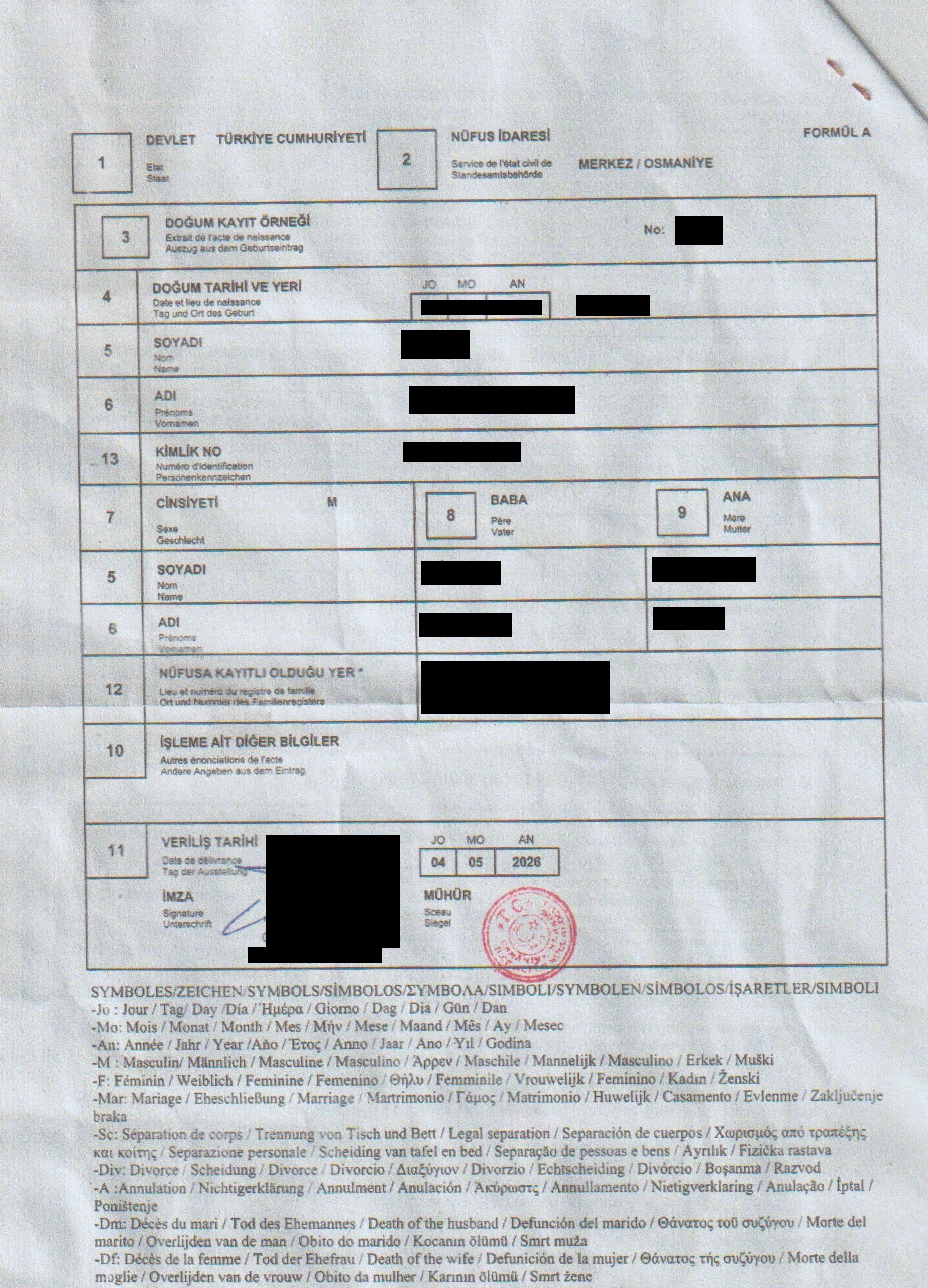
| Official name / code | International Birth Extract (Uluslararası Doğum Kayıt Örneği / Formül A) |
| Validity period | Generally 3–6 months depending on the country |
| Content | Date of birth, place of birth, parents' details |
| Language & Legalization | Multilingual (CIEC format) / Apostilled if no bilateral agreement exists |
- The critical difference between formula A and a standard registry extract: Consulates do not accept standard population registry extracts as birth certificates; the universally coded Formula A is mandatory.
- Unknown parentage: In cases where the mother or father's name is legally blank on the Formula A, foreign consulates will demand additional sworn statements (affidavits).
| Document obtained abroad (For use in Turkey) | |
|---|---|
| Use cases | Citizenship, marriage, immigration, and civil registry processes |
| Special rules / timeframe | Turkish institutions (Nüfus Müdürlükleri) generally require the document to have been issued within the last 6 months. |
2. Marriage Certificate
| Document obtained in Turkey (for use abroad) | |
|---|---|
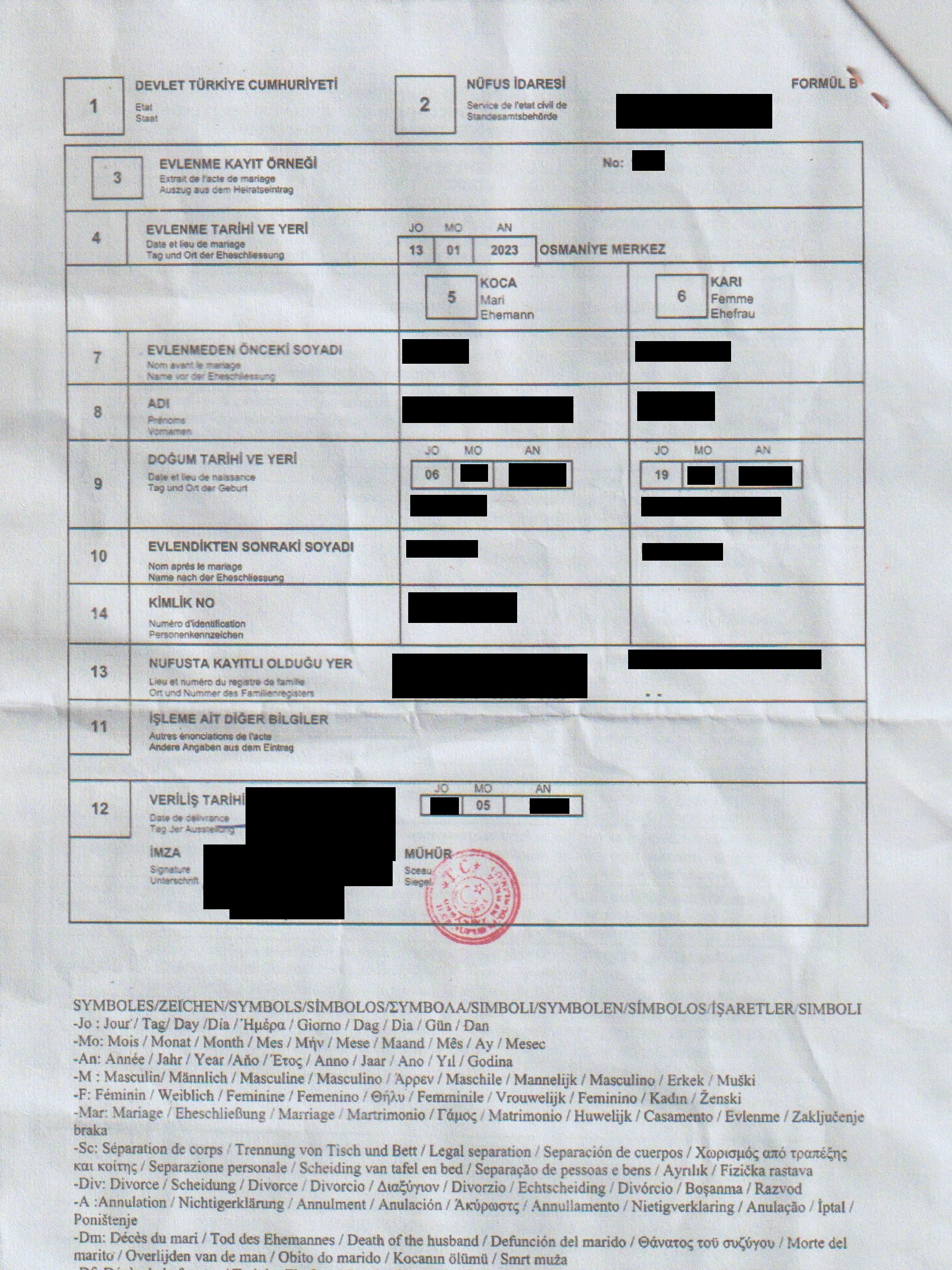
| Official name / code | International Marriage extract (Uluslararası Evlenme Kayıt Örneği / Formül B) |
| Validity period | Generally 3–6 months |
| Language & legalization | Multilingual / Apostilled if no bilateral agreement exists |
| Document obtained abroad (for use in Turkey) | |
|---|---|
| Use cases | Family reunification, residence permit, citizenship processes |
| Special rules / timeframe | Local marriage offices (Evlendirme Daireleri) outright reject foreign marriage/celibacy certificates older than 6 months. |
3. Divorce decree
| Document obtained in Turkey (for use abroad) | |
|---|---|
| Official name | Finalized court decision (Kesinleşmiş Mahkeme Kararı) |
| Validity period | Indefinite |
| Translation sensitivity | Absolute compliance with the destination country's legal terminology is required. |
- The finalization annotation trap: The Family Court must stamp the "Finalization Annotation" (Kesinleşme Şerhi) on the back of the decree, after which it is apostilled at the Justice Commission or Governorate. Without this annotation, the document is legally incomplete and void abroad.
| Document obtained abroad (for use in Turkey) | |
|---|---|
| Use cases | Remarriage in Turkey, updating population registry |
| Special rules | Translation alone is not enough; a Recognition and Enforcement (Tanıma ve Tenfiz) lawsuit must be filed in Turkey, or an administrative update must be processed via the registry office. |
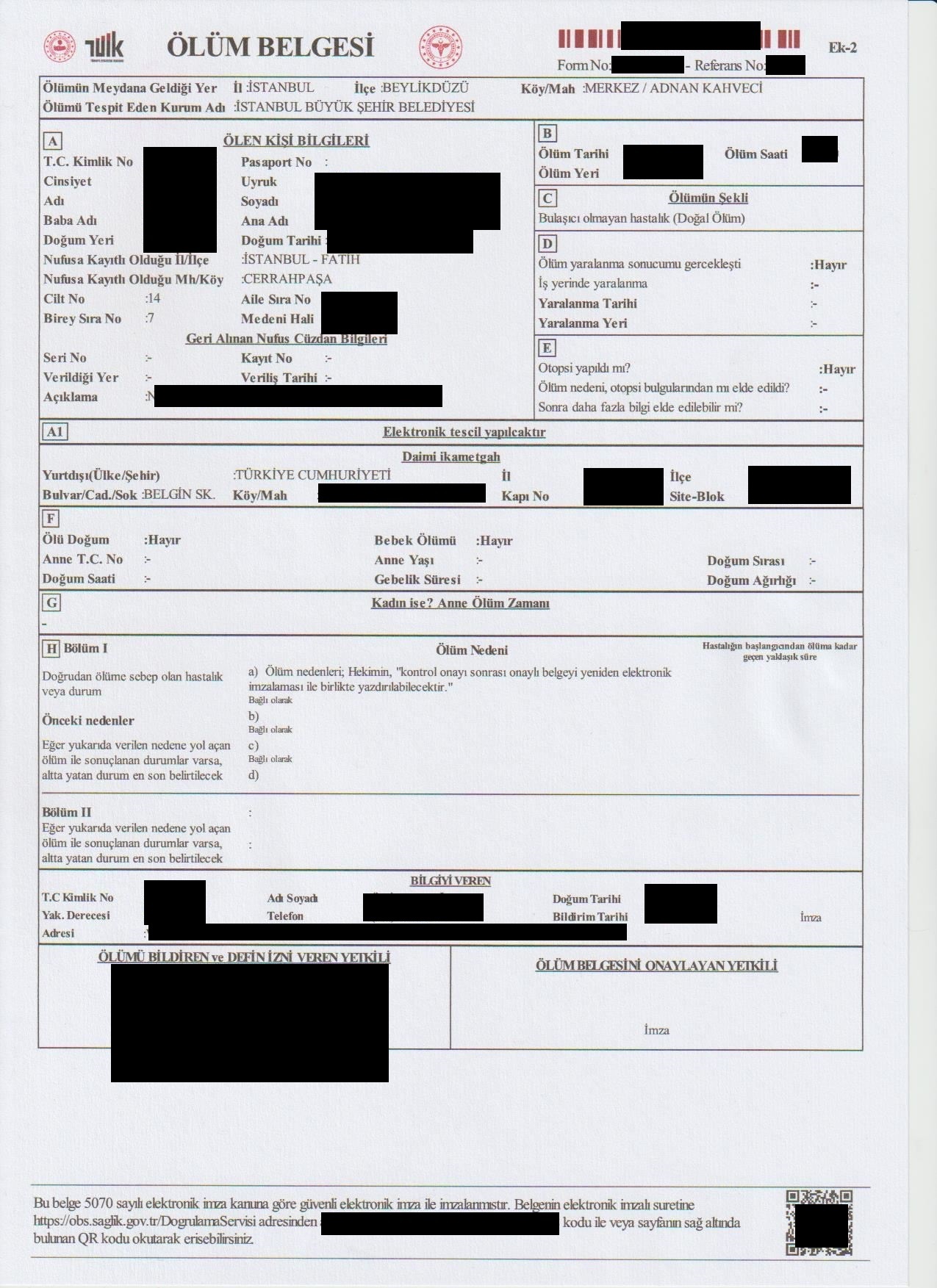
4. Death Certificate
| Document obtained in Turkey (for use abroad) | |
|---|---|
| Official name / code | International Death extract (Uluslararası Ölüm Kayıt Örneği / Formül C) |
| Language & legalization | Multilingual / apostilled if no bilateral agreement exists |
| Document obtained abroad (for use in Turkey) | |
|---|---|
| Use cases | Inheritance (veraset) procedures, banking operations, registry deregistration |
| Special rules / timeframe | The foreign document must be apostilled and submitted to the court with a notarized translation. |
5. Population Registry Extract
| Document obtained in Turkey (for use abroad) | |
|---|---|
| Official name | Detailed Population Registry Extract (Vukuatlı / Vukuatsız Nüfus Kayıt Örneği) |
| Language & legalization | Turkish / apostille applied to the wet-signed original (E-Devlet printouts are invalid) |
| Document obtained abroad (for use in Turkey) | |
|---|---|
| Use cases | Citizenship applications, educational enrollments, establishing lineage |
| Special rules / timeframe | Most administrative bodies require the document date to be no older than 3 months. |
6. Certificate of Celibacy / Marital status
| Document obtained in Turkey (for use abroad) | |
|---|---|
| Official name | Certificate of Celibacy / Marital Status (Bekârlık / Medeni Hal Belgesi) |
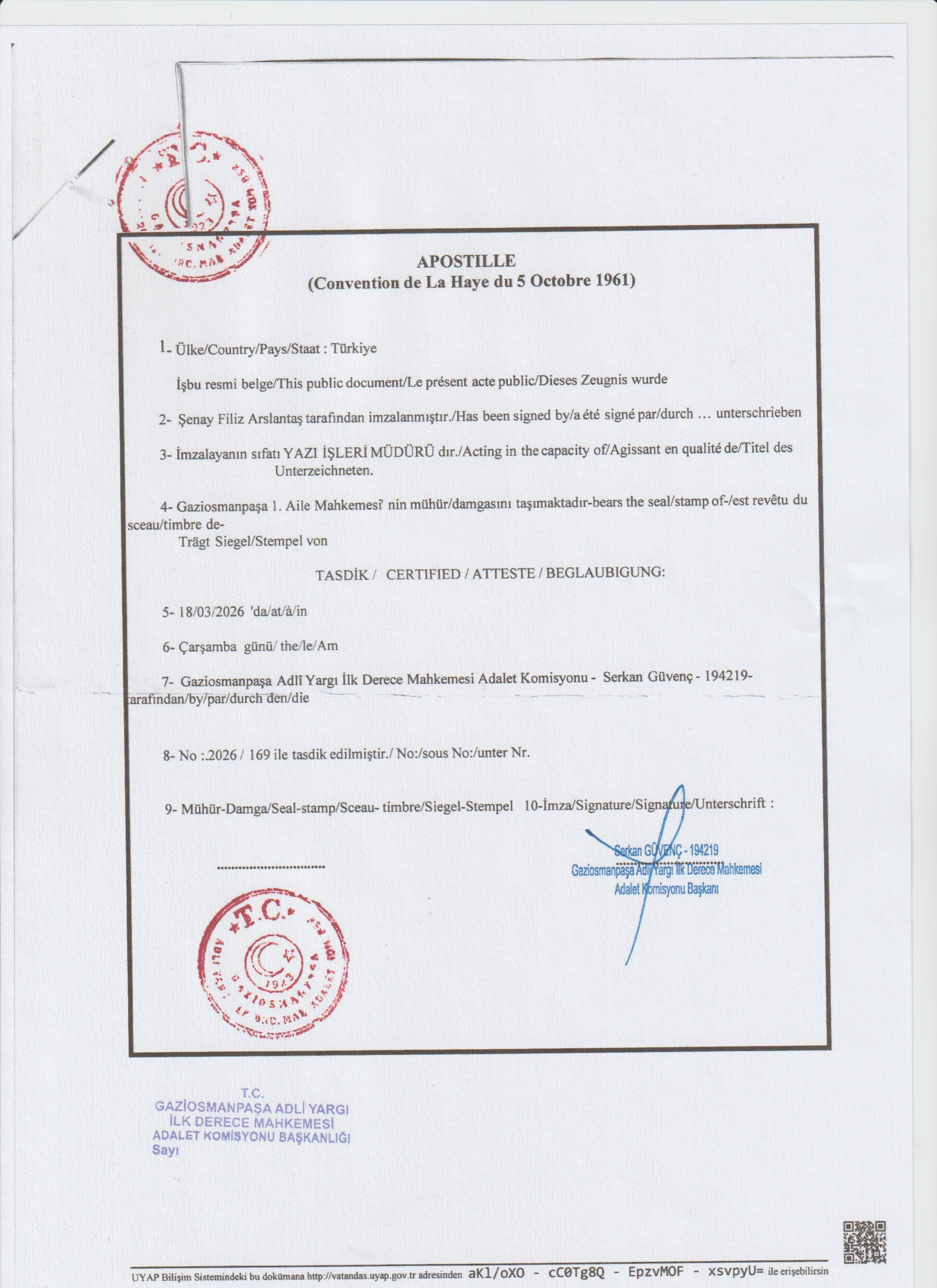
| Language & legalization | Turkish / Translated and apostilled |
- Proof of "single" status for divorced Individuals: Foreign marriage registries strictly require the document or an addendum to explicitly state: "There is currently no legal impediment to marriage." Just showing "Divorced" is often not enough.
| Document obtained abroad fFor use in Turkey) | |
|---|---|
| Use cases | Marriage applications of foreign nationals in Turkey |
| Special rules / timeframe | Must strictly be issued within the last 6 months. |
7. Name Equivalence Certificate
| Document obtained in Turkey (for use abroad) | |
|---|---|
| Official name | Name Equivalence Certificate (İsim Denklik Belgesi) |
| Content | Proves that the previous name/surname and the Turkish name/surname belong to the exact same individual. |
- Transliteration: Letter translation must flawlessly match the international passport; otherwise, inheritance and pension offices will reject the application.
| Document obtained abroad (for use in Turkey) | |
|---|---|
| Use cases | Establishing citizenship, marriage procedures abroad. |
| Special rules | Mandatory for citizenship applications, especially for Balkan and European countries. |
8. Proof of address
| Document obtained in Turkey (for use abroad) | |
|---|---|
| Official name | Certificate of residence and other address (Yerleşim Yeri ve Diğer Adres Belgesi) |
| Language & legalization | Turkish / Translated and apostilled |
| Document obtained abroad (for use in Turkey) | |
|---|---|
| Use cases | Residence permits, opening bank accounts, official subscriptions |
| Special rules / timeframe | The Directorate of Migration Management (Göç İdaresi) and banks strictly accept documents dated within the last 3 months. |
9. Diploma and transcript
| Document obtained in Turkey (for use abroad) | |
|---|---|
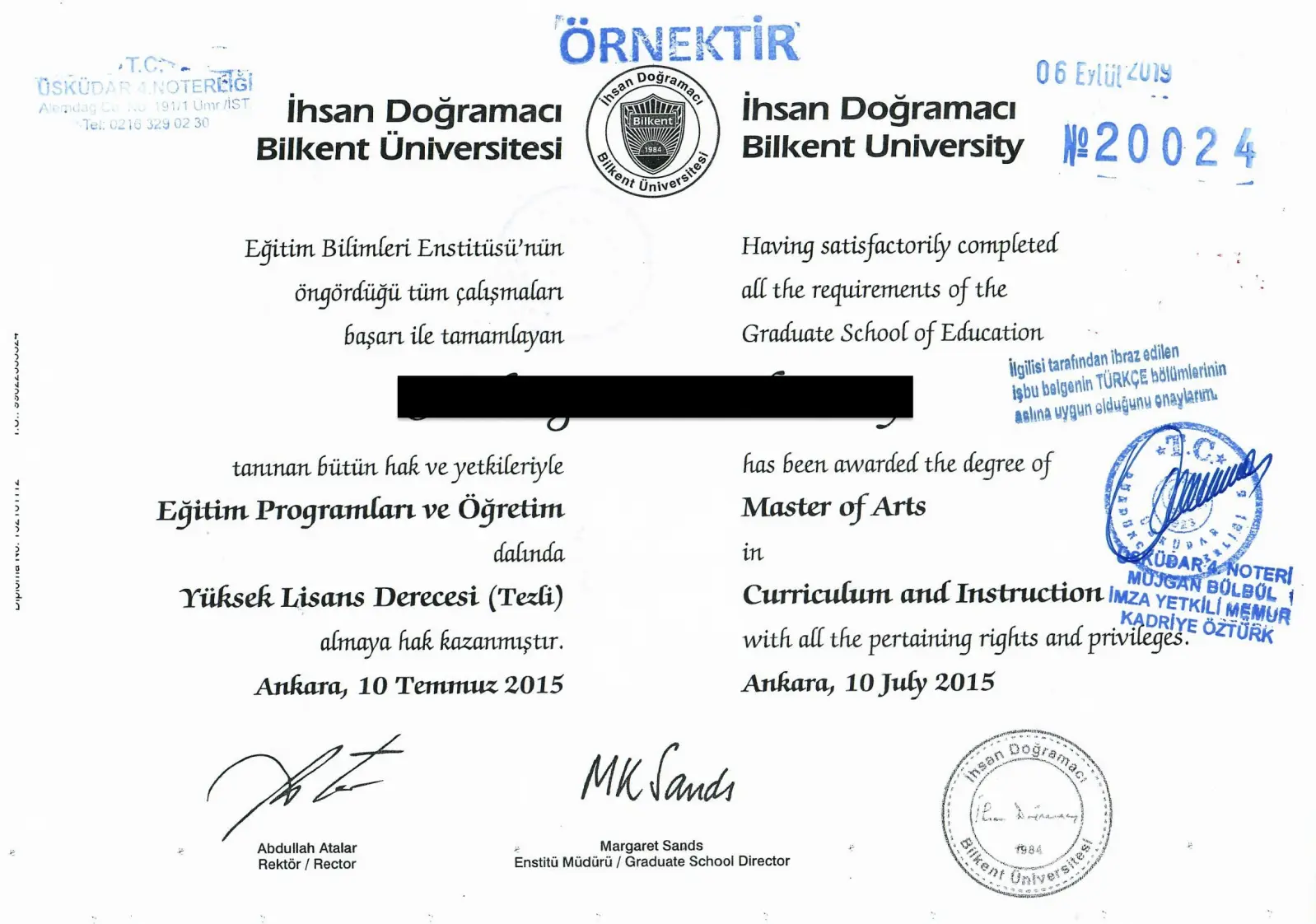
| Official name | University diploma and transcript (Üniversite Diploması ve Transkript / Not Dökümü) |
| Legalization process | Apostille is applied after Rectorate or notary approval on the wet-signed document. |
- Temporary graduation certificates (Geçici Mezuniyet Belgesi): Many foreign institutions outright reject temporary graduation certificates; you must wait for the actual diploma.
| Document obtained abroad (for use in Turkey) | |
|---|---|
| Use cases | YÖK equivalence applications, postgraduate education, professional licensing |
| MEB vs. YÖK equivalence: | High school diploma equivalency is handled by the Ministry of National Education (MEB), while university diploma equivalency is processed by the Council of Higher Education (YÖK). |
10. Criminal record certificate
| Document obtained in Turkey (for use abroad) | |
|---|---|
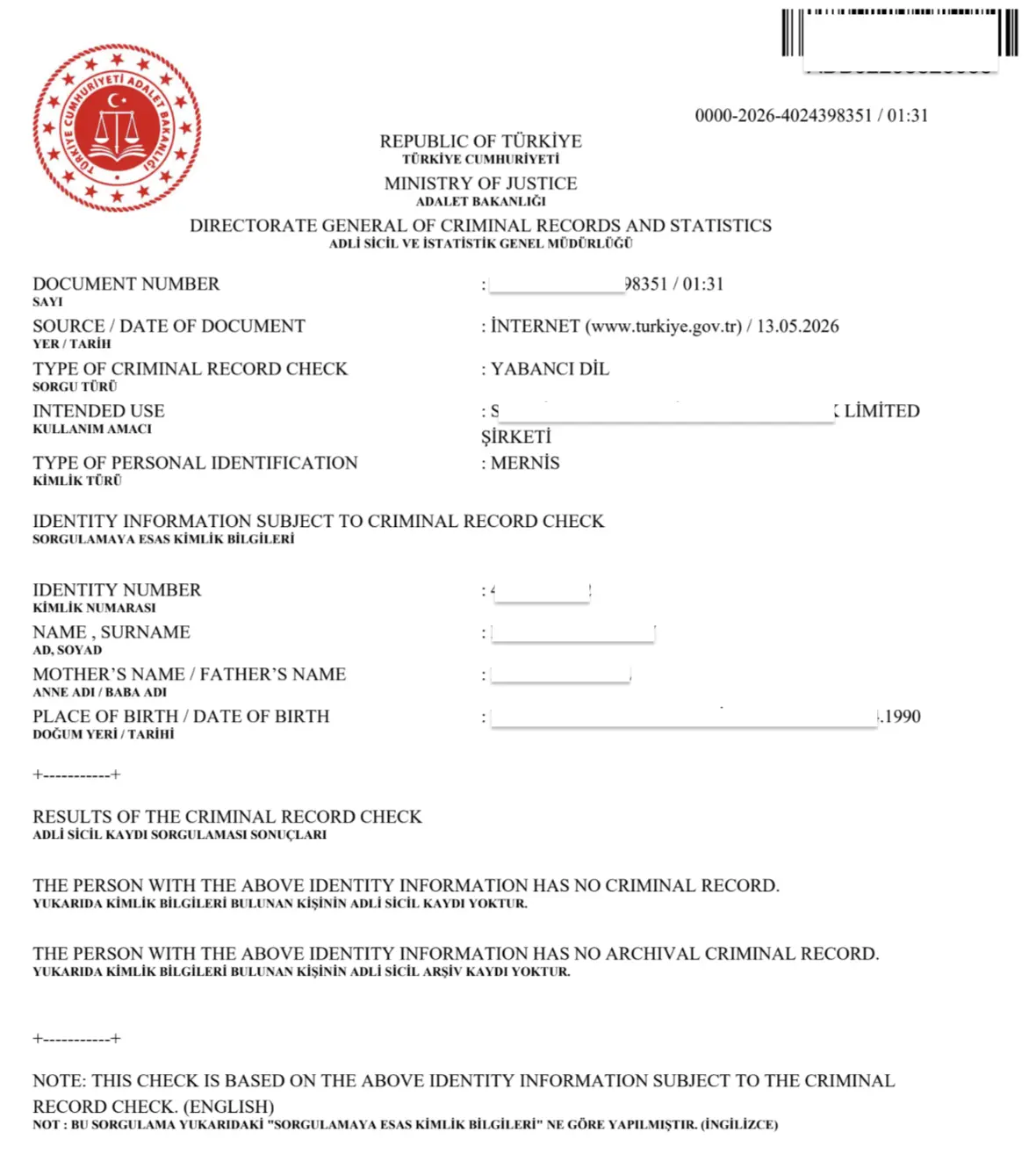
| Official Nname | Criminal Record / Archived Record (Adli Sicil Kaydı / Arşiv Kaydı) |
| Language & legalization | Can be issued in multiple languages at courthouses / Apostille on the wet-signed original |
- The "Archive" Record Detail: Countries like the US, Canada, and the UK reject standard criminal records because they want to see deleted past offenses. You must specifically obtain an "Archived Criminal Record" (Adli Sicil Arşiv Kaydı).
| Document obtained abroad (for use in Turkey) | |
|---|---|
| Use cases | Work permits, citizenship, and long-term residency applications |
| Special rules / timeframe | The document date must absolutely be no older than 3 months. |
Children, custody, and adoption documents
The international travel or residency of minors is one of the most strictly regulated bureaucratic areas worldwide due to anti-human trafficking laws.
Custody decisions (Velayet Kararları): For a divorced parent to permanently take a child under their custody abroad or obtain a residence permit for them in that country, the Custody Decision issued by the court must be apostilled and translated in accordance with the destination country's legal system. For foreign custody decisions to be legally valid in Turkey, a recognition and enforcement (tanıma ve tenfiz) lawsuit must absolutely be filed in Turkish Family Courts. An apostilled foreign decision is merely a prerequisite to open the case; it does not grant direct custody rights.
Travel consents for minors (Seyahat Muvafakatnameleri): If a child is traveling abroad with only one parent or a third party (grandparent, teacher, etc.), the non-traveling parent(s) must issue a Notarized Consent Form (Muvafakatname). Having this document translated and apostilled according to the destination country prevents severe crises at border control.
International adoption documents (Uluslararası Evlat Edinme Belgeleri): Unlike standard apostille rules, international adoption procedures are governed by the "Hague Convention on Protection of Children and Co-operation in Respect of Intercountry Adoption". Under this framework, all court decisions, psychosocial evaluation reports, and corresponding ministerial approvals must be legalized according to specialized international procedures.
Finance, real estate, and inheritance documents
Personal documents are not limited to civil registry records. Citizens also need to legalize critical financial documents for banking, tax, and property transactions abroad.
- Tax Residence Certificate (Mukimlik Belgesi / Vergi İkametgahı): Expats, digital nomads, or international investors wishing to avoid double taxation must obtain a "Tax Residence Certificate" from the Turkish Revenue Administration and have it apostilled.
- Social Security History and Payrolls (SGK Hizmet Dökümü ve Maaş Bordroları): For Skilled Worker visas or foreign mortgage applications, individuals are asked for their Social Security (SGK) history in Turkey. Wet-signed service records obtained from the Social Security Institution can be notarized and apostilled.
- Bank statements (Banka Hesap Özetleri): Legalizing private financial documents not issued by state agencies works differently. A wet-signed bank statement from a Turkish bank cannot be taken directly to the apostille desk. It must first be notarized alongside the bank official's signature circular (imza sirküleri).
- Title Deeds and Proof of Real Estate (Tapu Kayıtları ve Gayrimenkul İspatı): Individuals participating in "Golden Visa" programs (like Spain, Greece, or Portugal) or tax processes requiring wealth declaration must submit fully legalized, wet-signed title deed extracts from the Turkish Land Registry Offices (Tapu Sicil Müdürlükleri).
- Certificate of Inheritance and Wills (Mirasçılık Belgesi / Veraset İlamı ve Vasiyetnameler): In order for heirs to access the foreign bank accounts or real estate (e.g., in Germany) of a deceased person, the apostilled translation of the Certificate of Inheritance issued by Turkish Civil Courts of Peace (Sulh Hukuk Mahkemeleri) or Notaries is required.
Name and surname change Court decisions (İsim ve Soyisim Değişikliği Mahkeme Kararları)
Excluding marriage, individuals who have changed their first or last name via Turkish courts (or through the civil registry via e-Devlet) must apostille this specific court decision (or administrative board decision) to update their foreign bank accounts, visas, or diplomas. The decision must be translated into the target language, explicitly highlighting that the old and new names belong to the exact same person.
Professional Chamber Registrations and Certificates of Good Standing (Meslek Odası ve Kayıt Belgeleri)
Professional practitioners like doctors, engineers, lawyers, and nurses must obtain a "Certificate of Good Standing" (Mesleki Men Etme Cezası Yoktur) from their respective chambers (Medical Chamber, Bar Association, etc.) to work or obtain a professional license abroad. Because these documents are issued by professional chambers, they cannot usually be apostilled directly; they must first be notarized to enter the official document chain, and then apostilled.
Apostille from Turkey
Turkey acceded to the Hague Convention Abolishing the Requirement of Legalization for Foreign Public Documents in 1985. Therefore, the documents issued in Turkey are exempt from consular legalization for use in other member states of the Convention. The documents gain full legal validity if accompanied by the apostille and a certified translation.Time of the procedure
It takes approximately 14 working days to obtain new documents from Turkey. The issuance time may vary depending on the processing time of the issuing authorities. This time frame does not include the time required to obtain an apostille certificate and translate your documents. Apostille processing in Turkey typically takes between 5 and 14 days, depending on the court's location and current workload.
Translation of documents from Turkey
In addition, you can obtain a certified translation from Turkish into a language of the state of destination from Schmidt & Schmidt. The fee is calculated based on the scope of a specific document.Pricing and service categories (Transparent Pricing)
Costs vary depending on the digital infrastructure of the destination country, the type of document, and the required legal approvals. To give you an idea, here are the starting prices for our basic service packages:
| Service category and document complexity | Estimated starting price |
|---|---|
| Category 1: Digital documents (procurement only) Retrieving basic documents with QR codes / e-signatures from countries with highly advanced digital infrastructures. (excluding apostille and consular legalization) |
Starting from €50 |
| Category 2: Physical documents (procurement only) Retrieving basic documents with wet signatures via physical archive searches in countries with low digitalization. (excluding apostille and consular legalization) |
Starting from €150 |
| Category 3: Fully legalized physical document & Far-route delivery Wet-signed document procurement + apostille process + secure international courier delivery to exceptional/distant destinations. |
Starting from €250 |
| Category 4: Complex legal and archival documents Locating, retrieving, and processing Apostille/Legalization for historical court decisions, divorce decrees, and old archive documents. |
Starting from €400 |
| Category 5: Consular legalization, unrecognized or dissolved states Retrieving archive documents from states that are not party to the Hague Convention, lack diplomatic recognition, or no longer exist today (e.g., former USSR, Yugoslavia), alongside full multi-stage Consular Legalization (Konsolosluk Tasdiki). |
Starting from €700 |
(Note: The final cost table will be clarified after a free preliminary review, depending on the country's consular fees, translation volume, and courier zone.)