Summary: GOST R Certification and Declaration
- What is the GOST R conformity assessment? The national Russian proof of conformity for products that do not fall under the harmonized technical regulations of the EAEU (TR CU / TR EAEU).
- Legal framework: The governing regulation is Government Decree No. 2425 dated December 23, 2021 (effective since September 1, 2022), which superseded the former Decree No. 982. All transition periods for legacy documents issued under Decree No. 982 finally expired on September 1, 2025.
- Certificate vs. Declaration: Whether an item requires certification (assessment by an accredited certification body) or declaration (self-declaration by the applicant) is strictly governed by the nomenclature in Decree No. 2425 based on the HS code (TN VED) and the OKPD2 classification code.
- Applicant requirements: Foreign manufacturers without a registered legal entity in the Russian Federation must appoint an authorized representative established in Russia.
- Validity period: Up to 3 years for serial production, or shipment/contract-based for single deliveries.
- Next steps: Send us your product description and customs tariff number (HS code) for an individual classification and quotation.
What is GOST R Certification and When Is It Required?
The GOST R Certificate is an official certificate of conformity confirming that imported or domestically produced goods comply with national Russian standards (GOST / GOST R) and safety regulations. Historically, this standardization framework traces back to the State Committee for Standardization (Gosstandart), established in the USSR in 1925. Following the dissolution of the Soviet Union, the GOST system served for decades as the regulatory cornerstone for market access in Russia.
With the establishment of the Eurasian Economic Union (EAEU), most technical requirements were progressively harmonized into supranational standards: the Technical Regulations of the Customs Union (TR CU / TR EAEU), verified by either the EAC Certificate or the EAC Declaration. Nevertheless, national GOST R conformity assessment remains strictly mandatory for all product categories for which no union-wide TR CU regulations have entered into force yet.
Without the mandatory GOST compliance documentation, customs clearance, legal export, and commercial distribution across the Russian market are strictly prohibited.

Legal Framework: Government Decree No. 2425
National conformity assessment in the Russian Federation is subject to a strict legal framework that has undergone extensive reform in recent years. Key regulatory acts include:
- Federal Law No. 184-FZ "On Technical Regulation"
- Federal Law No. 162-FZ "On Standardization in the Russian Federation"
- Government Decree No. 2425 dated December 23, 2021: The unified mandatory lists of products subject to certification and declaration.
- Letter of the Federal Customs Service No. 01-11/7403 regarding customs clearance verification procedures
Which Products Fall Under Mandatory GOST R Requirements?
Whether a product requires mandatory GOST R compliance is determined by its national OKPD2 product classification code and its customs tariff number (TN VED / HS code). Typical categories governed by national Russian regulation include:
- Steel wire ropes, conveyor belts, pipes, and pipeline components
- Concrete construction products, binders, and cement
- Pressure pipes and fittings made of unplasticized polyvinyl chloride (PVC-U)
- Power cables and cords (not covered by TR CU 004/2011)
- Transformers, industrial storage batteries, and accumulators
- Mineral fertilizers, varnishes, paints, pigments, and lubricating oils
- Household chemicals and insecticides
- Sporting weapons, hunting rifles, and edged weapons
GOST Certificate vs. GOST Declaration: Key Differences
Similarly to the EAEU framework, the national Russian system establishes two distinct forms of conformity assessment: the GOST R Certificate and the GOST Declaration. While both provide equal legal validity for customs clearance and distribution, they differ significantly in terms of liability, issuing bodies, and procedural steps.
A GOST Certificate is issued by an independent certification body accredited by Rosstandart / RusAccreditation (Rosakkreditatsiya) on an official, anti-counterfeit document blank. The accredited certification body shares primary legal responsibility for verifying conformity and conducting audit assessments.
A GOST Declaration, conversely, represents a self-declaration submitted by the applicant. It is prepared on standard paper (A4 format), authenticated with the official seals of both the applicant and the registering authority, and officially registered in the national electronic register. Full legal liability for product conformity and regulatory compliance rests solely with the applicant.

| Criterion | GOST R Certificate | GOST Declaration |
|---|---|---|
| Legal Basis | Decree No. 2425 (List 1: Mandatory Certification) | Decree No. 2425 (List 2: Mandatory Declaration) |
| Applicant | Manufacturer, importer, or authorized representative | Only a legal entity registered in Russia (importer/authorized representative) |
| Testing Basis | Test reports issued exclusively by accredited Russian laboratories | Test reports from accredited testing laboratories or proprietary test evidence |
| Manufacturing Audit | Mandatory for serial production (scheme-dependent) | Not required |
| Document Form | Official secure state document blank | Standard print on applicant letterhead (A4 sheet) |
| Legal Liability | Shared between certification body and applicant | Borne solely by the applicant |
| Validity Period | 1 to 3 years (serial production) or shipment-based | 1 to 3 years or contract-bound |
| Surveillance Audit | Annual routine inspection controls for serial certificates | None |
Voluntary GOST Certification
If a product is subject neither to TR CU technical regulations nor to mandatory assessment under Decree No. 2425, manufacturers may apply for a voluntary GOST Certificate. This serves as an acknowledged verification of technical quality, builds trust among Russian industrial buyers, and is frequently demanded in public tenders, infrastructure tenders, and B2B contracts.

Certification Schemes: Single Shipment, Contract Delivery, or Serial Production

The scope of testing, documentary requirements, and procedural expenses depend directly on the chosen certification scheme and supply volume:
1. Single Shipment (Batch / Prototype Deliveries)
Recommended for one-time deliveries of small quantities (frequently up to 10 units) or commercial sample shipments. The certificate is issued directly to the Russian importer and remains valid strictly for the volume defined in the supply contract and shipping invoice.
2. Contract-Based Delivery
Applied when continuous deliveries occur over a predetermined period under a bilateral contract with an established Russian distribution partner. The certificate is tied to the underlying supply agreement and typically remains valid for one year.
3. Serial Production
Intended for foreign manufacturers delivering products continuously to multiple distributors throughout Russia. The certificate is issued in the manufacturer's name (via a designated authorized representative) for up to 3 years. It generally requires an initial on-site manufacturing audit as well as annual inspection controls.
Required Technical Documentation
To initiate testing and regulatory assessment, comprehensive technical files must be compiled. The following documents are typically required:
- Official application form for certification or declaration
- Detailed product description with technical specifications and HS code
- Operating manual / user instructions in Russian
- Technical Passport drafted in accordance with national GOST standards
- Design blueprints, circuit schematics, and material specifications
- Existing test reports as well as ISO, DIN, CE, or CB certificates
- Commercial contract, invoice, and shipping manifests (for batch or contract deliveries)
- Registration documents (OGRN/INN tax certificate) of the Russian importer or authorized representative

Marking Requirements and Conformity Marks
Products that have successfully achieved certification or declaration must be labeled with the appropriate conformity mark on their rating plates, packaging, and accompanying documentation before being placed on the Russian market.
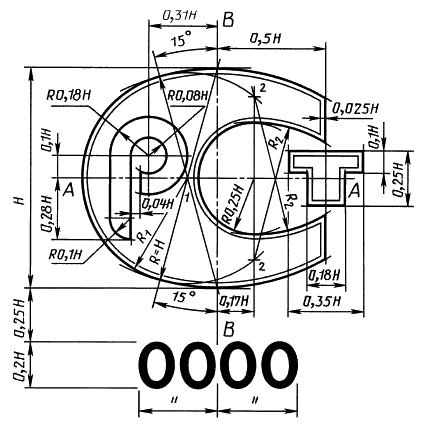

The Current GOST Conformity Mark (Federal Law No. 162-FZ)
Following the enactment of Federal Law No. 162-FZ "On Standardization", the design of the national conformity mark was revised. It features the Cyrillic letters "Р" and "Т" integrated into the "С" contour. The designated GOST standard must be clearly indicated in bold lettering directly beneath the sign (e.g., ГОСТ Р 58984-2020).

Classic Mandatory GOST Certification Mark (with Body Code)
When a mandatory GOST R certificate is issued, the mark displays the alphanumeric accreditation code of the accredited certification body directly underneath the emblem.

Mark for GOST Declaration
Goods accompanied by a registered GOST Declaration bear the conformity mark without any certification body code, reflecting that the declaration was issued under the sole legal accountability of the declarant.


National TR Mark vs. Voluntary Mark
Products regulated under national Russian technical regulations display the square TR Mark. Voluntarily certified items carry the mark bordered by the lettering "Voluntary Certification" (Добровольная сертификация). Marketing mandatory goods without valid conformity marking is illegal and subject to import bans and heavy fines.
Authorized Representative in the Russian Federation

Foreign companies without an incorporated legal entity in Russia are not legally entitled to apply directly for national conformity assessment. To obtain a GOST Certificate or GOST Declaration, appointing an authorized representative domiciled in the Russian Federation is legally compulsory.
The authorized representative acts as the formal applicant vis-à-vis Rosstandart, RusAccreditation, and accredited testing laboratories. The representative assumes joint legal responsibility before regulatory authorities regarding product safety and compliance with Russian legal norms.
Processing Time and Costs for GOST Conformity Assessment
The costs and execution timelines for GOST R procedures depend on multiple technical factors and cannot be determined on a flat-rate basis. Core variables include:
- Document type: GOST Declaration (typically 1 to 2 weeks) or GOST Certificate (typically 2 to 4 weeks)
- Scope of laboratory testing: Volume and complexity of non-destructive or destructive testing
- Audit requirements: Need for mandatory manufacturing plant audits for serial certifications
- Technical dossier readiness: Availability of fully translated Russian technical passports, manuals, and test reports
Upon submission of your product description and customs tariff number (HS code), we will prepare a transparent, customized quote covering the entire assessment workflow.
How Does the GOST Conformity Assessment Procedure Work?
We guide you reliably through each regulatory phase — from preliminary tariff classification to delivery of registered original documents: