Many companies looking to sell their products in Kazakhstan or other member countries of the Eurasian Economic Union (EAEU) find it challenging to navigate the regulatory jungle of EAC marking, EAC certification, EAC declaration, state registration, and national GOST standards. The specialists at Schmidt & Schmidt bring years of international experience in product certification for export to Kazakhstan and the EAEU, and we are eager to share our extensive expertise with you.
We offer various formats designed to build your team's competence across multiple topics:
- General information on technical regulations within the EAEU
- Preparation of technical documentation required for EAC certification
- Detailed procedures and step-by-step guidance for EAC certification
- Specific conformity assessment requirements across various industries (e.g., plant engineering, mechanical engineering, electrical engineering, etc.)
Our Offer

Seminars
We provide high-quality seminars, available both as tailored in-house training at your company and as open public events.

Workshops
Our competent specialists deliver practical workshops that equip you with the essential skills for managing day-to-day certification processes.

Webinars
Benefit from our industry knowledge comfortably from your computer. Register today for one of our upcoming webinars!

Presentations
Are you looking for a professional speaker? Our specialists are available to speak at various industry events regarding complex certification procedures within the EAEU.

Individual Consultation
Planning to export your products to Kazakhstan or other EAEU member states? We would be happy to advise you proactively to help you avoid regulatory pitfalls.

Project Support
We gladly assist you directly on-site with the certification of your products in the Eurasian market, providing reliable advice at every step.
Technical Regulations in the EAEU
Since 2011, the EAEU has adopted more than 48 technical regulations, which govern the importation process into member states. The primary goal of these harmonized standards is to replace outdated national guidelines—such as the GOST-K standards in Kazakhstan or GOST-R standards—with unified regulations, bringing the technical framework of the EAEU into closer alignment with European standards.
Our clients' products most frequently fall under the scope of the following technical regulations:
- TR CU 004/2011 On the safety of low-voltage equipment
- TR CU 010/2011 On the safety of machinery and equipment
- TR CU 012/2011 On the safety of EX equipment
- TR CU 016/2011 On the safety of appliances burning gaseous fuels
- TR CU 018/2011 On the safety of wheeled vehicles
- TR CU 019/2011 On the safety of personal protective equipment
- TR CU 020/2011 On electromagnetic compatibility
- TR CU 021/2011 On the safety of food
- TR CU 022/2011 On food marking
- TR CU 025/2012 On the safety of furniture
- TR CU 029/2013 On the safety of food additives, flavor enhancers, and processing aids
- TR CU 030/2012 On the safety of lubricants, oils, and special fluids
- TR CU 031/2012 On the safety of agricultural or forestry operation vehicles and trailers
- TR CU 032/2013 On the safety of pressure equipment
- TR EAEU 037/2016 On the restriction of the use of certain hazardous substances in electrical and electronic equipment
Technical Documentation
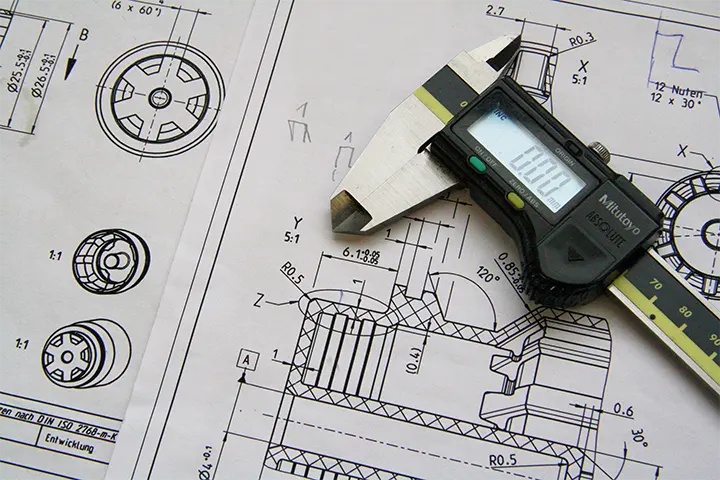
Many companies are overwhelmed by the complex preparation of technical documentation mandatory for carrying out conformity assessments. Our mission is to support you in drafting these essential documents and to resolve all your questions comprehensively. The following documents are particularly critical for ensuring a smooth conformity assessment process:
A core component of the safety justification is the risk assessment. This procedure complies with strict ISO norms, meaning the methodology remains identical globally. Within its framework, all potential hazards associated with the operation of a machine are identified, evaluated, and mitigated with corresponding safety measures. We provide full support in the preparation of this essential risk assessment.