Extracts from foreign commercial registers and accounting statements in Turkey
Executive Summary: Navigating Turkish B2B document compliance requires strict adherence to international legalization chains. We operate as a pure-play document procurement and legalization engine, delivering ready-to-file corporate documents to legal and financial professionals worldwide.
Scope of Services
Expanding across borders requires accurate corporate documentation, especially for bank accounts and branch establishment in Turkey. Commercial legalization follows a multi-step authority chain, unlike personal documents — involving Chambers of Commerce, Trade Registries, and ministries. Missing or incorrect stamps can delay cross-border transactions, including mergers and tenders.
At Schmidt & Schmidt, we provide comprehensive B2B services for obtaining corporate documents, navigating the Turkish MERSIS system, securing commercial apostilles, handling consular legalization, and executing sworn corporate translations in over 140 countries. Our goal is to ensure your company's documents achieve international legal validity seamlessly.
Target Audience & Use Cases
🎯 What this guide is relevant for:
Corporate Data Security and Privacy (KVKK, GDPR & NDAs)
Corporate documents such as Articles of Association and Board Resolutions contain sensitive business information. Cross-border document transfers require strict security measures. At Schmidt & Schmidt, we execute strict Non-Disclosure Agreements (NDAs) before handling your files. All processes strictly comply with the European Union's GDPR and Turkey's KVKK. Digital copies are stored on end-to-end encrypted servers, and we use tracked international couriers such as DHL and UPS for document transport.
In this guide
Executive Summary: A quick navigation menu to the critical legalization chains, rules, document guides, regional variations, and pricing models.
Navigation Topics
This guide explains how apostille, consular legalization, and document retrieval processes work for the use of Turkish corporate documents abroad and foreign corporate documents in Turkey.
The Standard Commercial Legalization Chains
Executive Summary: This section defines the two most common international legalization pathways. Refer back to these core sequences whenever standard processing is mentioned throughout the guide to avoid repetitive confusion.
Two Primary Legalization Pathways
To ensure clarity, whenever this guide refers to the "Standard Legalization Chain", it strictly means one of the following two paths based on the destination country's treaty status:
- Obtain the wet-signed original document.
- Obtain an Apostille from the competent authority designated by the issuing jurisdiction.
- A sworn translation may be required in the destination country, depending on local requirements.
- Complete Notary Authentication in the target country.
- Obtain the wet-signed original document.
- Certification by a Chamber of Commerce, notary, or other competent authority may be required depending on the document type.
- Authenticate via the Ministry of Foreign Affairs (MFA).
- Final Embassy/Consulate legalization of the target country.
Critical Rules on Commercial Legalization and Bureaucratic Traps
Executive Summary: This section explains the most common legal rejection risks in Turkish commercial document legalization and provides exact workarounds to ensure immediate compliance.
Common Rejection Risks and Workarounds
In B2B bureaucracy, the physical state of the document, the exact sequence of the legalization chain, and localized terminology are just as important as the content itself. Here are the critical traps that most frequently cause international rejections:
Detailed Guide to Corporate Document Legalization (2026 Updated)
Executive Summary: A highly structured, document-by-document breakdown of the exact inbound and outbound compliance rules for the 8 most critical corporate and customs files.
Document-by-Document Legalization Rules
Below are the detailed requirements for the most frequently used corporate documents, categorized by outbound (From Turkey) and inbound (To Turkey) scenarios.
1. Articles of Association / Memorandum
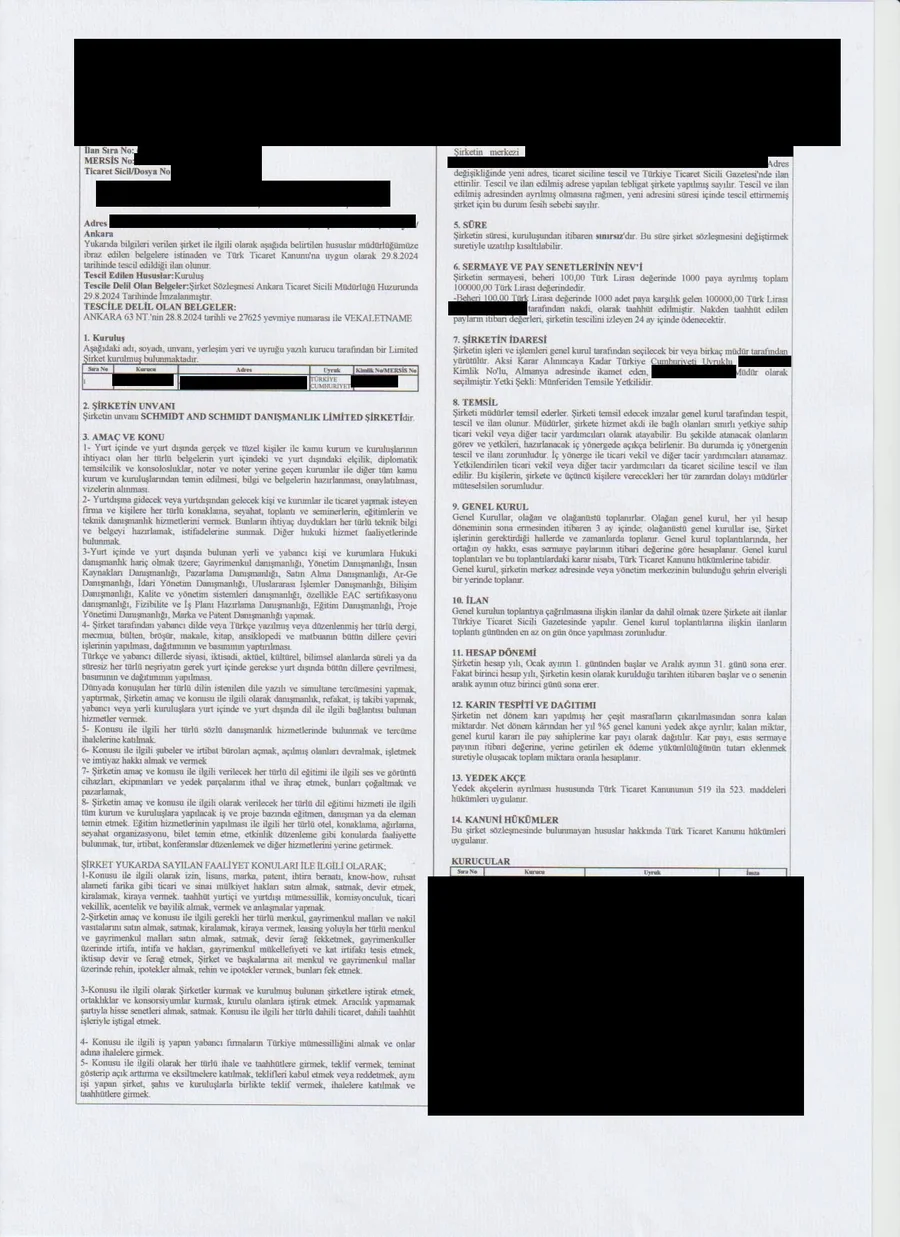
The foundational text defining the company's structure, shareholding, and purpose. This is one of the "Big 3" documents commonly required by MERSIS for foreign companies entering Turkey.
| Outbound Rules (From Turkey to Abroad) | |
|---|---|
| Standard Procedure | Şirket Ana Sözleşmesi: Is generally required to be extracted as a wet-signed or e-signed original from the Trade Registry, notarized, and apostilled. |
| Inbound Rules (From Abroad to Turkey) | |
| Critical Rule | The Double Notarization issue should be avoided in inbound processes. The process requires coordinated notarization and translation across jurisdictions. Translation and notarization costs depend on character count, as Turkish notaries charge per character, making heavy AoA documents expensive to process. |
2. Certificate of Activity / Good Standing
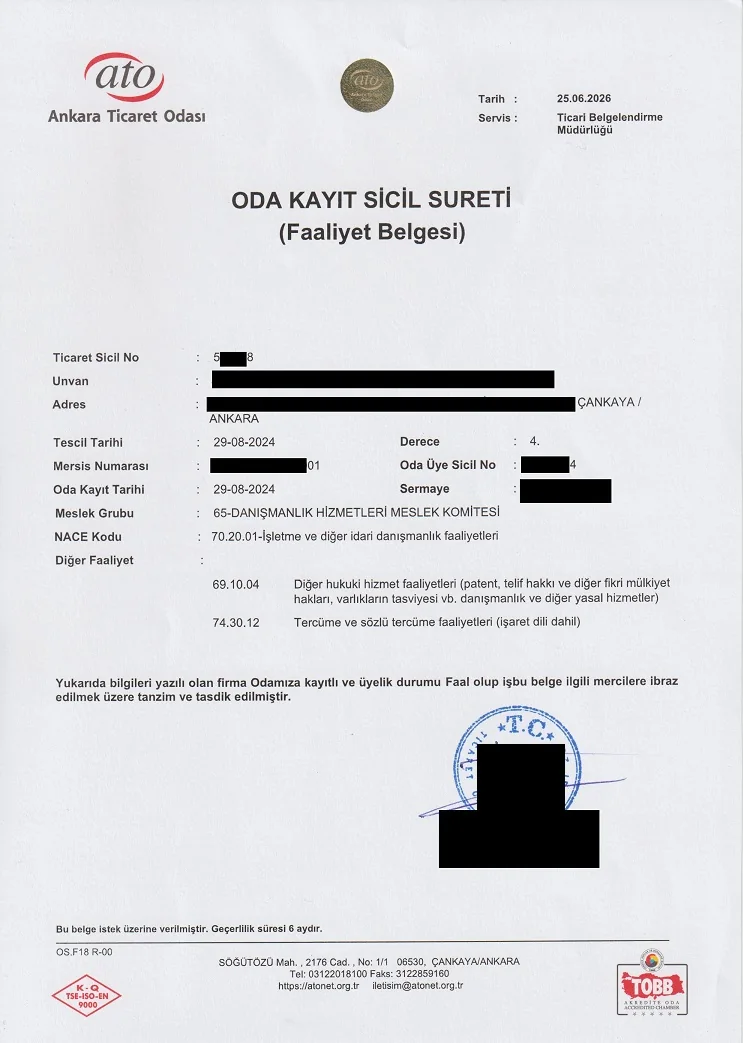
Proves the company is actively trading and not in liquidation or bankruptcy. The second of the "Big 3" MERSIS documents.
| Outbound Rules (From Turkey to Abroad) | |
|---|---|
| Standard Procedure | Faaliyet Belgesi: E-signed documents from the Chamber of Commerce are generally required to be authenticated via Notary before Apostille. |
| Inbound Rules (From Abroad to Turkey) | |
| Critical Rule | Critical timeframe: Turkish Trade Registries commonly require Activity Certificates to be no older than 6 months (some provincial registries may require 3 months). |
3. Board of Directors / General Assembly Resolutions
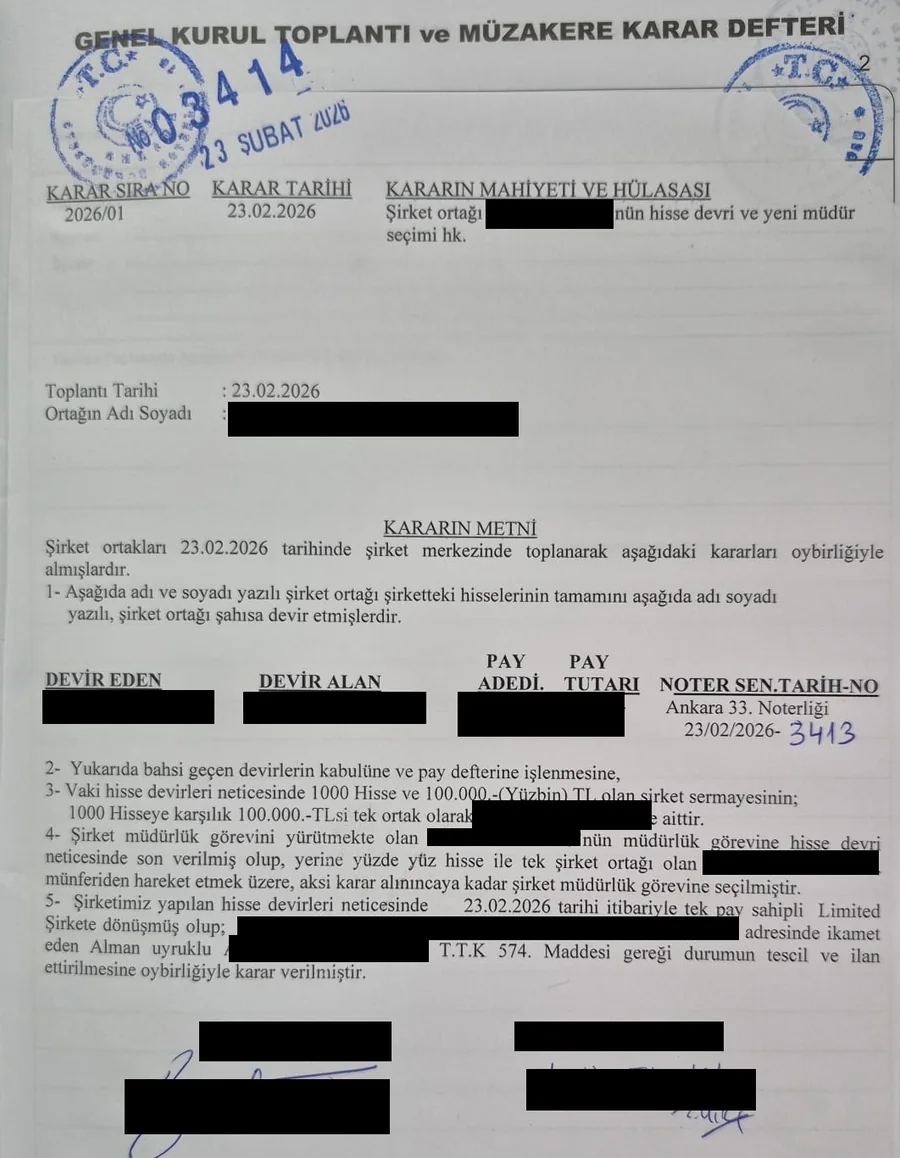
Documents strategic decisions like branch openings, director appointments, or capital increases. The third of the "Big 3" MERSIS documents.
| Outbound Rules (From Turkey to Abroad) | |
|---|---|
| Standard Procedure | Yönetim Kurulu Kararı: Is generally required to be notarized from the physical company decision book (Karar Defteri) before apostille. |
| Inbound Rules (From Abroad to Turkey) | |
| Critical Rule | To open a Turkish branch, the resolution is commonly required to explicitly state the branch name, full Turkish address, allocated capital, and the appointed Turkish representative's passport/ID number. |
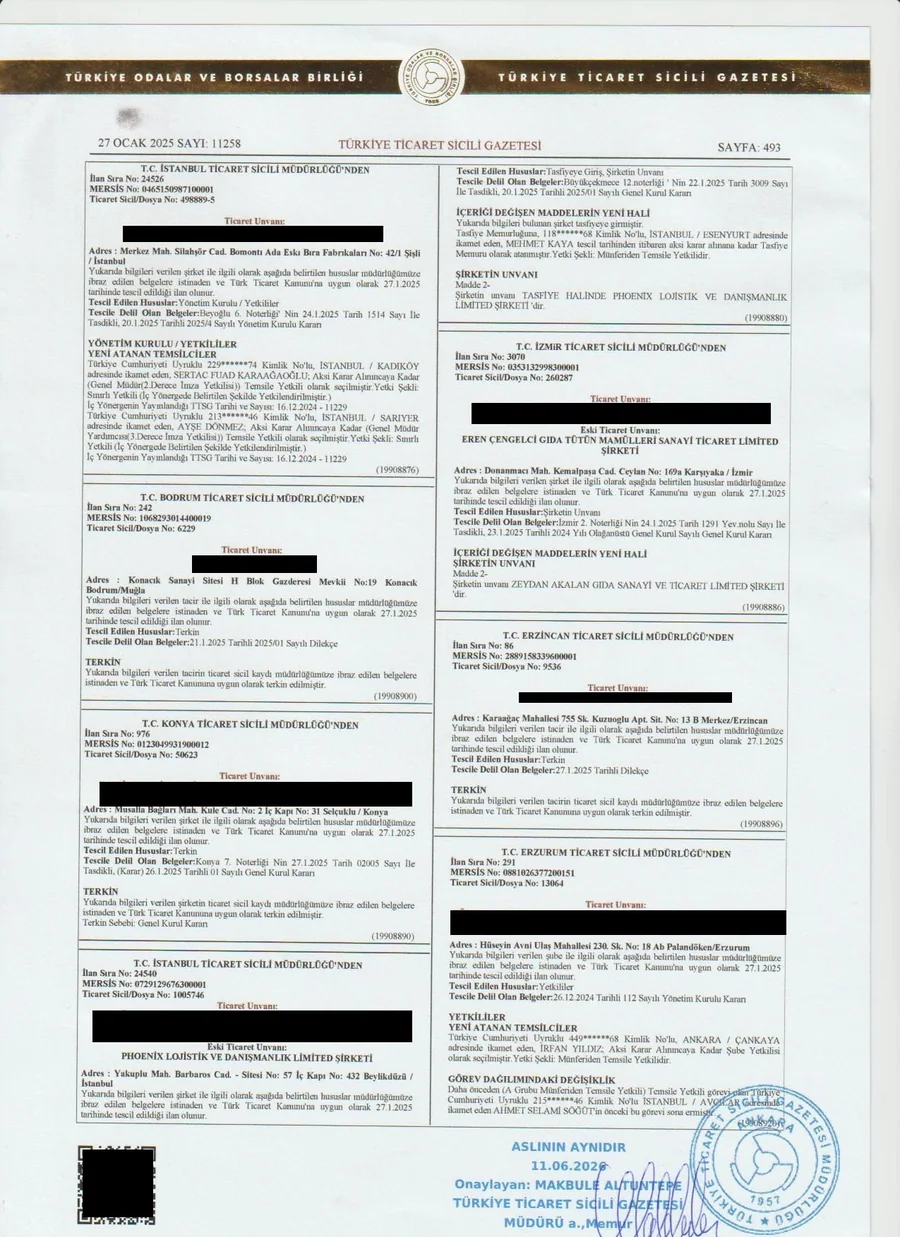
4. Certificate of Incorporation / Registry Extract
Proves the legal existence and registration number of the company.
| Outbound Rules (From Turkey to Abroad) | |
|---|---|
| Standard Procedure | Ticaret Sicil Tasdiknamesi: Standard retrieval from the registry, followed by apostille. |
| Inbound Rules (From Abroad to Turkey) | |
| Critical Rule | Commonly required by Turkish banks for corporate account openings, alongside the Potential Tax ID. |
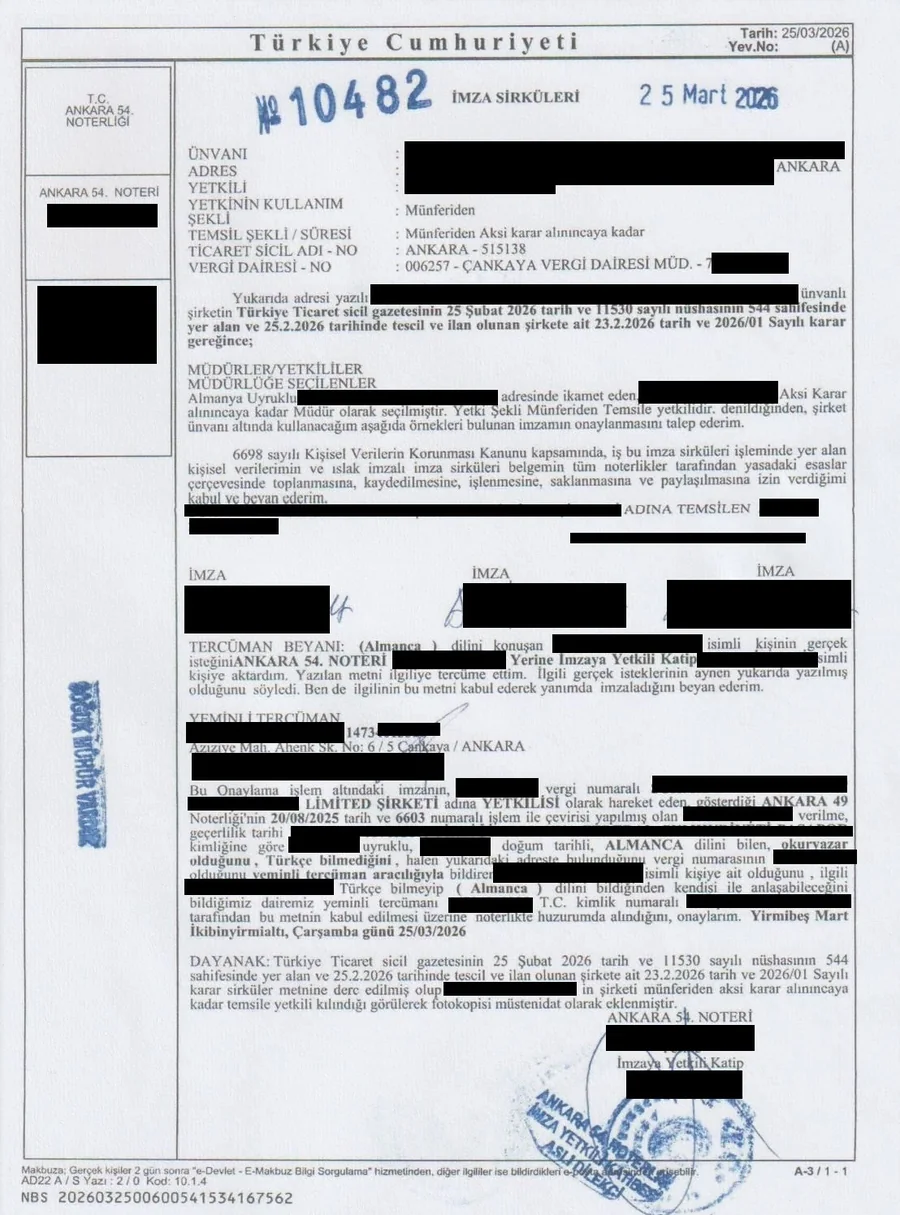
5. Signature Circular / Power of Attorney
Defines who can sign on behalf of the company and their financial limits.
| Outbound Rules (From Turkey to Abroad) | |
|---|---|
| Critical Rule | İmza Sirküleri: Translating this is often insufficient for foreign banks. Draft a custom Corporate Power of Attorney instead. |
| Inbound Rules (From Abroad to Turkey) | |
| Critical Rule | Foreign directors are generally required to provide a legalized signature declaration to the Turkish notary to activate the MERSIS registration. |
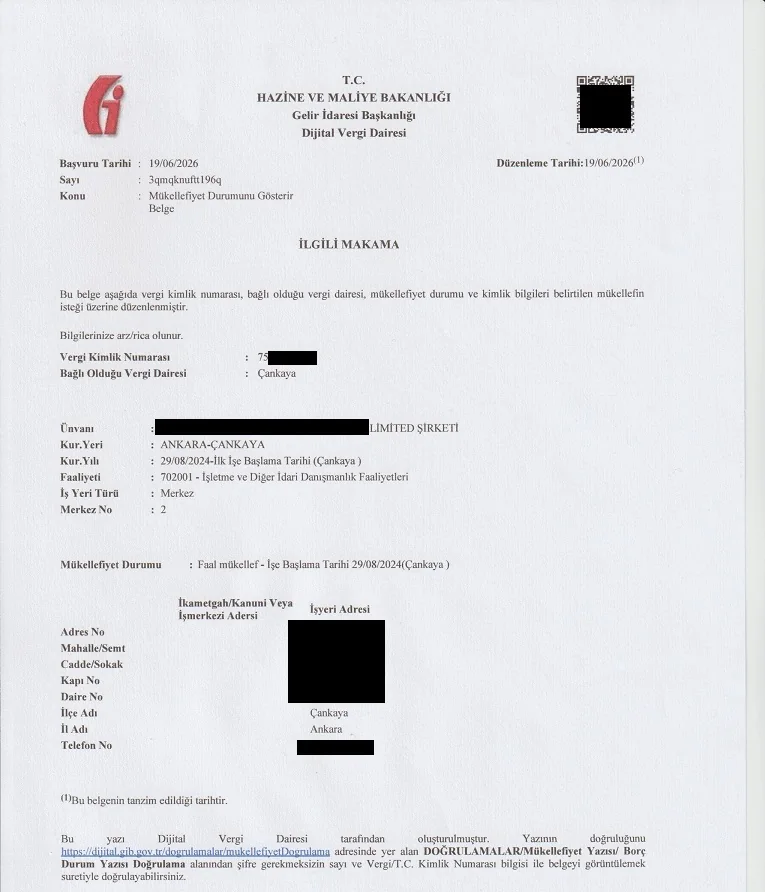
6. Tax Certificates
Documents proving the fiscal status of the corporate entity.
| Outbound Rules (From Turkey to Abroad) | |
|---|---|
| Critical Rule | Mukimlik Belgesi: Retrieve from the Revenue Administration (GİB) for international tax exemption, not the standard Vergi Levhası. |
| Inbound Rules (From Abroad to Turkey) | |
| Critical Rule | The Potential Tax ID Barrier: A foreign company is generally required to be assigned a "Potential Tax ID" in Turkey before any Turkish Notary will process their inbound documents. |
7. Customs & Export Documents
Commercial Invoices, Certificates of Origin, and Packing Lists.
| Outbound Rules (From Turkey to Abroad) | |
|---|---|
| Critical Rule | Are generally required to be verified by the Chamber of Commerce with a "For use abroad" seal before notary and apostille. |
| Inbound Rules (From Abroad to Turkey) | |
| Standard Procedure | Often legalized via Consular processes (especially from MENA or Asian countries) for Turkish customs clearance. |
8. ISO, CE, and Trademark Certificates
Intellectual property and quality assurance documents.
| Outbound Rules (From Turkey to Abroad) | |
|---|---|
| Critical Rule | Original certificates from the Turkish Patent and Trademark Office or independent auditors are generally required to be notarized as "True Copies" before apostille. |
| Inbound Rules (From Abroad to Turkey) | |
| Standard Procedure | Commonly required for product registration with the Turkish Ministry of Health or Ministry of Agriculture. |
Regional and Corridor-Specific Variations (2026 Focus)
Executive Summary: Geopolitical boundaries dictate distinct bureaucratic paths. Here are the specific, localized traps for the EU, Gulf States, US, and transitioning Chinese jurisdictions.
Corridor Compliance Breakdowns
🇪🇺 Translations (Germany / Austria / EU Chain)
- Translator Credentials: Must be translated by a sworn translator explicitly listed on the destination embassy's official registry.
- Cost & Speed Optimization: Executing the translation and notarization within Turkey is generally faster and cheaper than completing the full EU legalization chain locally.
- GmbH & Co KG Formatting: Highly sensitive to exact transliteration accompanied by a localized descriptive translation.
🇦🇪 🇸🇦 UAE / Saudi Arabia Legalization Chain
- Chain Structure: Exclusively follows the Consular Legalization Chain (B). Standard apostilles alone are legally useless.
- Chamber Certification: The commercial authenticity of the trade transaction must be verified by the local Chamber first.
- SABER Platform (KSA): Document legalization is independent of the SABER digital compliance system; both physical stamps and digital clearance are required.
🇺🇸 United States (Delaware, etc.) & 🇨🇳 China
- US State vs. Federal: A Delaware State Apostille is fully sufficient for Turkish MERSIS. Federal authentication is exceptionally rare and unnecessary for corporate setups.
- US Good Standing: A "Certificate of Status" or "Certificate of Incumbency" acts as the direct legal equivalent for Turkish branch setups.
- China Transition: Despite joining the Hague Convention, local implementation practices may vary depending on document type and issuing authority. Consular legalization is frequently utilized as a fallback when local bureaus refuse apostille issuance.
Sector-Specific Regulatory Addendums
Executive Summary: Specialized industries face hyper-specific regulations. This section breaks down compliance rules for Non-Profits, Professional Partnerships, and Medical/Food exports.
Specialized Industry Rules
Topic 1: Foreign Non-Profit Organizations (Inbound & Outbound)
Operating an NGO internationally introduces unique security and systemic challenges distinct from standard commercial entities.
- Entry Framework: Operations occur via branch, representative office, or rarely, a localized foundation. The primary authority is the Ministry of Interior.
- Approval Reality: The entity must clear layered security vetting. Additional review procedures may apply depending on the organization's activities and regulatory requirements.
- Capital & AML: No fixed statutory capital applies, but the entity is required to demonstrate operational funding capacity and clear stringent MASAK (Anti-Money Laundering) disclosures.
- Registry Systems: NGOs are strictly governed by DERBİS, completely bypassing the MERSIS corporate database.
Topic 2: Professional Partnerships (Inbound & Outbound)
Regulated professions (law, architecture, medicine) require dual clearance from both corporate registries and state licensing boards.
- Law Firms: Foreign lawyers must operate strictly under a "Foreign Legal Consultancy" structure; they are barred from equity partnership in standard Turkish practice.
- Chamber Clearances: Final operational approval belongs to professional chambers (e.g., TMMOB for engineers), requiring YÖK equivalency for academic validation.
- Visas & Operations: Work permits must be filed independently via the Ministry of Labor; partnership status does not automatically grant residency rights.
Topic 3: Medical, Export, FDA, EU, and SFDA Systems
Global health and safety documents require synchronization across three entirely distinct regulatory systems.
- The Triad of Compliance: 1) Authentication (Apostille/Embassy). 2) Regulation (FDA, EMA, TİTCK). 3) Customs (Importer border controls).
- FDA & EMA Reality: Neither agency mandates "apostille compliance" for their internal processes. However, foreign customs authorities strictly demand localized authentication (Apostilles) for the resulting certificates.
- Middle East (SFDA): Saudi Arabia relies heavily on SABER. However, physical embassy stamps must back up the digital submissions for specific food and cosmetic exports.
- Document Consistency: Exact nomenclature must match across Commercial Invoices, Health Certificates, and Product Descriptions.
Why International Businesses Trust Schmidt & Schmidt
Executive Summary: With over 12 years of experience, 14,000+ completed assignments, and a presence in 120+ countries, we are the trusted document procurement partner for the world's leading law firms and compliance officers.
Our Global Footprint and Experience
For more than 12 years, Schmidt & Schmidt has supported companies, law firms, accountants, and compliance professionals with international document procurement, apostille, consular legalization, and corporate document authentication services.
Our team operates through physical offices in Germany, China, Russia, and Turkey, supported by a trusted partner network spanning more than 120 countries. This global presence allows us to coordinate complex multi-jurisdiction document projects efficiently while maintaining local expertise and direct communication with relevant authorities.
To date, we have completed more than 14,000 document procurement and legalization assignments for over 1,200 corporate clients worldwide. On average, our specialists process approximately eight new document requests every business day, covering corporate registrations, branch establishments, banking compliance, commercial transactions, tenders, and international regulatory requirements.
We regularly work with documents in English, German, Turkish, Russian, and Chinese, helping businesses navigate cross-border compliance requirements across multiple legal systems and jurisdictions. Many of our clients return to us repeatedly for ongoing international expansion, corporate maintenance, and document authentication projects.
Commitment to Confidentiality
Confidentiality remains a core part of our service. Upon request, we execute Non-Disclosure Agreements (NDAs) and follow strict document-handling procedures designed to protect sensitive corporate information throughout the legalization and procurement process.
Pricing and service categories (Transparent B2B Pricing)
Executive Summary: Transparent, tiered B2B pricing models for global document procurement, heavy translation, and multi-stage consular legalization services.
B2B Service Packages
Corporate documents vary wildly in length, and consular fees differ by country. Here are the starting prices for our B2B service packages:
| Service Category | Scope & Inclusions | Ideal For | Pricing |
|---|---|---|---|
| Tier 0: Digital Registry Extract | Procurement of unlegalized extracts from public registers, non-limited registries, or professional body associations. Delivered with QR code or electronic signature only, without translation or legalization. | Internal audits, KYC verification, or domestic corporate purposes. | Starting from 20 Euro |
| Tier 1: Standard Apostille | Procurement of single standard doc (e.g., Activity Certificate) + Apostille. | Tenders, quick vendor registrations. | Starting from 200 Euro |
| Tier 2: Commercial Package | 3-5 standard docs. Procurement + Sworn Translation + Notary + Apostille. | Opening foreign bank accounts. | Starting from 400 Euro |
| Tier 3: Heavy Translation | Processing lengthy documents like Articles of Association with custom volume discounts. | M&A, establishing foreign subsidiaries. | Starting from 700 Euro |
| Tier 4: Inbound Turkey Pack | Complete MERSIS prep, Potential Tax ID acquisition, and managing the Double Notarization trap in Turkey. | Foreign companies opening a Turkish branch. | Starting from 1100 Euro |
| Tier 5: Consular Legalization | Multi-stage Ministry of Foreign Affairs and Embassy coordination for non-Hague countries (UAE, China). | Middle East & Asia market expansion. | Starting from 2000 Euro |
Frequently Asked Questions (FAQ)
Executive Summary: Rapid answers to the most complex operational and procedural questions asked by foreign CPAs, lawyers, and corporate compliance officers.
Common Inquiries
Enterprise-level data security and privacy
Executive Summary: Client confidentiality is guaranteed through strict NDAs, ISO 27001-certified servers, SSL encryption, and full compliance with global GDPR standards.
Our Security Infrastructure
Each server is located in an ISO 27001 certified data center and has its own firewall.
As with online banking, your access is only through a secure, SSL-encrypted connection.
Our company complies with the EU General Data Protection Regulation (GDPR). GDPR regulation is the most stringent in the world.