The conformity assessment of medical devices and medicines involves checking compliance with the applicable safety, quality and performance requirements. The required procedure depends on the product’s classification, intended use and target market.
Medical device registration, medicinal product registration and EAC conformity assessment are distinct procedures. An EAC Declaration should not be treated as a universal substitute for the required state registration.
What is a medical device?
According to the Agreement on Common Principles and Rules for the Circulation of Medical Devices within the EAEU of December 23, 2014, medical devices include instruments, equipment, materials and other products intended by their manufacturer for medical purposes, whether used individually or in combination. These may also include accessories and software required for their intended use.
Medical purposes include the prevention, diagnosis, monitoring and treatment of diseases, medical rehabilitation, and the investigation, replacement or modification of anatomical structures or physiological functions. In vitro diagnostic products may also be classified as medical devices.
The following questions can help identify whether a product may fall within the scope of medical device regulations. Classification must be assessed according to its intended purpose and the applicable rules.
- Is the product intended for diagnosis, treatment, prevention or rehabilitation?
- Is it intended to monitor physiological parameters or replace, support or modify anatomical structures or physiological functions?
- Does the manufacturer specify a medical purpose for the product?
- Is it intended for in vitro examination of samples obtained from the human body?
- Is it included in the applicable nomenclature classification of medical devices?
Use in a hospital or contact with the human body does not, on its own, establish that a product is a medical device.
Examples of products that may be classified as medical devices, depending on their intended use, include:
- Medical instruments and equipment, from thermometers to MRI scanners.
- Surgical and dental instruments.
- Diagnostic and monitoring equipment, including ECG devices and pulse oximeters.
- Implants, including joint implants and pacemakers.
- Medical consumables, including certain gloves, dressings and catheters.
- Containers and systems for collecting or storing biological samples.
- Equipment intended for sterilising medical devices.
Legal framework
The EAEU has established common rules for medical devices. The regulatory framework includes the following agreements and decisions:
- Agreement on Common Principles and Rules for the Circulation of Medical Devices within the Eurasian Economic Union of December 23, 2014
- Decision No. 46 of the Council of the Eurasian Economic Commission of February 12, 2016, on the rules for registration and examination of the safety, quality and effectiveness of medical devices
- Treaty on the Eurasian Economic Union of May 29, 2014
- Decision No. 173 of the Eurasian Economic Commission Board of December 22, 2015, on the classification of medical devices according to the potential risk of their use
- Decision No. 27 of February 12, 2016, on general requirements for the safety and effectiveness of medical devices, their labelling and operational documentation
- Decision No. 26 of February 12, 2016, on the special circulation mark for medical devices on the EAEU market
The applicable registration route and any transitional provisions must be checked for the particular product and destination. Medicines are subject to a separate pharmaceutical regulatory framework.
Conformity assessment procedure for medical devices
The first step is to establish the product’s regulatory classification and identify the applicable registration requirements. Depending on the product, additional requirements may also need to be assessed.
Medical device registration and conformity assessment under general EAEU technical regulations must be distinguished. The applicability of requirements such as TR CU 020/2011 on electromagnetic compatibility must be checked against the scope and exclusions of the relevant regulation.
Classification of medical devices by risk
Under Decision No. 173 of December 22, 2015, medical devices are classified according to the potential risk associated with their use:
- Class 1: low risk.
- Class 2a: medium risk.
- Class 2b: increased risk.
- Class 3: high risk.
The classification depends on factors such as the intended purpose, duration of use, invasiveness and interaction with the human body. The risk class cannot always be determined from the product name alone.
State registration of medical devices
Medical devices must undergo the applicable registration procedure before being placed on the market, unless an exemption applies. In Russia, Roszdravnadzor is the competent authority for medical device registration within its remit.
The territorial scope and validity of a registration document depend on whether registration is completed under a national procedure or the common EAEU procedure. A national registration document should not automatically be treated as valid throughout the EAEU.
The main stages may include:
- Determination of the device’s classification and registration route.
- Preparation of technical documentation, instructions for use, drawings, photographs and other supporting materials.
- Testing, studies and assessments required for the device.
- Submission of the registration dossier to the competent authority.
- Examination of the dossier and responses to any requests for additional information.
- Issuance of the registration document following a successful assessment.
Further information is available on our page about state registration of medical devices and medicines.
EAC Declaration where applicable
Where a product is subject to an EAEU technical regulation requiring an EAC Declaration, the procedure generally includes:
- Identification of the product and applicable regulations.
- Selection of the declaration scheme.
- Preparation of supporting documents and arrangement of the required testing.
- Adoption and registration of the declaration.
- Application of the required marking.
The need for an EAC Declaration must be determined separately from medical device or medicinal product registration. Read more about the EAC Declaration procedure.
EAC-MED marking

The special circulation mark for medical devices, commonly referred to as EAC-MED, is associated with the common EAEU medical device regulatory system. It must be distinguished from the general EAC conformity mark.
The specifications for the special mark are established by Decision No. 26 of the Council of the Eurasian Economic Commission of February 12, 2016.
The applicable marking requirements depend on the registration route and the conditions under which the device is placed on the market.
Authorised representative

Foreign manufacturers may need an authorised representative established in the EAEU or the relevant destination country, depending on the registration procedure.
The representative’s responsibilities and eligibility requirements differ between medical device registration, medicinal product registration and EAC conformity assessment. These roles should be established before the application is prepared.
Schmidt & Schmidt can assist with identifying the applicable requirements and coordinating the appointment of an authorised representative.
For projects involving Kazakhstan, please refer to our information on conformity assessment through Kazakhstan. The suitability of this route must be assessed for the particular product and transaction.
Compliance with EU and US sanctions
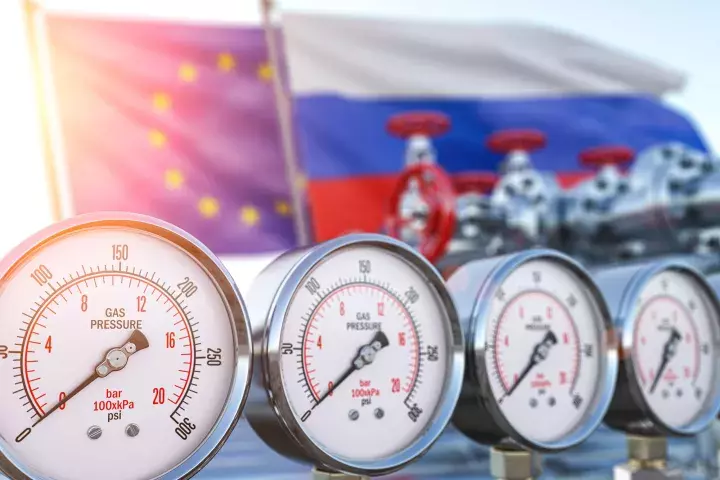
When assessing medical devices and medicines for the EAEU market, manufacturers and exporters must consider applicable EU and US sanctions and export controls alongside product registration requirements. The assessment depends on the product, destination, parties involved and intended use.
For transactions involving Russia or Belarus, the products, customers, intermediaries, testing laboratories and other project participants should be screened against the applicable restrictions. Any exemptions or authorisation requirements must be assessed for the specific transaction.
A registration document, EAC Certificate or EAC Declaration does not establish that an export transaction complies with sanctions or export controls. Registration through another EAEU Member State does not remove restrictions that otherwise apply.
For further information, see EAC Certification Amid EU and US Sanctions against Russia and Belarus.
Time and costs
The time and cost of registration depend on the product’s classification, complexity, selected procedure and the scope of testing and examination required.
Medical device registration can involve several stages and may take many months. The timeline must be assessed individually after reviewing the product and available documentation.
Delivery of documents
Once the procedure has been completed, we will provide the registration or conformity documents in the available format. Electronic copies or register details will be sent by email. Courier delivery of paper documents can be arranged where applicable.