Summary: EAC Ex Certificate
- Applicable Regulation: Technical Regulation TR CU 012/2011 "On safety of equipment for use in explosive atmospheres".
- Mandatory for: All electrical and non-electrical equipment and components intended for hazardous areas.
- Applicant Requirements: Foreign manufacturers require an Authorized Representative based in the EAEU to apply for certification.
- Compliance Document: Only an EAC Ex Certificate is possible; declarations are not applicable for this regulation.
- Key Requirement: A mandatory manufacturing audit is required for serial production certification (Scheme 1c).
- Processing Time: From 8 to 10 weeks, significantly depending on the complexity of the equipment and the scope of required laboratory testing.
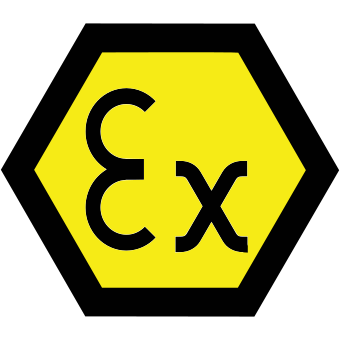
- Marking: Both the official EAC mark and the stylized Ex symbol must be durably applied to the product.
- Validity: Up to 5 years for serial production; for batch deliveries, validity is limited to the specific shipment.
- Next Steps: Submit a product description and HS code to receive an individual quotation based on your technical specifications.
What is an EAC Ex Certificate?
The EAC EX certificate is required for the export of explosion-proof equipment to Kazakhstan, Russia and other members the EAEU members.
The explosion-proof equipment intended for use in potentially explosive environments must be designed and manufactured in accordance with the TR CU 012/2011 On safety of the equipment for operation in explosive atmospheres, so that it ensures that an explosion or a fire resulting from the use of the appliance can be reliably prevented when used as intended.
The only possbile form of the conformity document is the EAC Ex Certificate.
Explosive atmospheres, caused by flammable gases, vapors, fibres or dust, pose significant risks in industrial settings and human lives. Ensuring safety in these environments is crucial. Only specialized equipment designed to prevent ignition can be used in hazardous areas.
The term explosion-proof specifically describes the capability of equipment or systems to withstand the effects of an explosion - including impact and heat - without sustaining damage, while continuing to operate normally.
Explosion protection standards have been evolved over decades in response to industrial accidents and technological progress. Around the world, various countries and regions have implemented their own standards and certification systems for explosion-proof equipment. Examples include IECEx from the International Electrotechnical Commission, OSHA, NFPA, and ASTM in the United States, as well as the ATEX Directive and EN standards in Europe.
The countries of the Eurasian Economic Union have elaborated their own regulation, which provides the safety requirements for electrical and non-electrical equipment operated in potentially explosive surroundings for the protection of life, health, property and the environment.
In our article "Explosion Protection. Explosion-Proof Equipment – Differences Between ATEX and EAC EX Certification" we look closer at the main differences between ATEX and TR CU 012/2011 regulations.
Application area of TR CU 012/2011
TR CU 012/2011 applies to all:
- explosion-proof electrical equipment and machinery
- ex proof non-electrical equipment and machinery
- including their EX-protection components intended for use in potentially explosive environments.
Does not apply to:
- medical equipment
- devices which can explode when explosive substances and unstable chemical compounds are present
- household appliances
- personal protective equipment
- seagoing vessels and barges, mobile offshore platforms and oil rigs
- air, road, rail or water vehicles
- nuclear weapons and nuclear research facilities
EAC Ex Certification Procedure
The EAC certification process is a structured workflow to ensure products meet EAEU safety standards. Depending on the supply type (batch or serial), the procedure follows these 9 key stages:
- Step 1: Application – Formal submission of the application to an accredited certification body.
- Step 2: Document Review – Comprehensive verification of technical files, safety justifications, and manuals by certification experts.
- Step 3: Scheme Selection – Determination of the appropriate certification scheme (e.g., 1c, 3c, or 9c) based on the product and supply type.
- Step 4: Manufacturing Audit – Production site inspection (mandatory for serial production).
- Step 5: Sampling – Identification of the HS code and selection of product samples during the audit.
- Step 6: Laboratory Testing – Technical examinations in an accredited EAEU laboratory.
- Step 7: Issuance – Registration in the unified state register and issuance of the certificate.
- Step 8: EAC Ex Marking – Affixing the official EAC Ex conformity mark to the products and packaging.
- Step 9: Surveillance – Annual inspection control to maintain validity (if required).
1. Who may apply for the EAC within the EAEU?
Only a company with its registered office in the EAEU may apply for EAC certification. A foreign manufacturer is not authorized to apply for a conformity assessment in order to confirm the compliance of the products with the technical regulations.In order to be able to carry out EAC certification, the foreign manufacturer must appoint an authorized representative in one of the member states of the Eurasian Economic Union. This representative will then represent the interest of the foreign manufacturer in the cooperation with the certification bodies of the Eurasian Economic Union with regard to the safety and quality of the products and their compliance with the technical regulations.
2. Which documents are required to obtain an EAC Ex Certificate?
According to the Technical Regulation TR CU 012/2011 (Article 6), the applicant must provide a comprehensive set of documents in Russian (or the official language of the EAEU member state) to confirm the explosion safety of the equipment:
- Operating manual in Russian
- Ignition risk analysisin Russian especially for not electrical equipment.
- ATEX certificate or declaration with test reports for the product
- Photos of the product
- Wiring diagram of the product
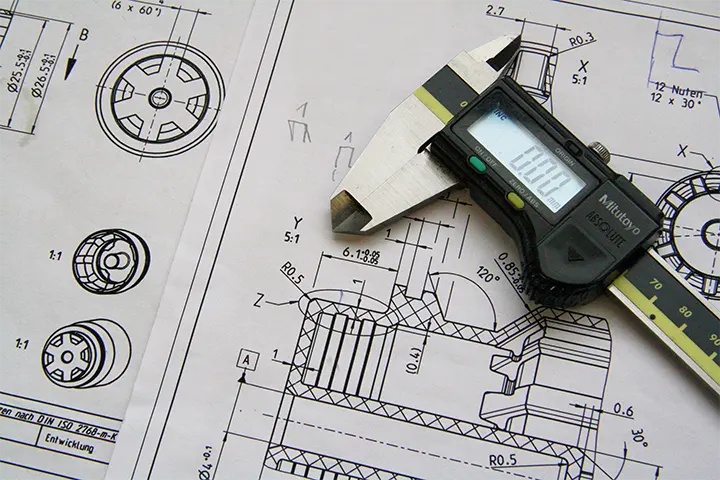
- Drawing of the product with material specifications
- Technical Passport: A core document containing the manufacturer's guarantees and main parameters.
- Operating Manual: Must include safety requirements, maintenance procedures, and conditions for safe operation in hazardous areas.
- Safety Justification (Risk Assessment): A mandatory document evaluating potential hazards throughout the product's lifecycle.
- Ignition Hazard Assessment: Specifically required for non-electrical equipment to demonstrate that no potential ignition sources are present.
- Technical Drawings & Schematics: Full set of assembly drawings, wiring diagrams, and specifications of materials used for Ex-protection.
- Certificates for Components: Existing EAC or TR CU certificates for explosion-proof components used within the assembly.
- Ex-related evidence: ATEX or IECEx certificates, test reports, or internal manufacturer's test records (if applicable).
- QMS Documentation: Certificates for the Quality Management System (e.g., ISO 9001) are mandatory for serial production (Scheme 1c).
- Product Data Sheet & Photos: Detailed technical specifications, Customs Tariff Number (HS-Code), and high-resolution photos of the device and its nameplate.
- Certification Matrix: For complex industrial plants, a matrix showing the compliance of all sub-components is highly recommended.
Depending on the type of certified products, other additional documents may be required.
3. Which EAC conformity assessment schemes exist?
| Scheme | Description |
|---|---|
| 1C | is intended for series production. In this case, samples are to be tested and a manufacturing audit is to be carried out. |
| 3C | is intended for a batch delivery. In this case, a sample from this batch is to be tested. No manufacturing audit is required. |
| 4C | is intended for a single delivery. In this case, samples are to be tested. No manufacturing audit is required |
Single delivery vs. series delivery (short comparison)
| Criteria | Single delivery (contract) | Series production |
|---|---|---|
| Validity | Only for the delivery defined in the contract | Fixed validity, typically 1–5 years |
| Tests | Sample from the batch | Product/Type tests |
| Manufacturing audit | Not required | Audit is required |
| Inspection control | Not required | Annually |
| Appropriate for | One-time/rare deliveries | Regular exports |
4. When is a manufacturing audit required for EAC certification?
The technical regulation TR CU 012/2011 requires a mandatory inspection of the production site(s) (if the product is manufactured at multiple sites) and the manufacturer’s quality management system.
The audit is carried out on-site by an accredited certification body. Its primary purpose is to verify whether the production processes meet the specified requirements. The execution of the production audit is governed by the national standard of the Russian Federation GOST R 54293-2010 “Production Audit for Conformity Assessment Procedures.”
5. Sampling - Selection and Shipment of Product Samples
The selection of representative product samples is a critical step in the EAC Ex certification process. During or immediately after the manufacturing audit, the certification body identifies which samples must be tested to verify conformity with TR CU 012/2011 requirements.
Key aspects of the sampling process:
HS Code Determination
The customs tariff number (HS code) must be accurately determined during this stage. This classification is essential for customs clearance and affects the applicable technical regulations. The certification body verifies that the declared HS code corresponds to the actual product characteristics.
Sample Selection Criteria
For explosion-proof equipment, samples are selected based on:
- Ex marking variations: Each different Ex marking requires separate testing (e.g., Ex d IIC T6 vs. Ex d IIB T4)
- Representative models: For product families, the "worst-case" model is typically tested (highest temperature class, most complex protection type)
- Component variations: Different explosion-protected components within the assembly may require individual certification
- Testing requirements: Destructive tests (flame tests, pressure tests) require multiple samples
Number of Samples Required
The exact number depends on:
- Number of product variants and Ex markings
- Type of explosion protection (Ex d, Ex i, Ex e, etc.)
- Scope of required testing (some tests destroy the samples)
- Certification scheme (1c, 3c, or 4c)
Typically, 2-5 samples per product type are required, though complex equipment may need more.
Shipment and Documentation
Samples must be shipped to the EAEU laboratory with:
- Detailed technical documentation
- Commercial invoice and packing list
- Temporary import customs declaration (samples often cannot be returned due to destructive testing)
- Clear labeling identifying each sample
For detailed guidance on sample selection and shipment procedures, see our comprehensive guide: Selection and Shipment of Samples for EAC Certification.
6. Testing of the product sample

The testing of product samples is a mandatory step in the EAC certification process according to TR CU 012/2011. A representative sample is tested for conformity with the requirements of the technical regulations and to ensure the product is suitable for its intended use in potentially explosive atmospheres.
For EAC certification, only a certification body is authorized to transfer the selected samples to an accredited laboratory for testing. The applicant is responsible for the delivery of the samples to the laboratory.
The sample tests are carried out in accordance with the standards specified in the Annex to the Technical Regulation TR CU 012/2011 (GOST standards). These examinations follow a special programme and methodology established based on generally accepted methods of certification testing. The programme can be developed by the manufacturer or by the experts of the certification body, depending on the complexity of the equipment.
Specifics of Ex-testing:
- Many tests for explosion protection are destructive (e.g., spark ignition tests or flameproof enclosure pressure tests), so samples often cannot be returned to the manufacturer.
- For large-scale or heavy equipment, it may be possible to perform testing on-site during the production audit. This is subject to the manufacturer’s capability to provide proper test conditions and the expert’s assessment of feasibility.
- The testing process includes verifying compliance with protection types (e.g., Ex d, Ex i, Ex e) and temperature classes.
After the examinations are completed, the results are documented in a test report, which serves as the fundamental evidence for issuing the EAC Ex Certificate.
7. Issuance and registration of the EAC Certificate
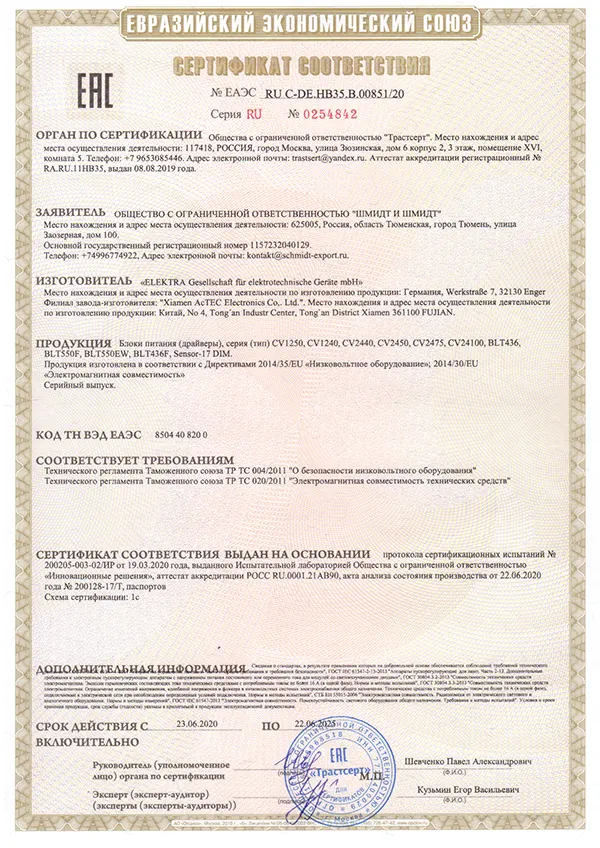
After the production audit is successfully passed, the certification body issues an EAC Certificate and enters its number in the unified state register. As official forms are often in short supply, the process of issuing a certificate may be delayed.
The EAC Certificate is valid from the date on which it is entered in the single register. The period of validity of EAC Certificates for products depends on many parameters (for example the applied technical norm, the selected scheme and type of production: serial production, single shipment etc.), which are all specified in the technical regulations.
Mandatory EAC Ex Marking of products


Explosion-proof equipment certified according to TR CU 012/2011 must be marked with both the EAC mark and the Ex symbol. These identifiers confirm that the equipment complies with the unified safety standards of the EAEU.
The marking must be conducted according to the GOST standards. Electrical equipment is marked according to GOST 31610.0-2014 (Equipment. General requirements) and GOST 60079, which are harmonized with IEC 60079-0.
Technical Requirements for the Ex Symbol:
- The symbol consists of stylized letters “E” and “x”. The height of “x” must be 5/9 of the height of “E”.
- The minimum height of the symbol is 10 mm, with a height-to-width ratio of 11:8.
- The mark must be placed on a white or contrasting background and remain legible throughout the product's life cycle.
Information required on the type label:
Every explosion-proof device, Ex component, or assembly must carry a nameplate (type label) containing:
- Official EAC Ex marking (EAC + Ex symbol)
- Name of the manufacturer and notified body
- Number of the certificate of conformity
- Equipment category and group
- Type of ignition protection
- Temperature class (T1-T6)
- IP protection degree
- Explosion subdivision (IIA, IIB, IIC)
1. Equipment Category (Protection Level)
The first digit on the Ex Label indicates the level of protection:
- 0 – Very high level: Ignition is unlikely even in case of rare malfunctions.
- 1 – High level: Safe in normal operation and expected malfunctions.
- 2 – Enhanced level: Safe in normal operation; provides protection during expected malfunctions.
Equipment for mines (Group I):
Certified according to GOST 12.2.020-76:
- PO – Very high level of protection.
- PB – Explosion-protected electrical equipment.
- RP (РП) – Enhanced level of protection.
2. Type of Ignition Protection
Different methods are used to prevent ignition of the surrounding atmosphere:
| Code | Type of Protection (Gas) | GOST Standard |
|---|---|---|
| "d" | Flameproof enclosures | GOST R 51330.1-99 |
| "e" | Increased safety | GOST R 51330.8-99 |
| "i" (ia, ib, ic) | Intrinsic safety | GOST R 51330.10-99 |
| "m" (ma, mb) | Encapsulation | GOST R 51330.17-99 |
| "p" (px, py, pz) | Pressurized enclosures | GOST R 51330.3-99 |
| "q" | Powder filling | GOST R 51330.6-99 |
3. Equipment Group & Subdivision
- Group I: Mines and underground works (Methane/Coal dust).
- Group II: Gas explosive atmospheres (excluding mines).
- Subdivisions: IIA (Propane), IIB (Ethylene), IIC (Hydrogen/Acetylene - most dangerous).
- Group III: Dust hazardous areas.
- Subdivisions: IIIA (Combustible flyings), IIIB (Non-conductive dust), IIIC (Conductive dust).
4. Temperature Class
Defines the maximum surface temperature of the equipment to prevent ignition of the surrounding gas/air mixture.
| Max Surface Temp (°C) | Temp Class |
|---|---|
| >450 | T1 |
| >300 to 450 | T2 |
| >200 to 300 | T3 |
| >135 to 200 | T4 |
| >100 to 135 | T5 |
| >85 to 100 | T6 |
5. IP Protection (Ingress Protection)
Standardized by GOST 14254-96 (IEC 529-89). The code consists of "IP" followed by two digits:
- First digit (0-6): Protection against solid foreign objects/dust.
- Second digit (0-8): Protection against water.
Example: IP65 means the equipment is dust-tight and protected against water jets.
8. What is surveillance in EAC conformity assessment and when is it required?
After having issued an EAC Certificate, regular surveillance is required. The surveillance is carried out annually to ensure that the series production continues to fulfil the specified requirements of the TR CU 012/2011 and that the objects of conformity assessment (products) are correctly marked with the EAC mark or the conformity mark. Without a successfully completed surveillance, the EAC Certificate loses its validity.
Certification matrix
For the EAC EX certification of complex explosion-proof equipment, it is advisable to create a certification matrix yourself or let the experts do it. The certification matrix provides an overview of which explosion-proof components require which certificates of conformity and additional documents.
The matrix is mostly written in Excel format and consists of the following fields:
- name of the product
- Information about the manufacturer
- ATEX marking
- designation of the required certificate of conformity
- designation of the required technical documentation
Period of validity of EAC conformity assessment certificates
The validity period of the EAC certificate for Explosion-proof equipment differs depending on the selected scheme, which depends on the type of production (serial production, individual delivery, etc.). The maximum validity under Scheme 1c is 5 years.
Costs for EAC Ex-Certification
The duration and costs associated with an EAC certificate application for Explosion-proof equipment depend on several different factors, such as the classification of the product, any required laboratory checks and the complexity of all examinations. As such the exact conditions of the EAC certification are always determined individually based on the required documentation. Please note that an application for an EAC certificate can take several weeks to process.
- Type and complexity of the products: Design, number of explosion-protected components, number of Ex-markings
- Scope of testing: depends on the type of explosion protection and construction of the equipment
- Completeness of documentation: Technical documentation, drawings, test reports
- Type of delivery: Single delivery (contract-related) or serial production which stipulates conduction of the manufacturing audit
- Samples for testing: amount of the required samples depends on the amount of types/models and number of differeтt ex-markings. Selection of representative models is crucial – Correct selection and shipment of samples is part of cost planning
How long does the EAC Ex certification process take?
Applying for an EAC Ex certificate is a time-consuming and cost-intensive process. On average, the processing time usually takes several weeks but may vary depending on the complexity of the project.
The duration of the certification process depends on the following factors:
- Type of delivery: Single shipment (contract-based) vs. serial production - for serial production a manufacturing audit must be conducted
- Product characteristics: Complexity, number of different types and ex-proof components - it influences the scope of testing
- Audit: audit is necessary for scheme 1c
- Completeness of documentation: Technical documentation, drawings, test reports.
- Availability of samples: Selection and shipment of product samples for laboratory testing
Legal framework

Until 15 February 2013, the EX certificate of conformity in Russia was carried out in accordance with the GOST standards from the Soviet Union. The GOST certificate was used as an EAC EX certificate of conformity. As a result of the coordination of the Technical Regulation in the EUEA between Russia, Belarus, Kazakhstan, Armenia and Kyrgyzstan, the entry into force of the Technical Regulation TR CU 012/2011 "On safety of the equipment for operation in explosive atmospheres" applies new EAC certification rules.
Since the reform, the certification of the explosion-proof equipment has been carried out exclusively in the form of EAC certification. The EAC declaration for the explosion-proof equipment is not provided.
The Technical Regulations TR CU 012/2011 "On safety of the equipment for operation in explosive atmospheres" was adopted on 18 October 2011 by Commission Decision № 825.
The EAC EX certification in the EUEA is similar in many respects to the European System of ATEX certification according to Directive 2014/34 / EU or Directive 94/9 / EC. Nevertheless, there are significant differences. If you already have an ATEX certificate for your equipment, this can simplify the EX certification for the Russian market but not replace it.
Case study: audit within the framework of certification of explosion-protected equipment
In EAC certification of explosion-protected equipment according to TR ZU 012/2011, the production audit is one of the most critical elements of the entire process. It is not sufficient to successfully test a single product. Rather, the manufacturer must demonstrate that all safety-relevant processes are continuously monitored and controlled.
In practice, we often observe that certification bodies require additional evidence regarding the traceability of components, the inspection of explosion-protected parts, and personnel training. The basis for this is GOST R ISO/IEC 80079-34-2013, which explicitly requires a functioning quality management system for the manufacture of Ex products.
The audit usually lasts about 2 days. The standards stipulate that an audit must be accompanied by two experts – one expert is responsible for the quality management system, and the second expert checks the product’s conformity.
The audit consists of two parts:
- Walkthrough of the production
- Review of the QM documentation
The production walkthrough is logically structured and starts with the incoming goods inspection.
Incoming goods inspection
The walkthrough begins with the incoming goods inspection. The experts check how the incoming goods inspection is organized. It is important to demonstrate which parameters need to be checked, inspection of incoming goods for compliance with specifications, inspection lot, control methods, documentation of inspection results, labeling of the status of inspected products, and measures to prevent non-conforming incoming materials from being passed on to production.
Handling of non-conforming goods is of utmost importance. It is essential to have a clearly marked area where non-conforming goods are placed. They must be visibly labeled with a tag.
Another important point is to ensure traceability of the parts from receipt of goods to the finished product.
Production and internal inspections
An important and the largest part is the inspection of production. Through this, the entire production process can be clearly demonstrated and evaluated.
What should be shown during assembly:
- The complete production process from material receipt to the finished product.
- Critical control points where quality checks are performed.
- Labeling and traceability of products.
- Handling of non-conforming products (e.g., blocking, rework).
- Interfaces between workstations and departments.
- Inspection and maintenance of machines and other technical equipment.
- Verification that inspection results are correctly recorded and documented.
- Ensuring that the status of inspected products is clearly identifiable.
Packaging and storage
The auditor checks whether the product is packaged according to the packaging and preservation instructions provided by the manufacturer. The packaging must protect the contents throughout the entire transport and storage process from physical damage (impacts, vibrations, deformation) as well as from harmful environmental influences (moisture, dust, temperature fluctuations).
Safety and occupational health measures
Occupational safety is also an important topic during the audit. The auditor checks compliance with safety regulations in the workplace, such as wearing helmets, ear protection, and other protective equipment in hazardous areas.
The presence and use of protective measures in the areas of noise protection, fire safety, and lighting are also checked.
Inspection control refers to a systematic, recurring conformity assessment carried out by the certification body that originally issued the EAC certificate. This includes, among other things, the review of production documentation, quality management processes, and sampling of products. This regular inspection forms the basis for the maintenance of the validity of the EAC certificate.
Differences between ATEX and EAC Ex Certification
When manufacturing or exporting explosion-proof equipment, it is essential to understand the differences between ATEX certification required in the European Union and EAC Ex certification required in the Eurasian Economic Union (EAEU). Although both systems regulate equipment intended for use in hazardous areas, they are based on different legal frameworks and follow independent conformity assessment procedures.
General overview
- ATEX (EU): Regulated by Directive 2014/34/EU. ATEX certification is mandatory for placing explosion-proof equipment on the EU/EEA market. Products must bear the CE and Ex markings after the conformity assessment has been completed.
- EAC Ex (EAEU): Required for placing explosion-proof equipment on the market of the EAEU member states (Russia, Kazakhstan, Belarus, Armenia, Kyrgyzstan). Certification is carried out according to Technical Regulation TR CU 012/2011 “On safety of equipment for use in explosive atmospheres”. ATEX certificates are not recognised within the EAEU and cannot replace EAC Ex certification.
Conformity assessment procedures
- ATEX: Depending on the equipment category, the manufacturer may carry out internal production control (self-declaration) or may need to involve a notified body for testing and certification.
- EAC Ex: Self-declaration is not permitted. Conformity assessment must always be conducted by an EAEU-accredited certification body and includes testing of samples, evaluation of technical documentation, and, for serial production, a mandatory production audit.
Marking and documentation requirements
| Aspect | ATEX (EU) | EAC Ex (EAEU) |
|---|---|---|
| Regulatory basis | Directive 2014/34/EU (ATEX) | Technical Regulation TR CU 012/2011 |
| Marking | CE marking + Ex marking according to ATEX classification | EAC marking + Ex marking according to TR CU 012/2011 |
| Type of conformity assessment | Self-declaration for certain categories; certification by a notified body for higher-risk equipment | Certification only; testing and approval must be performed by an EAEU-accredited certification body |
| Market validity | European Union / EEA | Eurasian Economic Union (RU, KZ, BY, AM, KG) |
Does the device need to have an ATEX or IECEx certificate to obtain the EAC Ex certificate?
No, an ATEX certificate or other approvals for explosion-protected equipment are not a prerequisite for obtaining certification under TR CU 012/2011. The certification body independently verifies the safety of the device regardless of existing approvals. However, having an ATEX certificate can facilitate the EAC certification process.
Is it enough to have an ATEX or IECEx certificate to export the ex proff equipment to the Customs Union?
ATEX or IECEx certificates are not recognized as proof of explosion safety within the Eurasian Economic Union. To sell and operate explosion-protected equipment in the EAEU, an EAC certificate under TR CU 012/2011 must be issued.
Are the test reports or audits from ATEX certification recognized?
No, EAC certification is an independent process. The ATEX certificate and test reports are helpful references, but they cannot replace the audit or the product testing conducted by an accredited certification body. The technical regulation TR CU 012/2011 requires that product samples be tested by a laboratory approved within the EAEU. The same applies to the site inspection and the quality management system audit for serial production (Scheme 1c).
Can explosion-protected equipment with an EAC Ex certificate also be installed in safe areas?
Yes. You only need to check whether other regulations may also apply. For example, an existing Ex certificate cannot replace the requirements of TR CU 004 "On the Safety of Low-Voltage Equipment". It is also important to note that as soon as the equipment bears an Ex marking, it must have the Ex certificate, even if it is used in non-hazardous areas.
Can the EAC Ex certificate be replaced by an EAC Ex declaration?
No. In the technical regulation TR CU 012/2011, a manufacturer’s declaration (EAC Declaration) is not provided for. Unlike the European system under ATEX Directive 2014/34/EU, where the manufacturer may declare conformity independently for certain equipment categories (e.g., under Module A – Internal Production Control), the EAEU regulation only allows certification by an accredited certification body within the EAEU.
This means that the manufacturer or its authorized representative in the Eurasian Economic Union (EAEU) must submit an application to a certification body accredited in one of the member states. This body conducts the review of technical documentation, product samples, and the quality management system.
An independent “manufacturer’s declaration” or self-certification—permissible under ATEX for certain product categories—is therefore not allowed under the EAEU system.
Who is responsible for compliance with regulations in the EAEU?
Similar to ATEX certification, either the manufacturer(if it is a domestic manufacturer) or the authorized representative is responsible for ensuring that the regulations are followed.
Authorized representative for EAC EX Certification

A manufacturer that is not established in one of the member states of the Eurasian Economic Union is not entitled to apply for conformity assessment of its products for compliance with the requirements of the relevant technical regulations.
In order to carry out a conformity assessment nonetheless, the foreign manufacturer must appoint an authorized representative in one of the member states of the Eurasian Economic Union. This representative then acts on behalf of the foreign manufacturer in cooperation with the certification bodies of the Eurasian Economic Union regarding the safety and quality of the products and their compliance with technical regulations.
According to applicable law and in accordance with the technical regulation of the Economic Union, only an entrepreneur located in the territory of the Eurasian Economic Union may be appointed as an authorized representative.
Schmidt & Schmidt supports manufacturers from Europe, America, and Asia in appointing an authorized representative in the EAEU. Thanks to our legally compliant solution concept through Kazakhstan – a member state of the EAEU – we can ensure the issuance of EAC certificates. Through our local offices, we ensure that the entire certification process complies not only with the technical regulations of the Eurasian Economic Union, but is also carried out in accordance with European and American sanctions regulations. In this way, our clients receive a reliable and legal access to the EAEU market.
Responsibility for violations of requirements
Distributing products without a valid EAC conformity certificate, or with falsified or unreliable documentation, carries significant penalties under Chapter 14 of the Code of Administrative Offenses. These penalties can include fines of up to tens of thousands of euros, suspension of business operations, seizure of products, and—in cases where life, health, or the environment is endangered—even criminal consequences. An overview of possible sanctions for violations of EAC certification rules can be found in our expert article. Therefore, it is of utmost importance to take the EAC conformity assessment seriously.
Can the EAC Ex certificate be extended?
Extension of the certificate is not provided for in the TR CU regulation. After the expiration date (usually after 5 years), the certificate is archived in the register. If the product continues to be sold, a new certification must be applied for. The entire certification process must be repeated.
Can the EAC Ex certificate be revoked?
Yes. The EAC Ex certificate can be suspended or revoked in accordance with the provisions of the technical regulation TR CU 012/2011 “On the Safety of Equipment for Use in Explosive Atmospheres” and the accreditation rules of the Eurasian Economic Union (EAEU).
The suspension or withdrawal is carried out by the accredited certification body and documented in the unified EAEU register. The certificate status is then updated to:
- suspended, or
- annulled
After revocation, the “EAC Ex” marking may no longer be used on the product or in accompanying documentation.
Reasons for Revocation or Suspension
- Non-conformity of products: The product does not match the tested sample or has been modified without informing the certification body.
- Missing or incomplete technical documentation: e.g., missing safety justification (Обоснование безопасности), operating manual (РЭ), or test reports.
- Errors or manipulation: Irregularities in test reports, documentation, or EAC markings.
- Failure to pass inspection control: For serial production, an annual inspection is required. Failure to conduct it leads to temporary suspension and ultimately revocation of the certificate.
- Termination of the certification body’s activity: Loss or withdrawal of accreditation.
- Voluntary withdrawal: The applicant (manufacturer or authorized representative) may request revocation.
Certificate Restoration
A suspended certificate can be reactivated if the manufacturer corrects the identified deficiencies and provides evidence or passes a new audit. An annulled certificate cannot be reactivated.
Compliance with EU and US sanctions in the context of EAC Certification

In addition to the technical regulations of the Eurasian Economic Union (EAEU), European and international companies must also comply with the applicable sanctions of the European Union and the United States when undergoing EAC certification. These regulations particularly concern the export of certain goods, trade with listed individuals and entities, and the provision of technical services. Non-compliance may not only jeopardize business relationships but also entail civil and criminal liability.
The situation is especially critical for exports to Russia and Belarus. Due to the geopolitical situation, numerous embargoes and restrictive measures have been imposed since 2014, which can directly affect the conformity assessment process. For example, it is possible that conformity assessment bodies or business partners in the affected countries are listed on sanctions lists, making cooperation legally impermissible. Therefore, companies must carefully review not only the technical regulations but also the current EU and US sanctions lists.
Another risk arises if a shipment is blocked due to sanctions violations. Even a formally correct conformity assessment does not provide legal certainty in such cases. Therefore, close coordination between compliance departments, export control officers, and certification partners is essential to avoid legal conflicts and to secure the supply chains.
Companies that aim to successfully export their objects of conformity assessment (products) to Kazakhstan, Russia, or other EAEU Member States should not focus solely on compliance with technical regulations but also ensure comprehensive sanctions compliance. This includes reviewing the end-use of products and selecting appropriate authorized representatives and local partners.
Schmidt & Schmidt provides a legally compliant solution via Kazakhstan. As an EAEU Member State, Kazakhstan is authorized to issue EAC certificates and EAC declarations. Through our local offices, we ensure that all conformity assessment processes are carried out in compliance with European and US sanctions regulations while enabling our clients to access the EAEU market.Detailed information on current developments can be found in our article: EAC Certification Amid EU and US Sanctions against Russia and Belarus.
How to apply for Certification?
To help you enter the Eurasian Economic Union (EAEU) market quickly and in full legal compliance, we support you throughout the entire EAC certification process – from the initial request to the delivery of the original documents.